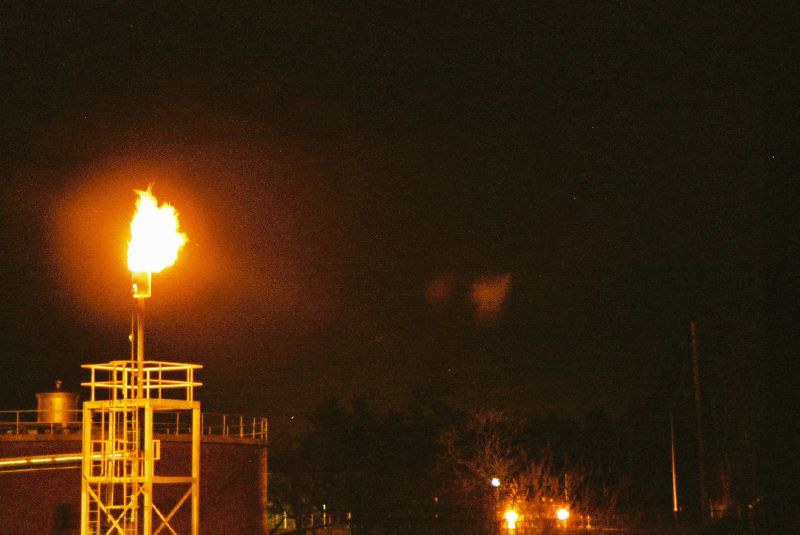
Congress and the Biden Administration are taking the first steps to reduce emissions of two dangerous greenhouse gases: methane, which is emitted during natural gas extraction and by leaks from oil and gas wells, and hydrofluorocarbons, which are used in refrigeration and air-conditioning systems.
Both of these planet-warming gases are many times more potent than carbon dioxide, even though they don’t stay in the atmosphere as long. Scientists say dealing with them is critical to slowing the pace of global warming.
The Senate, using a rarely invoked law to reverse a Trump administration rollback on methane, essentially reinstated an Obama-era regulation imposing controls on leaks of methane from oil and gas wells. And the Environmental Protection Agency moved to implement new curbs on the production and importation of HFCs, which Congress approved late last year.
“By taking fast action on these short-lived climate pollutants, of which HFCs are the most potent, we can buy ourselves some time and actually help avoid climate tipping points,” said Kristen N. Taddonio, a senior climate and energy adviser for the Institute for Governance & Sustainable Development.
The 52-42 Senate vote reinstates the Oil and Natural Gas New Source Performance Standards, a handful of Obama-era regulations on methane emissions that were rolled back by former President Donald Trump in August 2020. The measure drew support from every Senate Democrat, as well as Republican Sens. Susan Collins (R-ME), who has opposed GOP efforts to deregulate methane emissions in the past; Lindsey Graham (R-SC); and Rob Portman (R-OH). The rule is expected to be taken up and passed by the House of Representatives in this month.
The standards alone won’t be sufficient to meet the president’s pledge to slash greenhouse gas emissions by 50 to 52 percent compared with 2005 levels by 2030 — a goal meant to help keep global warming this century to 1.5 degrees Celsius, but it represents an important step toward meeting that commitment, because methane is seen as a major driver of climate change.
Senate Majority Leader Chuck Schumer called the Senate’s move “one of the most important votes, not only that this Congress has cast but has been cast in the last decade, in terms of our fight against global warming.”
Carbon Visuals: One day’s carbon dioxide emissions from the UN Secretariat Building via Flickr
According to a recent article by two climate experts in the online publication, The Conversation, there are more reasons for optimism on climate change than we’ve seen for decades. The authors, Gabi Mocatta, Lecturer in Communication, Deakin University, and Research Fellow in Climate Change Communication, Climate Futures Program, University of Tasmania, and Rebecca Harris
Senior Lecturer in Climatology, Director, Climate Futures Program, University of Tasmania, say two big reasons help explain the optimism:
1. The science on climate change “is now more detailed than ever. Although much of it is devastating, it’s also resoundingly clear
2. “It’s now also unequivocal that people want action”
Above all, the article maintains we need to act fast. “The 2020s really are our final chance: our “Earthshot” moment to start to repair the planet after decades of inaction.”
Wind Turbine by Rachel Schowalter, Massachusetts Clean Energy Center via Flickr
Climate change is deadly serious; but it strikes me the word change is too soft a term because the change occurring is not anything like changing your clothes or your diet or your drapes. Rather it’s a climate crisis.
Climate crisis is a better way to think about what is happening to the planet, and after four years of dreadful neglect, denial and inaction from the previous administration, the Biden administration is taking the crisis seriously. And it is taking action.
The White House last week unveiled a goal to expand the nation’s nascent offshore wind energy industry in the coming decade by opening new areas to development, accelerating permits, and boosting public financing for projects.
Then there is Biden’s American Jobs Plan, which includes $85 billion for mass-transit systems, another $80 billion for Amtrak to expand service and make needed repairs, and $100 billion to upgrade the nation’s electrical grid. The infrastructure plan also would allocate $174 billion to spur the transition to electric vehicles, $35 billion for research in emissions-reducing and climate-resilience technologies, and $10 billion to create a New Deal-style Civilian Climate Corps.
The plan will lead to “transformational progress in our effort to tackle climate change,” Biden said, speaking at a carpenters’ training facility outside Pittsburgh.
A Reuters report provided more detail on the offshore wind power plan: “The blueprint for offshore wind power generation comes after the Biden administration’s suspension of new oil and gas leasing auctions on federal lands and waters, widely seen as a first step to fulfilling the president’s campaign promise of a permanent ban on new federal drilling to counter global warming.
The United States, with just two small offshore wind facilities, has lagged European nations in developing the renewable energy technology.
“We’re ready to rock and roll,” National Climate Advisor Gina McCarthy said at a virtual press conference to announce the administration’s moves.
According to the report, the plan sets a target to deploy 30 gigawatts of offshore wind energy by 2030, which the administration said would be enough to power 10 million homes and cut 78 million metric tons of carbon dioxide per year.
One of the first steps will be to open a new offshore wind energy development zone in the New York Bight, an area off the densely populated coast between Long Island, New York and New Jersey, with a lease auction there later this year.
The industry will employ 44,000 workers directly by 2030 and support 33,000 additional support jobs. Many of those jobs will be created at new factories that will produce the blades, towers and other components for massive offshore wind turbines and at shipyards where the specialized ships needed to install them will be constructed. The administration predicted the nation would see port upgrade investments related to offshore wind of more than $500 million.
The administration said it will also aim to speed up project permits, including environmental reviews, and provide $3 billion in public financing for offshore wind projects through the Department of Energy.
The United States’ two small offshore wind farms include the 30-megawatt Block Island Wind Farm off Rhode Island and a two-turbine pilot project off the coast of Virginia. There are more than 20 GW of proposed projects in various stages of development.
Europe, by contrast, has more than 20 GW of capacity already and plans to expand that more than ten-fold by 2050. Many of the companies developing U.S. projects are European, including Norway’s Equinor, Denmark’s Orsted, and a joint venture between Avangrid, the U.S. arm of Spain’s Iberdrola, and Denmark’s Copenhagen Infrastructure Partners.
Disruptions in the fisheries and aquaculture sectors will increase as supply and consumption are affected by lockdown, according to the report from the Food and Agriculture Organization of the United Nations (FAO).
Fish supply, consumption and trade revenues for 2020 will all likely decline due to containment restrictions, the report noted, while global aquaculture production is expected to fall by about 1.3 percent, the first fall recorded by the sector in several years.
“The pandemic has caused widespread upheaval in fisheries and aquaculture as production has been disrupted, supply chains have been interrupted and consumer spending restricted by various lockdowns,” said FAO Deputy Director-General, Maria Helena Semedo. “Containment measures have provoked far-reaching changes, many of which are likely to persist in the long term.”
The FAO report indicated that in aquaculture there is growing evidence that unsold production will result in increasing levels of live fish stocks, creating higher costs for feeding as well as a greater number of fish mortalities. Sectors with longer production cycles, such as salmon, cannot adjust rapidly to the demand shifts.
Global catches from wild fisheries are also expected to have declined slightly in 2020, as, overall, there has been a reduced fishing effort due to COVID‑19-related restrictions on fishing vessel crews and poor market conditions.
As a result of Covid-19, consumer preferences have shifted. While demand for fresh fish has waned, consumer demand for packaged and frozen products has grown as households look to stock up on non-perishable food.
Aggregate prices for 2020, as measured by the Fish Price Index are down year-on-year for most traded species. Restaurant and hotel closures in many countries have also led to a fall in demand for fresh fish products.
The climate crisis is also impacting the food, fish, forest and water sectors
– In other news from FAO, two projects, one focusing on agroforestry in sub-Saharan Africa and the other on water management in the Near East, have received $80 million, paving the way to improve the livelihoods of more than 250 000 smallholders.
The Board of the Green Climate Fund (GCF) approved the funds for initiatives in the Republic of Congo and the Hashemite Kingdom of Jordan. Both are the first GCF-funded projects in those countries, underscoring FAO’s focus on expanding the use of global tools to advance climate action in food and agriculture. FAO’s GCF portfolio has now risen to $878 million, supporting 15 projects.
– Opening the high-level ceremony to mark the International Day of Forests, the Director-General of the Food and Agriculture Organization of the United Nations (FAO), QU Dongyu, described forest restoration as a path to global recovery and well-being.
“Healthy forests mean healthy people. Forests provide us with fresh air, nutritious foods, clean water and space for recreation, and also for civilization to continue,” the Director-General said.
More than 1 billion people depend on forest foods and 2.4 billion people use fuelwood or charcoal to cook their daily meals, noted the Director General. “Forests are also green pharmacies. In developing countries, up to 80 percent of all medicinal drugs are plant-based.”
Yet, despite their importance, the area of forests continues to shrink. FAO’s most recent Global Forest Resources Assessment says that each year, the world loses more than 10 million hectares of forest – an area about twice the size of Costa Rica. “We can change this. We have the knowledge and the tools,” said the Director-General.
With four billion people projected to be living in drylands by 2050,the publication outlines the transformational change required to ensure the sustainability of food production systems under climate change and after COVID-19, which includes giving a greater voice to marginalized dryland populations.
– Acute hunger is set to soar in over 20 countries in the coming months without urgent and scaled-up assistance, warn the UN’s Food and Agriculture Organization (FAO) and World Food Programme (WFP) in a new report issued on 23 March.
Yemen, South Sudan and northern Nigeria top the list and face catastrophic levels of acute hunger, with families in pockets of South Sudan and Yemen already in the grip of or at risk of starvation and death according to the Hunger Hotspots report.
Although the majority of the affected countries are in Africa, acute hunger is due to rise steeply in most world regions – from Afghanistan in Asia, Syria and Lebanon in the Middle East, to Haiti in Latin America and the Caribbean.
Already, over 34 million people are grappling with emergency levels of acute hunger (IPC4) – meaning they are one step away from starvation – across the world.
“The magnitude of suffering is alarming. It is incumbent upon all of us to act now and to act fast to save lives, safeguard livelihoods and prevent the worst situation,” said Qu.
“In many regions, the planting season has just started or is about to start. We must run against the clock and not let this opportunity to protect, stabilize and even possibly increase local food production slip away,” urged Qu.
“We are seeing a catastrophe unfold before our very eyes. Famine – driven by conflict, and fuelled by climate shocks and the COVID-19 hunger pandemic – is knocking on the door for millions of families,” said WFP Executive Director David Beasley.
“We urgently need three things to stop millions from dying of starvation: the fighting has to stop, we must be allowed access to vulnerable communities to provide life-saving help, and above all we need donors to step up with the US$ 5.5 billion we are asking for this year,” he added.
Thanks to the Civilian Conservation Corps by Kevin Micalizzi via Flickr CC
The Civilian Conservation Corps was created in the spring of 1933 by a new president, Franklin D. Roosevelt, as a way to put millions back to work. It gave jobs to an eventual three million young men. This was during the Great Depression and prior to the Second World War, which was an employment program of a quite different sort. The CCC left a legacy of trees, trails, shelters, footbridges, picnic areas, and campgrounds in local, state, and national parks across the country.
Now there is a new president, Joe Biden, and another CCC: The Civilian Climate Corps., which the president included in his 27 January 2021 Executive Order on Tackling the Climate Crisis at Home and Abroad, a comprehensive call to action on many fronts. The relevant section on the CCC goes as follows:
“Sec. 215. Civilian Climate Corps. In furtherance of the policy set forth in section 214 of this order, the Secretary of the Interior, in collaboration with the Secretary of Agriculture and the heads of other relevant agencies, shall submit a strategy to the Task Force within 90 days of the date of this order for creating a Civilian Climate Corps Initiative, within existing appropriations, to mobilize the next generation of conservation and resilience workers and maximize the creation of accessible training opportunities and good jobs. The initiative shall aim to conserve and restore public lands and waters, bolster community resilience, increase reforestation, increase carbon sequestration in the agricultural sector, protect biodiversity, improve access to recreation, and address the changing climate.”
Under Biden’s executive order, the heads of the Department of the Interior, the Department of Agriculture and other departments have 90 days to present their plan to “mobilize the next generation of conservation and resilience workers,” a step toward fulfilling Biden’s promise to get the US on track to conserve 30% of lands and oceans by 2030.
Through its nine-year existence, Roosevelt’s CCC put three million jobless Americans to work. CCC enrollees planted more than three billion trees, paved 125,000 miles of roadways, erected 3,000 fire lookouts, and spent six million workdays fighting forest fires.
“We are conserving not only our natural resources but also our human resources,” Roosevelt said back then.
The CCC was a great idea then, its time has come around again.
Getting to a global net-zero emission supply chain sounds like an impossible and expensive task, but it may be cheaper than one might think.
This is according to an article published in the recent State of Green Business report by Michael Holder, “The Price is Right.”
Holder, a BusinessGreen reporter, writes that “setting ambitious net-zero targets for a company’s core business is one thing, but achieving deep decarbonization across the entire supply chain is quite another.”
Many, if not most, supply chains are highly complex and reach across the globe, so measuring and mandating emissions is daunting. “Yet without action to get to net-zero emissions across every corner of the global economy, the planet’s climate will continue to warm.”
He referred to a recent report, “Net-Zero Challenge: The “Supply Chain Challenge,” from the World Economic Forum (WEF) and Boston Consulting Group (BCG) noting that, as well as being a “game changer” in the fight against climate change, decarbonizing supply chains is possible with readily available technologies and at surprisingly low cost. Some of the majore findings from the report include:
Many companies can multiply their climate impact by decarbonizing supply chains
Eight supply chains account for more than 50% of global emissions
Net-zero supply chains would hardly increase end-consumer costs. (Around 40% of all emissions in these supply chains could be abated with readily available and affordable levers)
Decarbonizing supply chains will be difficult; the report outlines nine major initiatives every company can take:
“Through interviews with several dozen global companies that lead the way in reducing supply chain emissions, we have identified nine key actions: (1) build a comprehensive emissions baseline, gradually filled with actual supplier data; (2) set ambitious and holistic reduction targets, reducing emissions by (3) revisiting product design choices and (4) reconsidering (geographic) sourcing strategy; (5) set ambitious procurement standards and (6) work jointly with suppliers to co-fund abatement levers; (7) work together with peers to align sector targets that maximize impact and level the playing field; (8) use scale by driving up demand to lower the cost of green solutions; and – finally – (9) develop internal governance mechanisms that introduce emissions as a steering mechanism and align the incentives of decision-makers with emission targets.”
Business, green business, sustainability, health and economic security have always been connected, but no more so than now after four years of neglect and ignorance by the Trump Administration. Mix in a raging pandemic, a new administration committed to tackling climate change, and it might just be that the path forward is in sight.
“There never has been a moment as opportune as this one to be talking about the intersection of business and sustainability,” writes Joel Makower, chairman and executive editor of GreenBiz Group, in the latest edition of the State of Green Business. The report is now in its 14th year.
“Justice,” he continues, is the new mantra governing a host of issues–social, racial, climate, economic, environmental and others. “During 2020, amid the economic, social, political and public health crises we encountered; corporate sustainability continued to move forward.” Because of Covid-19 and “the other challenges we’ve encountered, the idea of rapid, large-scale global action now seems more than a mere pipe dream,” says Makower.
Factoids from the report:
According to the U.S. SIF Foundation’s 2020 biennial “Report on US Sustainable and Impact Investing Trends,” sustainable investing assets now total $17.1 trillion, or 33 percent of the $51.4 trillion in total U.S. assets under professional money management — a 42 percent jump from 2018
As of October 2020, more than 1,500 organizations had expressed their support for the Taskforce on Climate related Financial Disclosures (TCFD), an increase of over 85 percent since June 2020
Given the above, it was not surprising to see an uptick in corporate ambition on sustainability issues. “Net zero” became a key commitment during 2020 — goals that aim to eliminate, at least on paper, a company’s greenhouse gas emissions, water extractions, fossil fuel use or deforestation activities by a given date
What will it take for companies to dramatically step up their ambition and actions? That is a defining question of the decade. No doubt the answer lies in a combination of investor pressure, technological innovation, consumption shifts, governmental pressure, new circular business models that reward resource efficiency — and more than a little grit and determination
Corporate sustainability efforts are continuing apace, even amid economic uncertainty and a global pandemic that, as of this writing, is far from contained. It wasn’t very many years ago that the future of corporate sustainability was uncertain even during good times
10 Subject-matter trends discussed in the 135-page report:
Ocean-Based Sequestration Heats Up
The ‘S’ in ESG Gains Currency
Community Investments Pay Dividends
Aquaculture Becomes a Net-Positive
Industrial Decarbonization Picks Up Steam
Nature Takes Root on the Balance Sheet
Sustainable Mobility Drives the Newest Perk
Aviation Plots a Sustainable Course
The Circular Economy Shows its Human Side
Corporate Advocacy Gets Louder
The “State of Green Business” is always a valuable resource, now more than ever.
Further reading:
“A New Day for the Climate,” New Yorker, by Elizabeth Kolbert January 31, 2021
It remains to be seen whether Joe Biden’s sweeping climate directives can make a meaningful difference, but a critical threshold has been crossed.
Actually, much more than a moment, President Biden’s cancellation of the Keystone XL pipeline permit is a milestone event in the on-again off-again, anti-climate history of this project.
Writing in the New Yorker on 21 January, Bill McKibben says the action “settled—almost certainly, once and for all—one of the greatest environmental battles this country has seen.”
Keystone XL is/was a project of the TransCanada Corporation (now TC Energy) and was designed to carry oil from Alberta’s tar sands across the country to refineries on the Gulf of Mexico. President George W. Bush approved the original Keystone pipeline, and it went into service early in the Obama years. But the new XL version, announced in 2008, was larger and took a different course across the heartland. It caused major opposition from virtually everyone concerned with protecting the climate. It came first from indigenous people in Canada, who had watched tar-sand mines lay waste to a vast landscape, to Native-Americans in America. Eventually President Obama announced a delay in the permit process in order to consider the question more closely, but President Trump revived the pipeline during his first days in office by Executive Order.
Now President Biden, also by Executive Orders, has cancelled the Keystone permit and has the US rejoining the Paris Climate agreement during his first days in office.
A great start for the new administration. There’s still much work to do and battles to be fought but can we at long last focus on creating jobs through renewable infrastructure projects, and not on pumping filthy tar sand oil into the US?
It is past time to transition away from fossil fuel jobs and transform those jobs to renewable industries.
Postscript:
Greta Thunberg Tweeted this on 24 January: “This week Norway awarded 61 new oil and gas exploration rights to 30 oil companies. Sweden’s Lundin Oil was awarded stakes in 19 licenses. It’s 2021 and when it comes to facing the climate emergency the world is still in a state of complete denial.”
In a few days the work begins to undo four years of neglect, incompetence and horrific awfulness on addressing climate change.
For one thing, the U.S. will rejoin the Paris Agreement, which is a good thing but that pact is probably already virtually useless and in need of a major update. Even with a new, updated agreement, which seems unlikely, it may be too late because global warming and climate catastrophe adheres to no timeline but its own.
But much work is needed right now, especially in the U.S., and the new president appears to understand this and the necessity of tying progress on climate, infrastructure, jobs and the economy in a coherent and workable plan.
Referring to the 2015 Paris Agreement, Greta Thunberg, said this week that it’s “a huge problem that nations are failing to meet their climate- and ecological targets. The main problem however, is the fact that their targets are completely insufficient in the first place. We can’t solve a crisis without treating it like a crisis.”
For those in need of a refresher on the Paris Agreement here’s a link. A status report on the agreement from Vox, published last month (Dec. 2020) offers some good information on where we are now.
While we play catch-up, here a couple recent articles to consider, courtesy of Google alerts:
While wildfires spread in California, glaciers continue to melt and species extinction continues apace, the Trump Administration this week took the first step to officially withdraw the United States from the Paris agreement on climate change. Lest we forget, every other country on the planet has signed the agreement that we wrote.
We also know that Trump promised to do this in 2017, but one might have hoped this particular move would be forgotten out of the sheer incompetence of this crew of idiots. But no.
“This is not America first; once again, it’s America isolated,” said John F. Kerry, former secretary of state, and Chuck Hagel, former U.S. defense secretary, in an op-ed piece published in the Washington Post.
“Climate change is already affecting every sector and region of the United States, as hundreds of top scientists from 13 federal agencies made clear in a report the White House itself released last year. The past five years were the warmest ever recorded. Without steep pollution reductions, climate change will risk tens of thousands of U.S. lives every year by the end of the century. Rising seas, increased storm surge, and tidal flooding threaten $1 trillion in public infrastructure and private property now along U.S. coastlines. The United States has experienced at least $400 billion in weather and climate disaster costs since 2014. The recent hurricanes that slammed America’s southern coasts, as well as historic wildfires in California, resulted in more American victims of severe weather juiced by climate change than ever before.”
They also noted climate change threatens national security. “This link has been clear for decades. Our military bases, and hence our security preparedness, are threatened by sea-level rise and other impacts. If you put a map of places with high political instability today over a map of places with high climate vulnerability, the two would be nearly identical.”
The Paris climate accord is not the final answer by any stretch, but it is a good and necessary start to mounting the actions needed. For the U.S. to bow out is shameful and yet another example of the nation’s abandonment of world leadership.
There is a ray of hope. The paperwork to exit the Paris agreement is submitted, but that sets off a year-long process: the U.S. won’t officially leave the agreement until Nov. 4, 2020.
The 2020 election is Nov. 3, 2020. “The United States can rejoin the agreement at any time once we have a leader willing to do so,” said Kerry and Hagel.






 wrdforwrd