Economic impact report says Seattle, Tacoma, bring nearly $55 billion to PNW

A new regional economic impact analysis shows The Northwest Seaport Alliance (NWSA), the Port of Tacoma, and the Port of Seattle continue as the primary drivers of the regional and state economy.  They supported more than 265,000 jobs in 2023, and together, the organizations generated $17.7 billion in wages and benefits and nearly $55 billion in business output.

The report offers a comprehensive regional look across the Seattle-Tacoma gateway, including marine cargo, aviation, real estate, commercial fishing, and the cruise industry. This is the first time that all lines of business have been evaluated together, according to the report.

It includes an analysis of direct jobs — such as longshore workers, truck drivers, and airport employees — as well as capturing a comprehensive viw of indirect jobs and induced economic benefit. Together, these represent the collective impact of port activities, demonstrating the amplifying economic effect the three organizations have across the region.  In addition, the organizations helped generate nearly $550 million in state tax revenues in 2023 (Exhibit 90). Jobs

The Northwest Seaport Alliance

The Northwest Seaport Alliance (NWSA) manages marine cargo in both harbors and in 2023 handled nearly 3 million twenty-foot equivalent units (TEUs) of containerized cargo, making it one of the largest gateways in the United States. Further, the NWSA is a key gateway for auto imports and breakbulk cargo. In 2023, NWSA operations supported an estimated 52,100 jobs, including 18,000 direct jobs, $4.4 billion in total wages and benefits, and nearly $14 billion in total business output throughout the state of Washington. 

Port of Tacoma

The report found the combined impact of trade through the NWSA’s South Harbor and additional Port of Tacoma lines of business in 2023 supported more than 41,000 jobs, $3.4 billion in wages and benefits, and a business output of almost $10.8 billion.

“We often talk about Washington being the most trade dependent state in the nation. What we don’t always talk about is how the trade that comes through our gateway is the catalyst for a robust supply chain ecosystem and quality living wage jobs across the state. We aren’t just dependent on trade, we excel at it,” said Northwest Seaport Alliance Co-Chair and Port of Tacoma Commission President John McCarthy in a press release.. “That trade excellence also serves the rest of the country. We are the ports of Idaho farmers and Midwest consumers; we serve a role of national importance and impact.”

Port of Seattle

The Port of Seattle’s business lines supported almost $39 billion in total business output, over 205,000 total jobs, and $396 million in total fiscal impact to the state.

The largest line of Port of Seattle business in the region is Seattle-Tacoma International Airport (SEA), which supported nearly 175,000 jobs in 2023, $10.5 billion in wages and benefits, and $33.3 billion in business output.

The Port of Seattle’s growing cruise business is expected to support 5,120 jobs in 2025, generating nearly $327 million in wages and benefits and over $1.2 billion in business output.

The report also found the Port of Seattle’s commercial fishing industry supported 8,790 jobs in 2023 and generated $484 million in wages and benefits and over $1 billion in business output. The Port of Seattle’s other lines of business, including its real estate, maritime moorage, and recreational boating portfolios supported an additional 16,035 jobs in 2023, nearly $1.3 billion in wages and benefits, and just under $3.3 billion in business output.

“At the Port of Seattle, we’re building the port of the future ‒ one that drives economic opportunity, safeguards family-wage jobs, and advances environmental stewardship,” said Northwest Seaport Alliance Co-Chair and Port of Seattle Commission President Toshiko Hasegawa. “This report reaffirms that our marine cargo and aviation gateways are vital to the economic health of our region. And just as important, it reflects the strength of our decade-long collaboration between the Ports of Seattle and Tacoma through The Northwest Seaport Alliance ‒ proving what’s possible when we come together with a shared vision for sustainable, inclusive growth.”

The report, prepared by Community Attributes, Inc., measures jobs, income, and business output directly supported by port activities, as well as associated nearby services tied to port operations (such as warehousing and off-site transloading) and the broader economic and fiscal impacts of these activities to the state economy.

Download the full Economic Impact Analysis (PDF)

Contact

Katherine Fountain | Senior Media Officer
(206) 787-3071 | fountain.k@portseattle.org
Decarbonizing Maritime Shipping: The PNW2Alaska Initiative

There’s an effort underway in the Pacific Northwest to make freight and cruise waterways as green as possible.

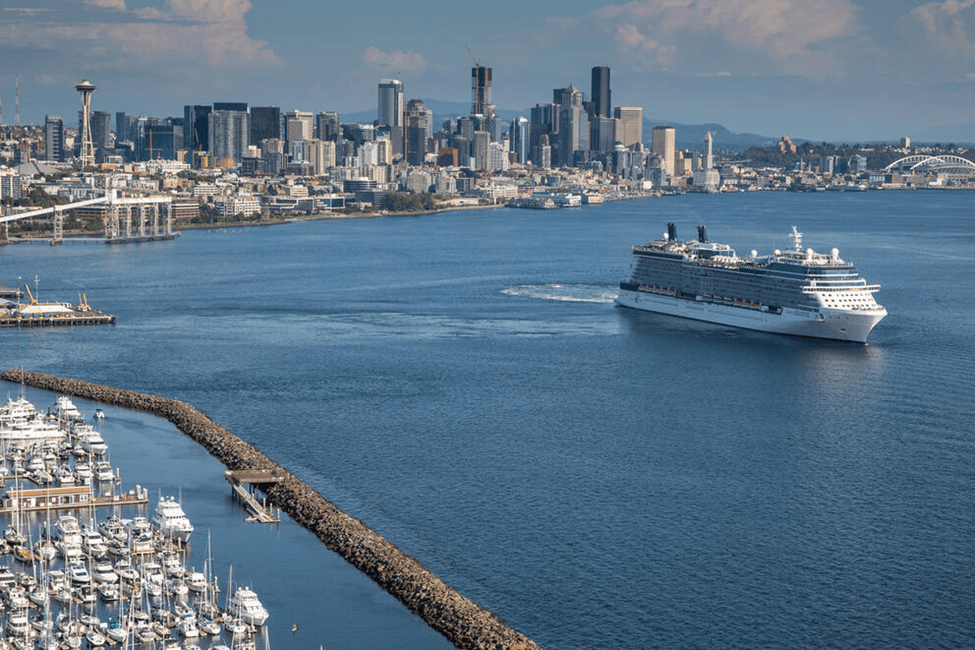
The Royal Caribbean Ovation of the Seas cruise ship leaves a port near Seattle. (Courtesy of the Port of Seattle)

Actually, the Green Corridor concept has been underway for some time.

Last May, the Pacific Coast Business Times reported the Port of Hueneme became the first U.S. port authority to sign agreements to create green automotive shipping corridors with ports and terminals in Japan and South Korea. “The partnerships we have with Japan and South Korea will help mutually grow commercial relationships with existing port clients and allow for a dynamic effort to make a difference around the globe with green shipping and development practices,” Kristin Decas, Port of Hueneme CEO and director, said in a press release.

The Port of Hueneme signed agreements to create green automotive shipping corridors between it and the Port of Yokohama in Japan and the Wallenius Wilhelmsen Pyeongtaek International Ro-Ro automotive terminal in the Port of Pyeongtaek, South Korea.

The agreements will help promote collaboration for environmentally sustainable port development initiatives and automotive logistics to transition to a zero-emission future, according to the release.

In September 2023, the Ports of Los Angeles, Long Beach, and Shanghai unveiled an Implementation Plan Outline for the first trans-Pacific green shipping corridor. Corridor features include:

  • A voluntary partnership of leading maritime goods movement stakeholders, including the Ports of Los Angeles, Long Beach, and Shanghai, with input from leading cargo owners, has developed a Green Shipping Corridor Implementation Plan Outline to accelerate emissions reductions on one of the world’s busiest container shipping routes. 
  • Plan development was supported by C40 Cities, the global network of mayors working to deliver the urgent action needed to confront the climate crisis. C40 is the facilitator of the Green Shipping Corridor, providing support to the cities, ports, and their corridor partners by coordinating, convening, facilitating, and providing communications support for the corridor’s goals.
  • Carrier partners supporting this plan intend to begin deploying reduced or zero lifecycle carbon capable ships on the corridor by 2025. 

X-Press Feeders, the world’s largest independent common carrier, recently signed a memorandum of understanding (MOU) with six European ports: Port of Antwerp Bruges (Belgium), Port of Tallinn (Estonia), Port of Helsinki (Finland), Port of Hamina Kotka (Finland), Freeport of Riga (Latvia) and Klaipeda Port (Lithuania). 

Through this MOU, X-Press Feeders and the participating ports will pool resources and expertise to develop and implement sustainable practices for maritime operations. 

Under the MOU: 

– Parties will work together to further develop infrastructure for the provision and bunkering of alternative fuels such as green methanol, 

– Encourage the development of supply chains for fuel that are zero or near zero in terms of greenhouse gas emissions 

– Provide further training programs for port workers and seafarers with regards to the handling of alternative fuels

– Leverage digital platforms to enhance port call optimization 

– Parties will have regular meetings to update and discuss progress on actions for further developing green shipping corridors. 

X-Press Feeders’ green methanol is sourced from fuel supplier OCI Global. The green methanol is made from green hydrogen and the decomposition of organic matter, such as waste and residues. OCI’s green methanol is independently certified by the International Sustainability and Carbon Certification (ISCC) Association headquartered in Germany. The ISCC system promotes and verifies the sustainable production of biomass, circular and bio-based materials and renewables.  

X-Press Feeders, which was founded in Singapore in 1972, is the world’s largest independent common carrier. X-Press Feeders operates a fleet of more than 100 vessels, calling at more than 180 ports worldwide. X-Press Feeders aims to achieve net zero emission by 2050 and be the ‘Greener Feeder Carrier of Choice’.

Green Shipping

Green shipping refers to transporting goods with as little environmental impact as possible. This may involve using advanced technology to optimize ship design, operations and performance to improve energy and fuel efficiency, prevent pollution, and reduce emissions. The concept of green shipping may be implemented already in the design phase of a new vessel, through continuous improvements or by switching to zero-emission fuels.

Switching to zero-emission fuels is gradually proceeding as more alternative fuels and engines enter the market. More shipbuilders are designing ships with green technology such as dual-fuel engines to accelerate the shift to clean fuels

Green shipping also includes training and educating staff and crew members in marine environmental awareness, including environmental policies, global requirements and compliances, ship energy efficiency, safe bunkering, oil transfer procedures, pollution prevention, garbage handling and disposal, biofouling, and ballast water management.

The International Maritime Organization (IMO) has set a target to reduce the total annual GHG emissions from international shipping by at least 50 percent by 2050. 

So, here’s the skinny on the latest green corridor, from the Port of Seattle.

The Pacific Northwest to Alaska Green Corridor (PNW2Alaska) is a collaboration among 14 organizations to create “a new era of low- and zero- greenhouse gas (GHG) emission cruise travel between Alaska, British Columbia and Washington.”

Decarbonizing this environmentally sensitive route is challenging, the port says. “Urban ports like Seattle and Vancouver can access large amounts of clean electricity to run shoreside operations and may have easier access to alternative fuels being developed. Smaller, remote ports in Alaska have more infrastructure and access challenges. Any decarbonization solution needs to work for cities, boroughs, ports, and cruise lines carrying passengers thousands of miles.”

The PNW2Alaska Green Corridor initiative considers the needs of each partner as it tests the feasibility of local solutions to decarbonize cruises in the Pacific Northwest. “One goal for all partners is that this first cruise-led Green Corridor can be an idea test bed that accelerates decarbonization at the 2,000 river and ocean cruise ports around the world.”

An aerial view of ships, boats, ferries and liners around Vancouver, B.C. (Courtesy of Vancouver Fraser Port Authority)

“No single group can achieve decarbonization. Combatting the reality of climate change takes honesty, accountability, innovation, and partnership,” said Port of Seattle Commission President Hamdi Mohamed of the collaboration. “We want to become a zero-emission port by 2050, and we need communities and industry partners to work together to meet these ambitious goals.”

PNW2Alaska was established in response to the 2021 Clydebank Declaration, a global commitment to create six green corridors on specific shipping routes by 2025, with corridors in operation by 2030, to move the needle toward maritime decarbonization at scale. Twenty-four countries took the commitment, the U.S. and Canada among them.

Next, Green Corridors, Part 2, and “elevating the future of freight.”

Hanford going solar

Hanford by Nicholas Blumhardt vi Flickr CC

The Department of Energy (DOE) entered into negotiations with Hecate Energy, LLC for a solar project capable of delivering up to one gigawatt of clean energy within an 8,000-acre area of DOE-owned land at the Hanford nuclear site as part of the Cleanup to Clean Energy initiative.

The Hanford site is a decommissioned nuclear production complex operated by the United States government on the Columbia River in Washington. It has also been known as Site W and the Hanford Nuclear Reservation. Established in 1943 as part of the Manhattan Project, the site was home to the Hanford Engineer Works and B Reactor, the first full-scale plutonium production reactor in the world. Plutonium manufactured at the site was used in the first atomic bomb, which was tested in the Trinity nuclear test, and in the Fat Man bomb used in the bombing of Nagasaki. For more Hanford’s history, click here.

DOE says the Cleanup to Clean Energy initiative aims to repurpose parts of DOE-owned lands to support the growth of America’s clean energy economy. The latest announcement reinforces the Biden-Harris Administration’s “whole-of-government approach to leveraging federal properties to increase the deployment of clean power through the buildout of utility-scale clean energy projects.”   

Secretary of Energy Jennifer M. Granholm said,  “Since the beginning of the Biden-Harris Administration, we’ve added nearly 90 gigawatts of solar capacity to the grid—enough to power roughly 13 million homes—and we’re building on this historic progress with another massive solar project,” She added that through this latest announcement,  DOE is transforming thousands of acres of land at the Hanford site into a thriving center of carbon-free solar power generation.”

Hecate Energy, LLC was selected to negotiate a real estate agreement for up to 8,000 acres at Hanford that DOE is making available for the development of a gigawatt-scale solar photovoltaic system with battery storage.

The selection was made through a competitive qualifications-based process for evaluating and ranking proposals. The selection comes after public comments on a request for information in August 2023, a Cleanup to Clean Energy information day at Hanford in September 2023, and a request for qualifications issued in March 2024. DOE and Hecate Energy will negotiate a realty agreement; DOE may cancel negotiations and rescind the selection for any reason during this process.

While cleanup at the huge Hanford site could take 50 years, the solar project might be up and running in five to seven years.

In addition to supporting the Administration’s clean energy goals, this project has the potential to benefit the Hanford site, Tribal Nations, and surrounding communities, while complementing local efforts to plan for the future. DOE will complete environmental review and applicable regulatory processes, and continue to communicate and partner with industry, Tribal Nations, communities, stakeholders, regulators, and others as clean energy projects are developed on DOE land. 

More information on the Cleanup to Clean Energy initiative can be found here

Maritime Partners, USCG agree on hydrogen power system

M/V Hydrogen One rendering. Credit: Elliott Bay Design Group

Maritime Partners received a ‘Design Basis Agreement’ from the U.S. Coast Guard for the M/V Hydrogen One towboat that includes e1 Marine hydrogen generator technology that will be used for the vessel’s power plant.

Maritime Partners, LLC, is a New Orleans-based maritime financing company that’s primarily focused on Jones Act vessels. The Maritime Partners press release said, “The M/V Hydrogen One is being designed as a first-of-its-kind vessel using new, cleaner, fuel cell technology that works by converting stored methanol to hydrogen.”

The hydrogen is then put into the fuel cell to generate power for the vessel. A successful string test of this technology was completed in Gothenburg, Sweden, in June 2023, proving it to be a viable option as the sole power generation source for vessel propulsion.

“The signing of this agreement opens the pathway for us to deploy our technological capabilities,” said Bick Brooks, co-founder and CEO of Maritime Partners. “With this, Hydrogen One is one step closer to becoming the world’s first vessel to utilize hydrogen generator technology greatly reducing emissions, increasing efficiency and providing a model for cleaner energy use as the industry continues to seek ways to decarbonize.”

The DBA process sets the rules for new technology proposed for installation on marine vessels. Maritime Partners worked with several industry leaders on the Hydrogen One project, including the Seattle-based Elliott Bay Design Group, which is designing the towboat; Bourg, La.-based Intracoastal Iron Works, which is the selected shipyard; e1 Marine, RIX Industries, Power Cell Group, among others, to work through the U.S. Coast Guard requirements.

Dave Lee, Maritime Partners’ VP of Technology & Innovation, said his company is committed to “developing and utilizing sustainable, clean energy solutions, as the entire maritime industry continues to seek alternative fuel options that are cleaner, greener, and more efficient.”

The signing of this DBA ensures that as the M/V Hydrogen One project advances Maritime Partners will be working towards an agreed-upon framework with the U.S. Coast Guard for the design, arrangement, and engineering aspects of the power system and associated safety systems for plan review, inspection, and eventual certification of the M/V Hydrogen One.

This is an important and necessary step for the eventual development of fossil-free marine propulsion.

Seattle: The smartest U.S. city

Seattle by Edward Stojacovic via Flickr CC

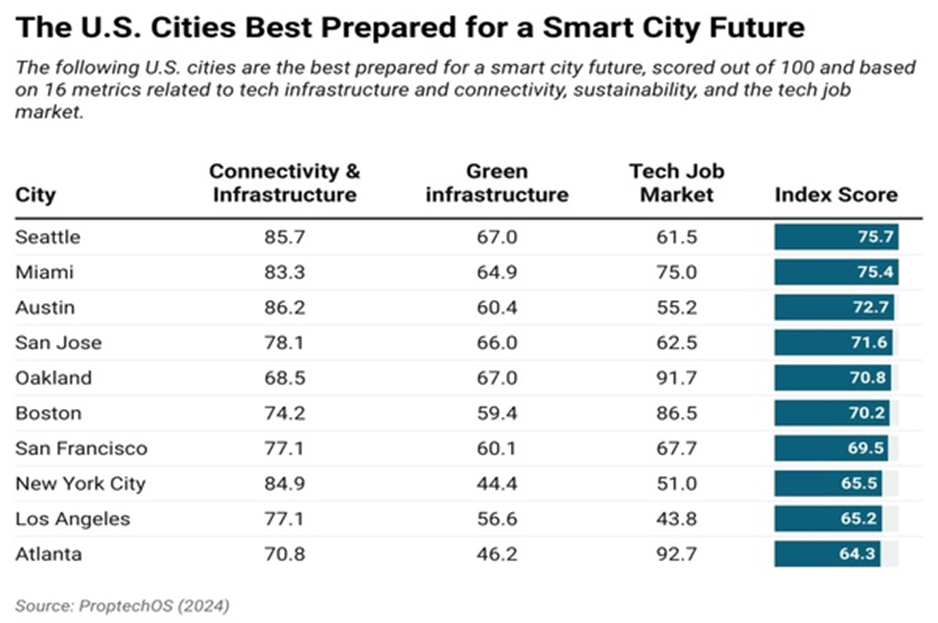
Seattle is the smartest U.S. city, an index report by ProptechOS reveals. Seattle overtook last year’s winner, Austin, Texas, to rank as the smartest city in the United States in 2024, with an overall score of 75.7 out of 100.

“Home to the likes of Amazon and Microsoft, Seattle scores highly in our research for tech infrastructure, with 34 AI companies and 13 IoT companies per 100,000 people,” the report says.

On sustainability, Seattle expanded its tree coverage by 13,700 hectares between 2010 and 2020 and built the equivalent of ten electric vehicle recharging points per 100,000 people.

To determine which cities are the smartest in 2024, ProptechOS analyzed 16 metrics related to connectivity and infrastructure, sustainability, and the tech job market. The report then ranked cities in Europe and the United States and created a weighted index.

The report analyzes three main metrics:

Tech infrastructure and connectivity, including:

  • The number of free WiFi hotspots
  • The number of AI companies
  • The number of AI companies per 100,000 people
  • The number of IoT (Internet of Things) companies 
  • The number of IoT (Internet of Things) companies per 100,000 people
  • Average broadband download speeds (Mbps)
  • Median 5G coverage of population per network provider
  • The number of airports

Green infrastructure:

  • Air quality (exposure to PM2.5)
  • 10-year tree loss (hectares)
  • 10-year tree gain (hectares)
  • The number of electric vehicle charging points
  • The number of electric vehicle charging points per 100,000 people
  • The number of LEED-certified green buildings


The tech job market:

  • The number of tech jobs advertised
  • The number of tech jobs advertised per 100,000 people

So, what is the smartest European city? Paris!

The French capital ranks the highest in Europe among cities best prepared for a smart city future, with an overall score of 76.4, overtaking last year’s winner, London.

Paris leads with several metrics, including 99.9% 5G coverage of the population by the average network provider. It has Europe’s second-highest number (532) of AI specialist companies, and the third-highest number (10,663) of free Wi-Fi hotspots, the report says.

“Paris is also known for its smart traffic management systems, which help monitor noise levels, air quality, and other environmental factors.”

Los Angeles, Long Beach, and Shanghai Ports Implement Outline for First trans-Pacific Green Shipping Corridor

The creation of the first green shipping corridor across the Pacific is taking shape.

Credit: U.S. Naval Institute/Shutterstock

Last week a voluntary partnership of maritime goods movement stakeholders, including the Ports of Los Angeles, Long Beach and Shanghai, some of the largest carriers in the world, and key leading cargo owners unveiled a Green Shipping Corridor Implementation Plan Outline designed to accelerate emissions reductions on one of the world’s busiest container shipping routes across the Pacific Ocean.

The plan, the first of its kind, was developed with support from C40 Cities as part of their effort to reduce carbon emissions from the largest cities in the world.

A joint press release from the stakeholders says the plan “is an important step toward decarbonizing the global supply chains that power our economies and transitioning toward zero lifecycle carbon emission ships.” In addition, it will showcase “cutting-edge goods movement technologies, decarbonization applications and best management practices to enhance efficiency, and catalyze technological, economic and policy efforts to progressively decarbonize shipping and port-related activities.” 

Carrier partners will begin deploying reduced or zero lifecycle carbon capable ships on the corridor by 2025, and work together to demonstrate by 2030 the feasibility of deploying the world’s first zero lifecycle carbon emission container ship(s).

Carrier partners include CMA CGM, COSCO Shipping Lines Co., Ltd., Maersk, and ONE. Core partners include the Shanghai International Port (Group) Co., Ltd., the China Classification Society, and the Maritime Technology Cooperation Centre of Asia.   

Partnership participants will take steps to reduce carbon emissions and harmful pollutant emissions impacting air quality, through methods such as expanding the use of shore power and supporting the development of clean marine fueling infrastructure. Cargo owner partners have set goals to contract with carriers to use zero lifecycle carbon emission shipping services, and in an effort to measure progress toward decarbonization, all partners will develop metrics to track decarbonization progress. 

Gene Seroka, Executive Director of the Port of Los Angeles, said, “This trans-Pacific green corridor will be a model for the global cooperation needed to accelerate change throughout the maritime industry. Most of the emissions associated with moving cargo by ship occur in the mid-ocean part of the journey between ports.  This corridor will help reduce mid-ocean emissions while continuing the work we have done to cut emissions within our ports.”

The initiative will drive emissions reductions across the world’s largest ocean and lead to greener practices from supply chain participants along these vital trade routes, added Mario Cordero, Chief Executive Officer of the Port of Long Beach. “The new and innovative vessel technologies, increased availability of sustainable fuels and better practices created through this green corridor will also impact society’s transition to a cleaner future far beyond the areas served by our ports.”

 C40 Cities is a network of world cities that are working to deliver the urgent action needed “to confront the climate crisis and create a future where everyone, everywhere can thrive.” Mayors of C40 cities are committed to using a science-based and people-focused approach to help the world limit global heating to 1.5°C and build healthy, equitable and resilient communities. Through a Global Green New Deal, mayors are working alongside a broad coalition of representatives from labor, business, the youth climate movement and civil society to go further and faster than ever before. 

Established in 2004, Shanghai Municipal Transportation Commission (SMTC) undertakes the management and safety supervision of the highways and urban roads, road transportation and urban traffic, ports and shipping, and other transportation industries in Shanghai. SMTC also leads the development of the Shanghai International Shipping Center. SMTC coordinates the air, rail and postal transportation management. SMTC aims to optimize the layout of the transport structure, comprehensively balance the transport capacity, and build an integrated transportation system in Shanghai.

Read the Green Shipping Corridor Implementation Plan Outline.

Watch a video about the Green Shipping Corridor.

California Grants Target Big Bucks for Net-Zero Efforts

The California State Transportation Agency (CalSTA) this month announced $1.5 billion in grants as part of efforts to build a “more efficient, sustainable and resilient supply chain.” The program includes approximately $450 million for zero-emission infrastructure, locomotives, vessels and vehicles.

Port of Long Beach CA by Ken Harrell via Flickr CC

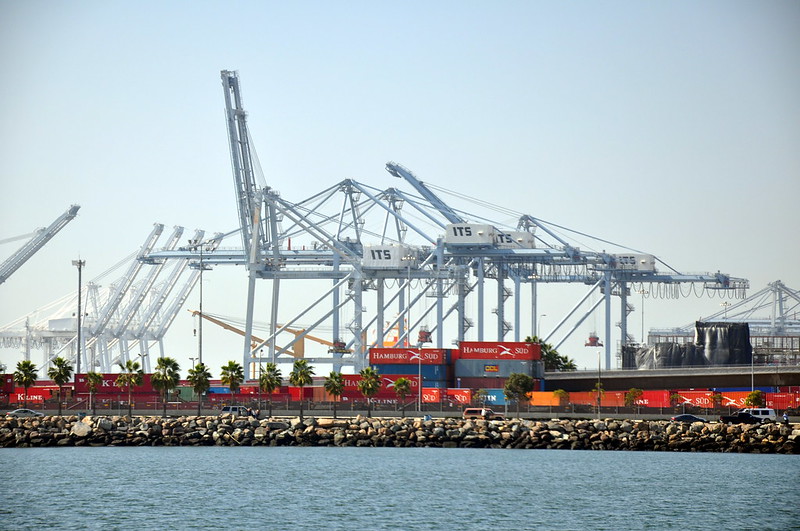
A major chunk of the funding includes a $383.35 million grant for the Port of Long Beach to complete a series of construction and clean-air technology projects to “accelerate” the transformation to zero-emissions operations and enhance the reliability and efficiency of cargo movement.

Also, as part of the state’s Port and Freight Infrastructure Program, nearly $225 million will fund a variety of zero-emissions cargo-moving equipment and support infrastructure projects across the Port of Long Beach, including “top handlers” and other manually operated cargo-handling equipment, as well as tugboats and locomotives. The sum is the single largest grant the port has received to support the zero-emissions goals of the 2017 Clean Air Action Plan Update.

The Port of Los Angeles will receive $233 million in grants from the state to complete infrastructure projects aimed at creating a more efficient and sustainable supply chain. “This nearly quarter-billion-dollar investment in critical Port of Los Angeles projects –– along with an additional $191 million in supporting regional projects –– will accelerate our efforts to boost competitiveness, create jobs and enhance decarbonization efforts,” said Port of Los Angeles Executive Director Gene Seroka. 

The Port of Oakland was awarded $119 million in grant funding from the state under the Port Freight Infrastructure Program (PFIP). The funding will support infrastructure improvements at the port’s maritime facilities and roadways, and to electrify port cargo handling equipment. 

A complete list of projects is available at the following links:

The funding – particularly the investments in zero-emission projects, which account for nearly 40 percent of the Port and Freight Infrastructure Program awards – builds on a partnership between the governments of California and Japan announced in March to collaborate on strategies to cut planet-warming pollution at seaports and establish green shipping corridors as part of the state’s broader strategy to aggressively combat and adapt to climate change.

The investments also follow the California Transportation Commission’s recent approval of $1.1 billion for infrastructure improvements on high-volume freight corridors as part of the Trade Corridor Enhancement Program (TCEP) – for a total state investment in supply chain infrastructure of more than $2.6 billion this month.

Sustaining Supply Chains

Supply chain infrastructure by Lars Plougmann via Flickr CC

Have supply chains ever really been sustainable? Are they more or less sustainable now in the post-pandemic, political and economic climate? Probably less.

Perhaps the problem is with the word itself: what happens when supplies are disrupted by war, weather, politics, economic turbulence and/or pandemics? Are the chains tough and flexible enough to withstand those punches?

Supply Chain Digest reviewed the Top Supply Chain Stories by Month 2022, which presented  pictures of oddities, failures, and “chaos.”

In January, for example, SCD reported that thieves are “opening intermodal containers as freight trains slow down or stop as they approach depots in downtown LA. That also leaves a trash mess around the rails from items the thieves don’t want.” Also, the queue of ships waiting to unload at the ports of Los Angeles and Long Beach reached a record high of 105, even as peak season ended weeks before.

And that was just January. In February Russia invaded Ukraine leading to chaos that is still happening.

In June, CSCMP and Kearney released the 2022 State of Logistics report. One of its metrics, US Business Logistics Costs (USBLC) rose sharply on an absolute basis in 2021 to $1.85 trillion. “That was an increase of 22.4% from an economically weak 2020. With a smaller increase in US nominal GDP (10%) than logistics cost rose last year (22.4%), that took the relative cost of logistics as a share of GDP to 8.0%, up significantly from 7.44% in 2020.”

Members of the International Longshore and Warehouse Union (ILWU), which represents West Coast dock workers, begin working without a contract in July after the current one expired at the end of June. Negotiations with the Pacific Maritime Association (PMA), which represents ports and terminals, began in May and a settlement seems well off.  Port automation is said to be a key issue, raising fears that a stalemate will lead to a dock worker strike and … supply chain chaos.

In December, the battery-powered Tesla Semi was launched as a commercially available product, with news that PepsiCo received the first vehicle. “It’s been a long haul for the electric truck,” according to SCD. “The company’s CEO Elon Musk first announced the cargo truck plans in 2017, with stated expectation for a commercial launch in 2019. At the announcement, Musk also said that on a November 25 test drive, a fully-loaded Tesla Semi (81,000 pounds) traveled 500 miles on a single charge.

Maybe we will all have to slow down in the EV age.

So what about this year? Thomas Insights offered these “top trends” in the supply chain for 2023:

  • An increase in Reshoring and Near-Sourcing initiatives: “Factors ranging from high freight costs, labor shortages, and factory shutdowns to component shortages, transportation delays, and geopolitical conflicts, have compelled many organizations to rethink their approach to supply chain management.” 
  • The Rise of crowdsourced delivery: A global research study found that around 90% of retailers expect to use crowdsourced delivery to handle specific orders by 2028. 
  • Better conditions for truckers: As of October 2022, the U.S. was short almost 78,000 truck drivers. “If current trends continue, the driver shortage could exceed 160,000 by 2031, contributing to significant supply chain delays.”
  • High supply chain costs: “In 2022, increases in fuel prices and ongoing global supply chain disruptions have severely impacted retailers’ margins. Between January and June, for example, the price of regular motor gasoline rose by 49% and the price of diesel fuel rose by 55%. Meanwhile, the ongoing war in Ukraine has seen a decline in food supplies and transportation bottlenecks. Because it’s more expensive, and takes a good deal longer, for retailers to acquire, transport, and store their goods, the prices of commodities are also soaring.”
  • Smaller warehouses: “Because smaller warehouses are both in-demand and hard to come by, recently, the rental rates for units less than 120,000 square feet had risen twice as much compared to bigger warehouses. Another option for retailers is to transform existing retail spaces into fulfillment centers. This is the tactic taken by Walmart, which is in the process of converting many of its 4,700 stores to mini-warehouses.”
  • Major skills gaps remain: “For supply chain leaders, a focus on attracting, recruiting, and retaining top talent will be a key focus in 2023, as will reskilling and upskilling the existing workforce.”
  • Technology investments: “The top supply chain technology trends of 2022 included digital twins, autonomous things, sustainability tools, and analytics everywhere. As companies become more comfortable utilizing these technologies, we will see them grow in 2023.”

Sustainable supply chains? It seems those are three words that don’t work very well together at the moment.

Preserve biodiversity through sustainable forest management

deforested by naqi via Flickr CC

Deforestation is the greatest threat to valuable biodiversity, with around 10 million hectares lost to deforestation each year, mainly for agricultural expansion, according to a new report from the Food and Agriculture Organization of the United Nations (FAO).

The key to thwarting deforestation is sustainable forest management, the report says. “Protecting the animals, plants, fungi, and microorganisms that thrive in forests must become a fundamental goal of sustainable forest management worldwide.”

The world’s forests provide habitats for about 80 percent of amphibian species, 75 percent of bird species and 68 percent of mammal species. In addition, about 60 percent of all vascular plants occur in tropical forests. The importance of sustainable forest management has long been recognized, but more action in a concerted manner is needed.

“The conservation of the world’s biodiversity is utterly dependent on the way in which we interact with and use the world’s forests,” said Tiina Vähänen, Deputy Director of FAO’s Forestry Division, of the report, Mainstreaming Biodiversity in Forestry.  The report was released at the 8th World Forest Week on the sidelines of the 26th Session of FAO’s Committee on Forestry.

The report assesses tools and methods of ensuring the conservation and sustainable use of biodiversity is integrated into forest policy, strategy and management. Through a series of case studies from the Democratic Republic of the Congo, Ethiopia, Finland, Japan, Malaysia, Mexico, Peru, and the United Kingdom it explores lessons learned and identifies good practices.

It recommends actions that governments and development partners can take “to facilitate the mainstreaming of biodiversity in forest management”:

  • Halting and reversing deforestation
  • Combating illegal and unregulated forest activities
  • Recognizing the forest tenure of Indigenous Peoples and local communities
  • Preventing the conversion of natural forests into monospecific forest plantations
  • Ensuring the sustainable management of harvested species
  • Managing and controlling invasive and overabundant species
  • Leveraging global momentum on restoration to enhance biodiversity conservation
  • Adopting a multisectoral perspective
  • Providing economic incentives
  • Facilitating market-based instruments
  • Investing in knowledge and capacity development

“We hope that the wealth of information and recommendations made in this study will inspire action from those involved in forest management and conservation,” said FAO Forestry Officer Kenichi Shono.

The role of forests in maintaining biodiversity is explicitly recognized by the United Nations Strategic Plan for Forests 2017–2030 and in 2019, FAO adopted the Strategy on Mainstreaming Biodiversity across Agricultural Sectors.

Lots of hope, lots of studies: time for action.

Eco-Friendly sourcing and risks

Forest Farming by Sustainability via Flickr CC

An article in Information Today talks about “reigning in” the risks of sustainable sourcing. Written by contributing reporter Samuel Greengard, the report says that building more eco-friendly and sustainable supply chains “is rapidly becoming a top priority for businesses. A clear strategy and the right technology that delivers visibility can reduce risks and improve results.”

That’s great but what has taken so long for businesses to realize this? The climate crisis is well upon us — it should have been a top priority many years ago. One of the great lessons, and confluences, of the pandemic and the climate crisis, is that supply chains of all types must change their thinking dramatically about how they do business.

Back to the article. Greengard writes:

“Product shortages and supply chain disruptions have emerged as a frustrating reality for organizations across a wide swath of industries. Due to a convergence of factors — including the pandemic, the war in Ukraine, and a shortage of raw materials — procuring essential materials and components is increasingly difficult.

“Yet, things suddenly get a whole lot more complicated as soon as sustainable sourcing enters the picture. As businesses strive to meet aggressive climate goals and display results on Environmental, Social and Governance (ESG) reports, the headaches and risks multiply. An inability to obtain materials, products and services can threaten basic operations.”

Supply chains and procurement are risky enterprises and adding green principles and sustainable sourcing to the mix adds even more risk. It’s the cost of doing business, so “reigning in risk” seems like the wrong approach. Actually, it can’t be done in a significant way because risk in the modern era is a pandora’s box.

“The end goal is to establish strategies, policies and processes that fully support sustainable sourcing.”

A nice and obvious thought but extremely difficult to implement as the climate crisis becomes more, well, critical. Better to do the right things, risks or no.

,,,

Note: Things are changing job-wise for yours truly so watch this space for developments with this blog and other endeavors.