Supply chain emissions are mostly “overlooked” by corporations measuring their operational emissions (known as Scope 1 and 2), leaving a huge question mark about the ability to achieve net zero globally by 2050.
That’s a major problem, as a report from Boston Consulting Group indicates: corporations’ “supply chain Scope 3 emissions are 26 times higher than their operational emissions.” And: “Supply Chain Scope 3 Emissions continue to be overlooked, with only 15% of corporates having set a supply chain emissions target.”
Looking at this another way, 85% of businesses have no commitment to cut supply chain emissions!
That undermines the entire net zero exercise and its timeline because those blind spots drive “significant unreported risks for both investors and corporates.”
The BCG analysis examined the climate disclosures made by more than 23,000 companies through CDP (the non-profit Carbon Disclosure Project) this year, which was slso produced in collaboration with Boston Consulting Group (BCG).
For the average large, listed company, supply chain emissions will be 26 times higher than those generated in operations. The discrepancy is even higher in the retail and apparel sectors, at a ratio of 92:1 tonnes and 47:1 tons respectively.
The only sector in which supply chain emissions are equal to or less than operational emissions is fossil fuels.
“As such, having a robust plan to cut supply chain emissions should be part of any corporate climate strategy,” notes BCG.
The report says its conclusions “highlight that the challenge of effectively measuring Scope 3 emissions is widespread and spans industries,” said Sonya Bhonsle, director of strategic accounts at CDP. “Meaningful strides toward emissions reductions require corporates to evaluate their full supply chain, then raise ambition and take accountability. The first step to driving meaningful change toward a 1.5°C-aligned net zero future begins with disclosure.”
Evaluating the spectrum of all emissions is challenging and might be an impossibility. Unless all facets of the drive to net zero are factored in – and not “overlooked” – net zero cannot be achieved.
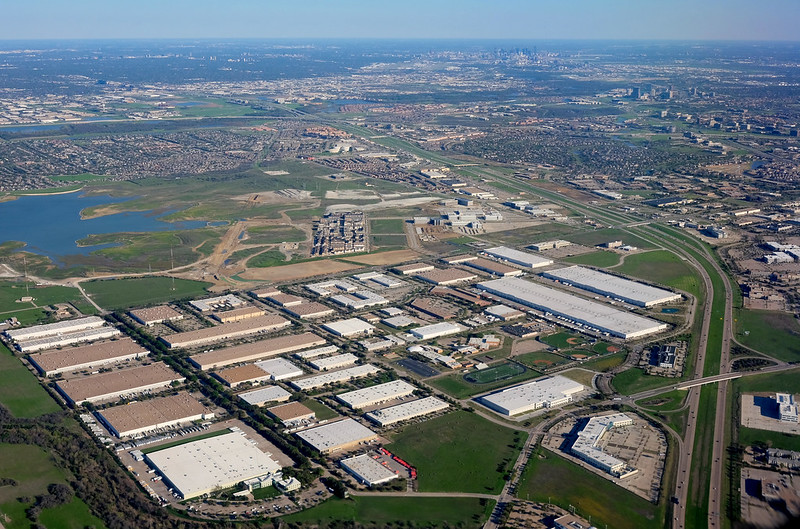
Supply chain infrastructure by Lars Plougmann via Flickr CC
Have supply chains ever really been sustainable? Are they more or less sustainable now in the post-pandemic, political and economic climate? Probably less.
Perhaps the problem is with the word itself: what happens when supplies are disrupted by war, weather, politics, economic turbulence and/or pandemics? Are the chains tough and flexible enough to withstand those punches?
In January, for example, SCD reported that thieves are “opening intermodal containers as freight trains slow down or stop as they approach depots in downtown LA. That also leaves a trash mess around the rails from items the thieves don’t want.” Also, the queue of ships waiting to unload at the ports of Los Angeles and Long Beach reached a record high of 105, even as peak season ended weeks before.
And that was just January. In February Russia invaded Ukraine leading to chaos that is still happening.
In June, CSCMP and Kearney released the 2022 State of Logistics report. One of its metrics, US Business Logistics Costs (USBLC) rose sharply on an absolute basis in 2021 to $1.85 trillion. “That was an increase of 22.4% from an economically weak 2020. With a smaller increase in US nominal GDP (10%) than logistics cost rose last year (22.4%), that took the relative cost of logistics as a share of GDP to 8.0%, up significantly from 7.44% in 2020.”
Members of the International Longshore and Warehouse Union (ILWU), which represents West Coast dock workers, begin working without a contract in July after the current one expired at the end of June. Negotiations with the Pacific Maritime Association (PMA), which represents ports and terminals, began in May and a settlement seems well off. Port automation is said to be a key issue, raising fears that a stalemate will lead to a dock worker strike and … supply chain chaos.
In December, the battery-powered Tesla Semi was launched as a commercially available product, with news that PepsiCo received the first vehicle. “It’s been a long haul for the electric truck,” according to SCD. “The company’s CEO Elon Musk first announced the cargo truck plans in 2017, with stated expectation for a commercial launch in 2019. At the announcement, Musk also said that on a November 25 test drive, a fully-loaded Tesla Semi (81,000 pounds) traveled 500 miles on a single charge.
Maybe we will all have to slow down in the EV age.
So what about this year? Thomas Insights offered these “top trends” in the supply chain for 2023:
An increase in Reshoring and Near-Sourcing initiatives: “Factors ranging from high freight costs, labor shortages, and factory shutdowns to component shortages, transportation delays, and geopolitical conflicts, have compelled many organizations to rethink their approach to supply chain management.”
The Rise of crowdsourced delivery: A global research study found that around 90% of retailers expect to use crowdsourced delivery to handle specific orders by 2028.
Better conditions for truckers: As of October 2022, the U.S. was short almost 78,000 truck drivers. “If current trends continue, the driver shortage could exceed 160,000 by 2031, contributing to significant supply chain delays.”
High supply chain costs: “In 2022, increases in fuel prices and ongoing global supply chain disruptions have severely impacted retailers’ margins. Between January and June, for example, the price of regular motor gasoline rose by 49% and the price of diesel fuel rose by 55%. Meanwhile, the ongoing war in Ukraine has seen a decline in food supplies and transportation bottlenecks. Because it’s more expensive, and takes a good deal longer, for retailers to acquire, transport, and store their goods, the prices of commodities are also soaring.”
Smaller warehouses: “Because smaller warehouses are both in-demand and hard to come by, recently, the rental rates for units less than 120,000 square feet had risen twice as much compared to bigger warehouses. Another option for retailers is to transform existing retail spaces into fulfillment centers. This is the tactic taken by Walmart, which is in the process of converting many of its 4,700 stores to mini-warehouses.”
Major skills gaps remain: “For supply chain leaders, a focus on attracting, recruiting, and retaining top talent will be a key focus in 2023, as will reskilling and upskilling the existing workforce.”
Technology investments: “The top supply chain technology trends of 2022 included digital twins, autonomous things, sustainability tools, and analytics everywhere. As companies become more comfortable utilizing these technologies, we will see them grow in 2023.”
Sustainable supply chains? It seems those are three words that don’t work very well together at the moment.


 wrdforwrd