
The sponge knows?

               Sponge by Olly Clarke via Flickr CC

Perhaps it should be net-below-zero. 

According to a study in Nature, the planet has already passed the 1.5 °C warming threshold that climate crisis experts are saying is the goal for climate action.

At the 2015 Paris Climate Accords, nations agreed not to exceed 1.5 °C, a main guardrail of climate change. But the problem is that the planet has already passed 1.5 °C of warming, according to a new measuring technique that goes back further in time than current methods. The technique involves dating ancient sponges.

“We have an alternate record of global warming,” said coral-reef geochemist Malcolm McCulloch, at the University of West Australia Oceans Institute in Crawley, and lead author of the study. “It looks like temperatures were underestimated by about half a degree.”

However, McCulloch says that long-lived marine sponges can provide indications of temperature as far back as the eighteenth century. He and his colleagues analyzed the ratio of the elements strontium to calcium in the 300-year-old calcium carbonate skeletons of a coral-like species of sponge, Ceratoporella nicholsoni, that grows off the coasts of Puerto Rico. This ratio changes only with changes in water temperature, making it a sort of thermometer, according to the study published in Nature Climate Change.

The sponges were sampled from one particular section in the Caribbean — the only place where they are found. They were collected at a depth of 33–91 meters, in what’s called the ocean mixed layer. “Sea-surface temperature can be highly variable on top,” McCulloch was quoted as saying. “But this mixed layer represents the whole system down to a couple hundred meters, and it’s in equilibrium with the temperatures in the atmosphere.”

The sponge skeletons suggest that the planet started to warm up in the mid-1860s, during the period currently defined as the pre-industrial baseline.

“The baseline is where we measure our current temperatures from, so when we say 1.5 [degrees of warming], it’s to do with this reference point,” said McCulloch.

McCulloch and colleagues have calculated that global temperatures had in fact increased by 0.5 °C more than what was estimated by the IPCC. “That’s a huge difference relative to the total amount of warming,” says McCulloch. Furthermore, the planet exceeded 1.5 °C of warming by around 2010–2012 and is on track to surpass 2 °C in the next few years.

Climate change is all about calibration and constantly trying to catch up; our planet operates on its own time schedule, no matter how hard we try to understand.
Copping out

Will the COP 28 meeting make much of a difference in the climate crisis discussion and action?

 Some rights reserved by equipo.comunicacion via Flickr CC

Probably not, but it is all we’ve got right now.

The 2023 United Nations Climate Change Conference or Conference of the Parties of the UNFCCC, more commonly referred to as COP28, is the 28th United Nations Climate Change conference, held from 30 November until 12 December 2023 at Expo City, Dubai. 

Here’s a round-robin of takes from various publications and organizations on the status of, and chances for success, of COP 28:

  • Climate Home News: “Annual emissions may have just peaked but the world’s temperature will keep rising until we reach net zero. Ahead of every COP climate talks, think tanks, campaign groups and United Nations agencies get their number-crunchers to produce a load of reports summarising where the fight against climate change is at. These reports can start to induce deja vu. We’re doing some stuff to tackle climate change, usually more than the year before. But not fast enough to avoid some pretty terrifying destruction.”
  • “Broken record,” is the title of the UN’s latest emissions gap report. “Temperatures hit new highs yet world fails to cut emissions (again),” the subtitle.
  • Nature: “Is it too late to keep global warming below 1.5 °C? Chances are rapidly disappearing to limit Earth’s temperature rise to the globally agreed mark, but researchers say there are some positive signs of progress.”

Editors always told me to try to find some positives in any story. That search is getting more difficult.

  • The Indian Express: “Ahead of the COP 28 summit, have we lost the fight against climate change? Emissions are rising, there’s not enough money to deal with a worsening climate, and its harmful effects become more apparent every day. What’s the way ahead? Just like every previous year, the situation appears more grim, and the progress more marginal, than earlier.”
  • report by Climate Analytics finds a 70% chance that emissions will peak in 2023 and start falling in 2024, mainly thanks to electric vehicles, solar and wind power.
  • Triple Pundit: “All in all, a multitude of complex and interconnected challenges need to be addressed at COP28 for the world to get back on track. Summit President Sultan Al Jaber emphasized in his letters to parties that ‘it is not too late to correct course’ and ‘we’re playing catch-up to keep 1.5°C alive.’ He calls for ‘optimism and unwavering resolve’ at the talks this year, though the outcome remains to be seen.”
  • Greenfin Weekly: “The feasibility of “keeping 1.5 alive” appears increasingly tenuous. 2023 saw the hottest month on record since 1880, and the global average temperature briefly passed 2 degrees Celsius of warming from the pre-industrial era for the first time ever in mid-November. “It will require an estimated $4 trillion annually by 2030 to transition to a clean economy that reverses those trends, and Al Jaber has noted that the money isn’t flowing fast enough.
  • It will take a real step change at COP28 to rewrite that equation, said Elise Larkin, director of global economic recovery at The Rockefeller Foundation.”

The way ahead is not very promising. If the private sector, especially the companies that have benefited the most from causing the climate crisis, can somehow step up and weigh-in, maybe progress will occur.

Is that a positive or a dream?

Featured

FAO: Transform agrifood systems to adapt and mitigate climate change

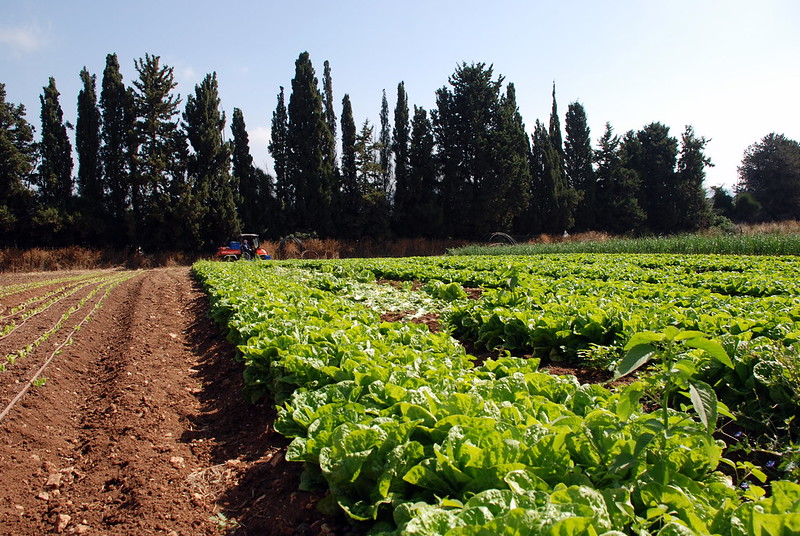
Agriculture by StateofIsrael via Flickr CC

The UN Food and Agriculture Organization asserts that transforming agrifood systems is essential to adapt to human-caused climate change and reduce greenhouse gas emissions. FAO underscored this in response to the March report published by the Intergovernmental Panel on Climate Change (IPCC).

The Synthesis Report, the last of the Sixth Assessment report cycle, confirms that human activities, mainly through emissions of greenhouse gases, have unequivocally caused global warming. These include unsustainable energy use, land use, and land-use change, as well as consumption and production patterns.

FAO says the report “underlines that 22% of global greenhouse gas emissions right now come from agriculture, forestry, and land use.” The synthesis report also paints a clear way ahead, noting that the solution lies in climate-resilient development and holistic measures to adapt to climate change that also reduce or avoid greenhouse emissions.

“Agriculture and food security are already threatened by climate change, in particular in Small Island Developing States, Least Developed Countries and Land-Locked Countries, affecting the livelihoods of smallholder farmers, pastoralists, forest-dependent people, fishers, Indigenous Peoples and women”, said FAO Deputy Director-General Maria Helena Semedo.

“We need to act now at scale. Building sustainable and resilient agrifood systems is fundamental to tackling the climate crisis, food insecurity and biodiversity loss,” she said.

Climate action through food and agriculture

IPCC scientists highlight with high confidence that many agriculture, forestry and land use options provide adaptation and mitigation benefits that could be upscaled in the near term across most regions.

For example, conservation, improved management, and restoration of forests and other ecosystems offer the largest opportunity to counteract the economic damages caused by climate-related disasters.

 Examples of effective adaptation options include cultivar improvements, on-farm, water management and storage, soil moisture conservation, irrigation, agroforestry, community-based adaptation, farm and landscape level diversification in agriculture and sustainable land management.

The IPCC also notes the importance of integrated approaches to meet multiple objectives, including food security, and underscores that shifting to healthy diets and reducing food waste, along with sustainable agriculture, can reduce impacts on ecosystems and free up land for reforestation and biodiversity restoration.

“The report shows how agriculture can be central to climate action. It highlights that Agriculture is already impacted by climate change, showing that its adaptation is urgent to ensure food security and nutrition leaving no one behind”, FAO Deputy Director-General Semedo highlighted.

“Agriculture including crop and livestock production, forestry, fisheries and aquaculture, offers solutions that contribute to both adaptation and mitigation,” she added.

The synthesis further highlights how central water is to all sectors for their adaptation. In this context, FAO supports integrated water resources management to face water-related challenges in the context of climate change. Looking ahead, the UN 2023 Water Conference is of particular importance for Agriculture.

The FAO Strategy on Climate Change looks beyond food production by considering crops and livestock, forests, fisheries and aquaculture and related value chains, livelihoods, biodiversity and ecosystems in a holistic manner, as well as embracing the indispensable role of women, youth and Indigenous Peoples, as essential agents of change.

It considers different contexts and realities, including rural, peri-urban and urban areas, and supporting countries, as appropriate, in designing, revising and implementing agrifood systems related parts of their country-driven commitments and plans, including nationally determined contributions (NDCs), national adaptation plans (NAPs), nationally appropriate mitigation actions, long-term low greenhouse gas emission development strategies, disaster risk reduction plans and other related targets and commitments.

It’s time to implement the strategy and make the Green Climate Fund (GFC), the world’s largest climate fund mandated to support developing countries to raise and achieve the ambition of their national climate plans, an effective reality.

Since becoming partners in 2016, FAO and the GCF have been scaling up climate investments in high-impact projects that make the agriculture, forestry and fisheries sectors more efficient, inclusive, sustainable and resilient to climate change. The portfolio now exceeds over 1 billion.

Beyond the brink

time bomb by Dirk Knight via Flickr CC

When it comes to the climate crisis we’re not on the brink of disaster, we’re beyond the brink.

A “Synthesis Report” report released Monday from the United Nations Intergovernmental Panel on Climate Change (IPCC), also known as the Sixth Assessment Report (AR6) says the world is likely to miss its climate target — limiting warming to 1.5 degrees Celsius (2.7 degrees Fahrenheit) above preindustrial temperatures — within a decade.

Climate change has already caused “substantial damages, and increasingly irreversible losses, in terrestrial, 36 freshwater, cryospheric, and coastal and open ocean ecosystems.”  Losses of species have been driven by increases in the magnitude of heat extremes with “mass mortality” events recorded on land and in the ocean, the report continues. Impacts on some ecosystems are “approaching Irreversibility,” such as the impacts of hydrological changes resulting from the retreat of glaciers, or the changes n some mountain and Arctic ecosystems driven by permafrost thaw.

Climate change has reduced food security and affected water security, “hindering efforts to meet Sustainable Development Goals.”

All the widely documented impacts from human-caused climate change “continue to intensify,” the report says.

Humanity has reached a “critical moment in history,” IPCC Chair Hoesung Lee asserted: The world has all the knowledge, tools and financial resources needed to achieve its climate goals, but after decades of disregarding scientific warnings and delaying climate efforts, the window for action is rapidly closing.

At the current global pace of carbon emissions, the world will burn through its remaining “carbon budget” by 2030. Doing so would put the long-term goal of keeping global warming to 1.5 degrees Celsius (2.7 degrees Fahrenheit) irrevocably out of reach. Keeping warming below th1.5 degrees Celsius threshold would help save the world’s coral reefs and preserve the Arctic’s protective sea ice layer. It could also stave off dramatic sea level rise by avoiding further destabilization in Antarctica and Greenland.

So we are all sitting on a powder keg, a loudly ticking time bomb, and while we may have the ability to defuse this bomb, can we do it?

A Desperate Read from IPCC

Sometimes we have to take it slowly, but this is not the time. The IPCC report is not a gentle meditation.

Climate change by quote catalog

The Sixth Assessment Report of the .Intergovernmental Panel on Climate Change, released earlier this month underscores and update what the IPCC has stated for many year.

The 42-page “Summary for Policymakers” — the full report is more than 3400 densely-written  pages — is more of the same, only more so.

Here are some of the summary’s findings:

  • On the “current state” of the climate: “It is unequivocal that human influence has warmed the atmosphere, ocean and land. Widespread and rapid changes in the atmosphere, ocean, cryosphere and biosphere have occurred.” Each of the last four decades” has been successively warmer than any decade that preceded it since 1850. Global surface temperature in the first two decades of the 21st century (2001-2020) was 0.99 [0.84- 1.10] °C higher than 1850-1900.”
  • “The scale of recent changes across the climate system as a whole and the present state of many aspects of the climate system are unprecedented over many centuries to many thousands of years.”
  •  “Human-induced climate change is already affecting many weather and climate extremes in every region across the globe. Evidence of observed changes in extremes such as heatwaves, heavy precipitation, droughts, and tropical cyclones, and, in particular, their attribution to human influence, has strengthened since AR5 (the fifth Assessment Report).”
  • “Improved knowledge of climate processes, paleoclimate evidence and the response of the climate system to increasing radiative forcing gives a best estimate of equilibrium climate sensitivity of 3°C with a narrower range compared to AR5.”

On “possible climate futures”:

  • “Global surface temperature will continue to increase until at least the mid-century under all emissions scenarios considered. Global warming of 1.5°C and 2°C will be exceeded during the 21st century unless deep reductions in CO2 and other greenhouse gas emissions occur in the coming decades.”
  • “Many changes in the climate system become larger in direct relation to increasing global warming. They include increases in the frequency and intensity of hot extremes, marine heatwaves, and heavy precipitation, agricultural and ecological droughts in some regions, and proportion of intense tropical cyclones, as well as reductions in Arctic sea ice, snow cover and permafrost.”
  • “Continued global warming is projected to further intensify the global water cycle,including its variability, global monsoon precipitation and the severity of wet and dry events.”
  • “Many changes due to past and future greenhouse gas emissions are irreversible for centuries to millennia, especially changes in the ocean, ice sheets and global sea level.”
  • “With further global warming, every region is projected to increasingly experience concurrent and multiple changes in climatic impact-drivers. Changes in several climatic impact-drivers would be more widespread at 2°C compared to 1.5°C global warming and even more widespread and/or pronounced for higher warming levels.”

Even in scenarios with lower GHG emissions, it will take 20 years or more to detect “discernible differences”  in global surface temperature trends. In short, this crisis is virtually “irreversible.” Tough stuff indeed. And it seems hopeless.

We want to see with wisdom and clarity what is going on with our planet and accept the facts in front of us. The time to act is now

Further reading:

Porsche Demands 1,300 Suppliers Use Renewable Energy