Featured

FAO: Transform agrifood systems to adapt and mitigate climate change

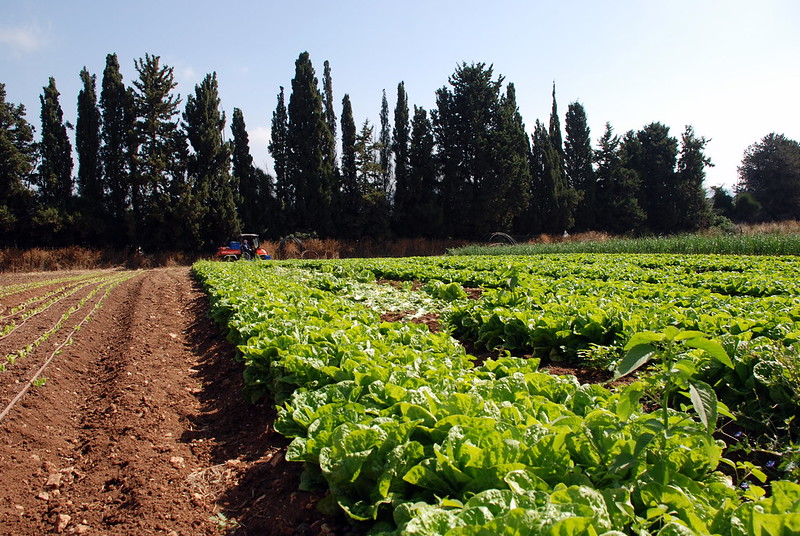
Agriculture by StateofIsrael via Flickr CC

The UN Food and Agriculture Organization asserts that transforming agrifood systems is essential to adapt to human-caused climate change and reduce greenhouse gas emissions. FAO underscored this in response to the March report published by the Intergovernmental Panel on Climate Change (IPCC).

The Synthesis Report, the last of the Sixth Assessment report cycle, confirms that human activities, mainly through emissions of greenhouse gases, have unequivocally caused global warming. These include unsustainable energy use, land use, and land-use change, as well as consumption and production patterns.

FAO says the report “underlines that 22% of global greenhouse gas emissions right now come from agriculture, forestry, and land use.” The synthesis report also paints a clear way ahead, noting that the solution lies in climate-resilient development and holistic measures to adapt to climate change that also reduce or avoid greenhouse emissions.

“Agriculture and food security are already threatened by climate change, in particular in Small Island Developing States, Least Developed Countries and Land-Locked Countries, affecting the livelihoods of smallholder farmers, pastoralists, forest-dependent people, fishers, Indigenous Peoples and women”, said FAO Deputy Director-General Maria Helena Semedo.

“We need to act now at scale. Building sustainable and resilient agrifood systems is fundamental to tackling the climate crisis, food insecurity and biodiversity loss,” she said.

Climate action through food and agriculture

IPCC scientists highlight with high confidence that many agriculture, forestry and land use options provide adaptation and mitigation benefits that could be upscaled in the near term across most regions.

For example, conservation, improved management, and restoration of forests and other ecosystems offer the largest opportunity to counteract the economic damages caused by climate-related disasters.

 Examples of effective adaptation options include cultivar improvements, on-farm, water management and storage, soil moisture conservation, irrigation, agroforestry, community-based adaptation, farm and landscape level diversification in agriculture and sustainable land management.

The IPCC also notes the importance of integrated approaches to meet multiple objectives, including food security, and underscores that shifting to healthy diets and reducing food waste, along with sustainable agriculture, can reduce impacts on ecosystems and free up land for reforestation and biodiversity restoration.

“The report shows how agriculture can be central to climate action. It highlights that Agriculture is already impacted by climate change, showing that its adaptation is urgent to ensure food security and nutrition leaving no one behind”, FAO Deputy Director-General Semedo highlighted.

“Agriculture including crop and livestock production, forestry, fisheries and aquaculture, offers solutions that contribute to both adaptation and mitigation,” she added.

The synthesis further highlights how central water is to all sectors for their adaptation. In this context, FAO supports integrated water resources management to face water-related challenges in the context of climate change. Looking ahead, the UN 2023 Water Conference is of particular importance for Agriculture.

The FAO Strategy on Climate Change looks beyond food production by considering crops and livestock, forests, fisheries and aquaculture and related value chains, livelihoods, biodiversity and ecosystems in a holistic manner, as well as embracing the indispensable role of women, youth and Indigenous Peoples, as essential agents of change.

It considers different contexts and realities, including rural, peri-urban and urban areas, and supporting countries, as appropriate, in designing, revising and implementing agrifood systems related parts of their country-driven commitments and plans, including nationally determined contributions (NDCs), national adaptation plans (NAPs), nationally appropriate mitigation actions, long-term low greenhouse gas emission development strategies, disaster risk reduction plans and other related targets and commitments.

It’s time to implement the strategy and make the Green Climate Fund (GFC), the world’s largest climate fund mandated to support developing countries to raise and achieve the ambition of their national climate plans, an effective reality.

Since becoming partners in 2016, FAO and the GCF have been scaling up climate investments in high-impact projects that make the agriculture, forestry and fisheries sectors more efficient, inclusive, sustainable and resilient to climate change. The portfolio now exceeds over 1 billion.
FAO report: fisheries and aquaculture slammed by Covid

United Nations Flag by sanjitbakshi via Flickr

Disruptions in the fisheries and aquaculture sectors will increase as supply and consumption are affected by lockdown, according to the report from the Food and Agriculture Organization of the United Nations (FAO).

The February report, “The impact of COVID-19 on fisheries and aquaculture food systems,” was featured during the 34th session of the Committee on Fisheries (COFI) hosted by FAO.

Fish supply, consumption and trade revenues for 2020 will all likely decline due to containment restrictions, the report noted, while global aquaculture production is expected to fall by about 1.3 percent, the first fall recorded by the sector in several years.

“The pandemic has caused widespread upheaval in fisheries and aquaculture as production has been disrupted, supply chains have been interrupted and consumer spending restricted by various lockdowns,” said FAO Deputy Director-General, Maria Helena Semedo. “Containment measures have provoked far-reaching changes, many of which are likely to persist in the long term.”

The FAO report indicated that in aquaculture there is growing evidence that unsold production will result in increasing levels of live fish stocks, creating higher costs for feeding as well as a greater number of fish mortalities. Sectors with longer production cycles, such as salmon, cannot adjust rapidly to the demand shifts.

Global catches from wild fisheries are also expected to have declined slightly in 2020, as, overall, there has been a reduced fishing effort due to COVID‑19-related restrictions on fishing vessel crews and poor market conditions.

As a result of Covid-19, consumer preferences have shifted. While demand for fresh fish has waned, consumer demand for packaged and frozen products has grown as households look to stock up on non-perishable food.

Aggregate prices for 2020, as measured by the Fish Price Index are down year-on-year for most traded species. Restaurant and hotel closures in many countries have also led to a fall in demand for fresh fish products.

The climate crisis is also impacting the food, fish, forest and water sectors

– In other news from FAO, two projects, one focusing on agroforestry in sub-Saharan Africa and the other on water management in the Near East, have received $80 million, paving the way to improve the livelihoods of more than 250 000 smallholders.

The Board of the Green Climate Fund (GCF) approved the funds for initiatives in the Republic of Congo and the Hashemite Kingdom of Jordan. Both are the first GCF-funded projects in those countries, underscoring FAO’s focus on expanding the use of global tools to advance climate action in food and agriculture. FAO’s GCF portfolio has now risen to $878 million, supporting 15 projects.

– Opening the high-level ceremony to mark the International Day of Forests, the Director-General of the Food and Agriculture Organization of the United Nations (FAO), QU Dongyu, described forest restoration as a path to global recovery and well-being. 

“Healthy forests mean healthy people. Forests provide us with fresh air, nutritious foods, clean water and space for recreation, and also for civilization to continue,” the Director-General said. 

More than 1 billion people depend on forest foods and 2.4 billion people use fuelwood or charcoal to cook their daily meals, noted the Director General. “Forests are also green pharmacies. In developing countries, up to 80 percent of all medicinal drugs are plant-based.” 

Yet, despite their importance, the area of forests continues to shrink. FAO’s most recent Global Forest Resources Assessment says that each year, the world loses more than 10 million hectares of forest – an area about twice the size of Costa Rica. “We can change this. We have the knowledge and the tools,” said the Director-General.

– Covering 41 percent of the global land area and home to 2.7 billion people, drylands supply about 60 percent of the world’s food production and support more than a quarter of our forests and woodlands, according to Building climate-resilient dryland forests and agrosilvopastoral production systems.   

With four billion people projected to be living in drylands by 2050,the publication outlines the transformational change required to ensure the sustainability of food production systems under climate change and after COVID-19, which includes giving a greater voice to marginalized dryland populations. 

FAO also launched the report, Local financing mechanisms for Forest and Landscape Restoration to highlight financing opportunities for restoration that support local-level actors, including smallholder farmers, foresters and landowners.

– Acute hunger is set to soar in over 20 countries in the coming months without urgent and scaled-up assistance, warn the UN’s Food and Agriculture Organization (FAO) and World Food Programme (WFP) in a new report issued on 23 March.

Yemen, South Sudan and northern Nigeria top the list and face catastrophic levels of acute hunger, with families in pockets of South Sudan and Yemen already in the grip of or at risk of starvation and death according to the Hunger Hotspots report.   

Although the majority of the affected countries are in Africa, acute hunger is due to rise steeply in most world regions – from Afghanistan in Asia, Syria and Lebanon in the Middle East, to Haiti in Latin America and the Caribbean. 

Already, over 34 million people are grappling with emergency levels of acute hunger (IPC4) – meaning they are one step away from starvation – across the world. 

“The magnitude of suffering is alarming. It is incumbent upon all of us to act now and to act fast to save lives, safeguard livelihoods and prevent the worst situation,” said Qu. 

“In many regions, the planting season has just started or is about to start. We must run against the clock and not let this opportunity to protect, stabilize and even possibly increase local food production slip away,” urged Qu.  

“We are seeing a catastrophe unfold before our very eyes. Famine – driven by conflict, and fuelled by climate shocks and the COVID-19 hunger pandemic – is knocking on the door for millions of families,” said WFP Executive Director David Beasley. 

“We urgently need three things to stop millions from dying of starvation: the fighting has to stop, we must be allowed access to vulnerable communities to provide life-saving help, and above all we need donors to step up with the US$ 5.5 billion we are asking for this year,” he added.