Cutting greenhouse gases

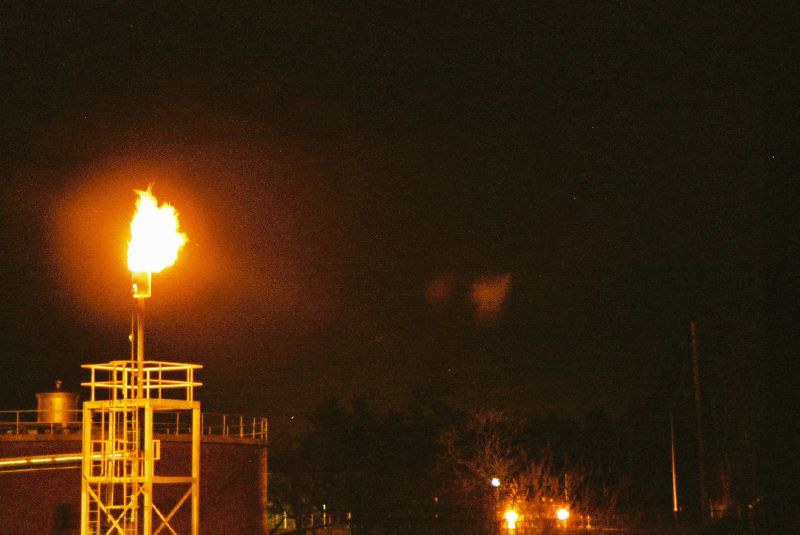
Fireball by Dan via Flickr CC

Congress and the Biden Administration are taking the first steps to reduce emissions of two dangerous greenhouse gases: methane, which is emitted during natural gas extraction and by leaks from oil and gas wells, and hydrofluorocarbons, which are used in refrigeration and air-conditioning systems.

Both of these planet-warming gases are many times more potent than carbon dioxide, even though they don’t stay in the atmosphere as long. Scientists say dealing with them is critical to slowing the pace of global warming.

The Senate, using a rarely invoked law to reverse a Trump administration rollback on methane, essentially reinstated an Obama-era regulation imposing controls on leaks of methane from oil and gas wells. And the Environmental Protection Agency moved to implement new curbs on the production and importation of HFCs, which Congress approved late last year.

“By taking fast action on these short-lived climate pollutants, of which HFCs are the most potent, we can buy ourselves some time and actually help avoid climate tipping points,” said Kristen N. Taddonio, a senior climate and energy adviser for the Institute for Governance & Sustainable Development.

The 52-42 Senate vote reinstates the Oil and Natural Gas New Source Performance Standards, a handful of Obama-era regulations on methane emissions that were rolled back by former President Donald Trump in August 2020. The measure drew support from every Senate Democrat, as well as Republican Sens. Susan Collins (R-ME), who has opposed GOP efforts to deregulate methane emissions in the past; Lindsey Graham (R-SC); and Rob Portman (R-OH). The rule is expected to be taken up and passed by the House of Representatives in this month.

The standards alone won’t be sufficient to meet the president’s pledge to slash greenhouse gas emissions by 50 to 52 percent compared with 2005 levels by 2030 — a goal meant to help keep global warming this century to 1.5 degrees Celsius, but it represents an important step toward meeting that commitment, because methane is seen as a major driver of climate change.

Senate Majority Leader Chuck Schumer called the Senate’s move “one of the most important votes, not only that this Congress has cast but has been cast in the last decade, in terms of our fight against global warming.”

Progress and hope are back in the picture.

Time to act fast

Carbon Visuals: One day’s carbon dioxide emissions from the UN Secretariat Building via Flickr

According to a recent article by two climate experts in the online publication, The Conversation, there are more reasons for optimism on climate change than we’ve seen for decades. The authors, Gabi Mocatta, Lecturer in Communication, Deakin University, and Research Fellow in Climate Change Communication, Climate Futures Program, University of Tasmania, and Rebecca Harris

Senior Lecturer in Climatology, Director, Climate Futures Program, University of Tasmania, say two big reasons help explain the optimism:

1. The science on climate change “is now more detailed than ever. Although much of it is devastating, it’s also resoundingly clear

2. “It’s now also unequivocal that people want action”

Above all, the article maintains we need to act fast. “The 2020s really are our final chance: our “Earthshot” moment to start to repair the planet after decades of inaction.”

More news on the climate crisis front:

– President Joe Biden committed the U.S. to cutting fossil fuel emissions in half by 2030. It’s a good thing, but will it be enough? Does it put the U.S. back in the forefront of leadership on climate change? President Biden will commit the U.S. to cutting emissions in half by 2030 during a virtual climate summit with 40 world leadersNew York Times

– The U.S. and China agreed to work together on climate change “with urgency.” Well, that is the headline; we’ll see what “working together” means for each party. US envoy Kerry confirms cooperation with China on climate change – Kyodo News Plus

Catch the wind

Wind Turbine by Rachel Schowalter, Massachusetts Clean Energy Center via Flickr

Climate change is deadly serious; but it strikes me the word change is too soft a term because the change occurring is not anything like changing your clothes or your diet or your drapes. Rather it’s a climate crisis.

Climate crisis is a better way to think about what is happening to the planet, and after four years of dreadful neglect, denial and inaction from the previous administration, the Biden administration is taking the crisis seriously. And it is taking action.

The White House last week unveiled a goal to expand the nation’s nascent offshore wind energy industry in the coming decade by opening new areas to development, accelerating permits, and boosting public financing for projects.

Then there is Biden’s American Jobs Plan, which includes $85 billion for mass-transit systems, another $80 billion for Amtrak to expand service and make needed repairs, and $100 billion to upgrade the nation’s electrical grid. The infrastructure plan also would allocate $174 billion to spur the transition to electric vehicles, $35 billion for research in emissions-reducing and climate-resilience technologies, and $10 billion to create a New Deal-style Civilian Climate Corps.

The plan will lead to “transformational progress in our effort to tackle climate change,” Biden said, speaking at a carpenters’ training facility outside Pittsburgh.

A Reuters report provided more detail on the offshore wind power plan: “The blueprint for offshore wind power generation comes after the Biden administration’s suspension of new oil and gas leasing auctions on federal lands and waters, widely seen as a first step to fulfilling the president’s campaign promise of a permanent ban on new federal drilling to counter global warming.

The United States, with just two small offshore wind facilities, has lagged European nations in developing the renewable energy technology.

“We’re ready to rock and roll,” National Climate Advisor Gina McCarthy said at a virtual press conference to announce the administration’s moves.

According to the report, the plan sets a target to deploy 30 gigawatts of offshore wind energy by 2030, which the administration said would be enough to power 10 million homes and cut 78 million metric tons of carbon dioxide per year.

One of the first steps will be to open a new offshore wind energy development zone in the New York Bight, an area off the densely populated coast between Long Island, New York and New Jersey, with a lease auction there later this year.

The industry will employ 44,000 workers directly by 2030 and support 33,000 additional support jobs. Many of those jobs will be created at new factories that will produce the blades, towers and other components for massive offshore wind turbines and at shipyards where the specialized ships needed to install them will be constructed. The administration predicted the nation would see port upgrade investments related to offshore wind of more than $500 million.

The administration said it will also aim to speed up project permits, including environmental reviews, and provide $3 billion in public financing for offshore wind projects through the Department of Energy.

The United States’ two small offshore wind farms include the 30-megawatt Block Island Wind Farm off Rhode Island and a two-turbine pilot project off the coast of Virginia. There are more than 20 GW of proposed projects in various stages of development.

Europe, by contrast, has more than 20 GW of capacity already and plans to expand that more than ten-fold by 2050. Many of the companies developing U.S. projects are European, including Norway’s Equinor, Denmark’s Orsted, and a joint venture between Avangrid, the U.S. arm of Spain’s Iberdrola, and Denmark’s Copenhagen Infrastructure Partners.

So, it is a world climate crisis.

Further reading:

Biden’s Jobs Plan Is Also a Climate Plan. Will It Make a Difference?

To See How Biden’s Infrastructure Plan Will Address Climate Change, Look at the Details

IMO publishes short list of actions for quick carbon footprint reduction in shipping