Copping out

Will the COP 28 meeting make much of a difference in the climate crisis discussion and action?

 Some rights reserved by equipo.comunicacion via Flickr CC

Probably not, but it is all we’ve got right now.

The 2023 United Nations Climate Change Conference or Conference of the Parties of the UNFCCC, more commonly referred to as COP28, is the 28th United Nations Climate Change conference, held from 30 November until 12 December 2023 at Expo City, Dubai. 

Here’s a round-robin of takes from various publications and organizations on the status of, and chances for success, of COP 28:

  • Climate Home News: “Annual emissions may have just peaked but the world’s temperature will keep rising until we reach net zero. Ahead of every COP climate talks, think tanks, campaign groups and United Nations agencies get their number-crunchers to produce a load of reports summarising where the fight against climate change is at. These reports can start to induce deja vu. We’re doing some stuff to tackle climate change, usually more than the year before. But not fast enough to avoid some pretty terrifying destruction.”
  • “Broken record,” is the title of the UN’s latest emissions gap report. “Temperatures hit new highs yet world fails to cut emissions (again),” the subtitle.
  • Nature: “Is it too late to keep global warming below 1.5 °C? Chances are rapidly disappearing to limit Earth’s temperature rise to the globally agreed mark, but researchers say there are some positive signs of progress.”

Editors always told me to try to find some positives in any story. That search is getting more difficult.

  • The Indian Express: “Ahead of the COP 28 summit, have we lost the fight against climate change? Emissions are rising, there’s not enough money to deal with a worsening climate, and its harmful effects become more apparent every day. What’s the way ahead? Just like every previous year, the situation appears more grim, and the progress more marginal, than earlier.”
  • report by Climate Analytics finds a 70% chance that emissions will peak in 2023 and start falling in 2024, mainly thanks to electric vehicles, solar and wind power.
  • Triple Pundit: “All in all, a multitude of complex and interconnected challenges need to be addressed at COP28 for the world to get back on track. Summit President Sultan Al Jaber emphasized in his letters to parties that ‘it is not too late to correct course’ and ‘we’re playing catch-up to keep 1.5°C alive.’ He calls for ‘optimism and unwavering resolve’ at the talks this year, though the outcome remains to be seen.”
  • Greenfin Weekly: “The feasibility of “keeping 1.5 alive” appears increasingly tenuous. 2023 saw the hottest month on record since 1880, and the global average temperature briefly passed 2 degrees Celsius of warming from the pre-industrial era for the first time ever in mid-November. “It will require an estimated $4 trillion annually by 2030 to transition to a clean economy that reverses those trends, and Al Jaber has noted that the money isn’t flowing fast enough.
  • It will take a real step change at COP28 to rewrite that equation, said Elise Larkin, director of global economic recovery at The Rockefeller Foundation.”

The way ahead is not very promising. If the private sector, especially the companies that have benefited the most from causing the climate crisis, can somehow step up and weigh-in, maybe progress will occur.

Is that a positive or a dream?

You can afford it!

Confusion and lack of clarity abounds when it comes to implementing a carbon tax and various decarbonization proposals and goals. It’s all a game: trying to avoid costs and even making money (at least breaking even) from emission trading systems.

Decarbonization by IRENA via Flickr CC

As one knowledgeable observer noted recently, “There is little to no appetite currently among beneficial cargo owners (BCOs) to pay up for decarbonized ocean container transport. There remains a wide variance in the emission trading system (ETS) surcharge estimates by carriers that illustrates the uncertainty over just how much the carbon tax will cost the industry.”

As Greg Knowler, Europe Editor at IHS Markit Maritime & Trade, relates in a LinkedIn post, Ocean carriers will need to comply with the European Union emissions trading system (ETS) from Jan. 1, 2024, a cap-and-trade principle that has been applied to industries in Europe since 2005 and was recently extended to cover shipping. His article continues:

“A cap is placed on the amount of CO2 that can be emitted by those within the system and companies must buy carbon allowances that cover their annual emissions. These allowances can be bought on the open carbon market or traded among companies.

“From Jan. 1, for every ton of CO2 emitted by a ship, the carrier will need to buy 1 emission allowance, called an EUA, from the carbon market. The regulation will be phased in according to a progressive schedule over the next two years. In 2024, carriers will be charged for 40% of all emissions, 70% in 2025 and 100% of emissions after 2026.

“Half of journeys that begin or end outside the EU will be covered by the ETS, and all the emissions from voyages between ports in the EU and while alongside will be covered.

“There are significant costs involved for carriers. According to emissions monitoring platform OceanScore, the maritime industry in 2022 generated CO2 emissions of 126 million tonnes from voyages to, from, between and within European ports. That would have resulted in the need to surrender 82.7 million EU Allowances (EUAs), or carbon credits, under the ETS, equating to a total cost of €6.5 billion based on the current price of €78 per EUA.  

“Hapag-Lloyd CEO Rolf Habben Jansen has estimated the ETS will cost Hapag-Lloyd $100 million in 2024, with that amount tripling in the next couple of years, and he has vowed to recover those costs from customers.”

Knowler quotes Jansen: “The initial cost is there, and we will not absorb the cost, It is real and is a fully out-of-pocket cost and people must accept it. We talk about $100 extra per container, and if you look at the value of the goods that are inside, people should be able to accept that.”

Knowler writes, “It will become harder and harder for the carriers to absorb the ETS costs as they get phased in, and as the free emission allowances across all industries gets phased out and compliance gets progressively more expensive…this is the way the system has been designed. The ETS is supposed to make it more expensive so those in the shipping industry are forced to use greener fuels and services to enable the European Union to be climate neutral by 2050.”

That last concluding bit is the point of this complicated and ultimately frustrating exercise. The bottom line is that no one wants to pay for the cost of climate change except those that can’t afford it. Climate change will exact its own high costs for everyone on this planet sooner or later.

The thing about net zero emissions and decarbonization is that while intentions are well meaning (or not) companies, especially those that use fossil fuels, don’t want to pay. God forbid that their margins and profits might decrease if they implement net zero net zero actions. Better to protect shareholders than the climate. It’s disgusting, shortsighted, and deadly,

This is the real bottom line: Do the right thing. Take the financial hit for the good of the planet! You can afford it!

Charge where you are….

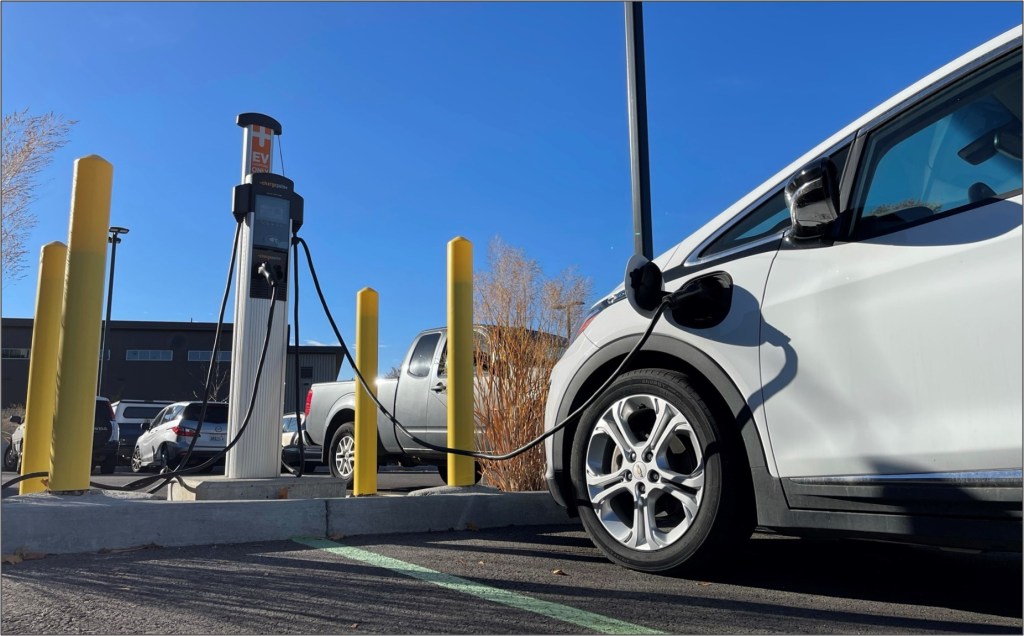
The grants will help Washington communities build and update charging infrastructure for EVs. 

The Washington Department of Ecology is offering $3.5 million in grants over the next two years to purchase and install Level 2 charging stations and upgrade existing charging stations in public, fleet, workplace, and residential locations.

Washington businesses, Tribes, nonprofits, public entities, and multi-family residences are eligible to apply for the electric vehicle (EV) charging infrastructure grants.

The so-called “Charge Where You Are” grants are intended to attract applicants from a wide range of community groups over multiple funding rounds. The department says the first installment will distribute $1 million, with priority given to projects in rural areas, as well as neighborhoods with limited access to EV charging and communities that are disproportionately affected by air pollution. Funding for the grants comes from Washington’s Volkswagen diesel emissions settlement. Applications for the first round are open now through Nov. 16.

“Not everyone lives where they can charge an EV in their garage every night,” said Molly Spiller, manager of the Pollution Reduction Grants Section in Ecology’s Air Quality Program. “By making more charging stations available in apartments, multi-family homes, workplaces, and public locations, such as parks and libraries, we can help make EV ownership a reality for more drivers.”

With a 240-volt output, Level 2 chargers are commonly used in offices and public spaces. Although slower than the fast chargers found along highways and major road corridors, they can recharge most EVs in 4 to 10 hours.

Kathy Taylor, Air Quality Program manager, says, “We estimate the Level 2 projects we fund will help reduce greenhouse gas emissions by about 2,200 tons per year.”

Ecology anticipates opening additional grants for faster, direct current (DC) EV charging stations in 2024.

Related info:                                                    

Los Angeles, Long Beach, and Shanghai Ports Implement Outline for First trans-Pacific Green Shipping Corridor

The creation of the first green shipping corridor across the Pacific is taking shape.

Credit: U.S. Naval Institute/Shutterstock

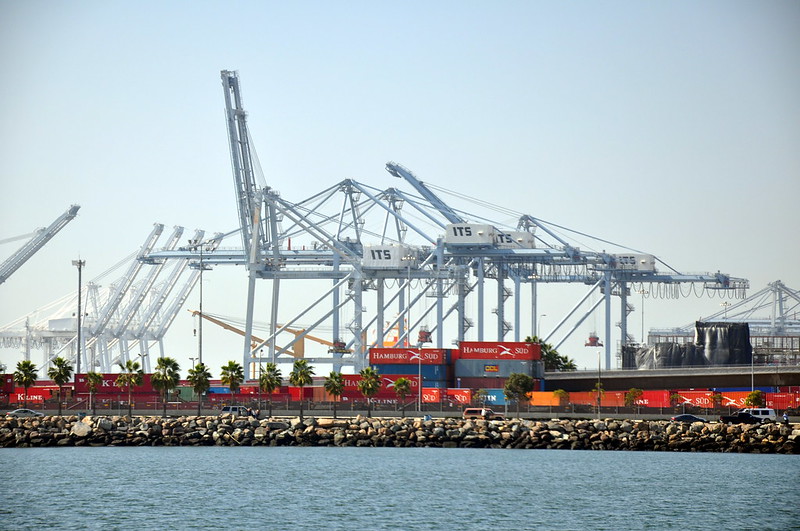
Last week a voluntary partnership of maritime goods movement stakeholders, including the Ports of Los Angeles, Long Beach and Shanghai, some of the largest carriers in the world, and key leading cargo owners unveiled a Green Shipping Corridor Implementation Plan Outline designed to accelerate emissions reductions on one of the world’s busiest container shipping routes across the Pacific Ocean.

The plan, the first of its kind, was developed with support from C40 Cities as part of their effort to reduce carbon emissions from the largest cities in the world.

A joint press release from the stakeholders says the plan “is an important step toward decarbonizing the global supply chains that power our economies and transitioning toward zero lifecycle carbon emission ships.” In addition, it will showcase “cutting-edge goods movement technologies, decarbonization applications and best management practices to enhance efficiency, and catalyze technological, economic and policy efforts to progressively decarbonize shipping and port-related activities.” 

Carrier partners will begin deploying reduced or zero lifecycle carbon capable ships on the corridor by 2025, and work together to demonstrate by 2030 the feasibility of deploying the world’s first zero lifecycle carbon emission container ship(s).

Carrier partners include CMA CGM, COSCO Shipping Lines Co., Ltd., Maersk, and ONE. Core partners include the Shanghai International Port (Group) Co., Ltd., the China Classification Society, and the Maritime Technology Cooperation Centre of Asia.   

Partnership participants will take steps to reduce carbon emissions and harmful pollutant emissions impacting air quality, through methods such as expanding the use of shore power and supporting the development of clean marine fueling infrastructure. Cargo owner partners have set goals to contract with carriers to use zero lifecycle carbon emission shipping services, and in an effort to measure progress toward decarbonization, all partners will develop metrics to track decarbonization progress. 

Gene Seroka, Executive Director of the Port of Los Angeles, said, “This trans-Pacific green corridor will be a model for the global cooperation needed to accelerate change throughout the maritime industry. Most of the emissions associated with moving cargo by ship occur in the mid-ocean part of the journey between ports.  This corridor will help reduce mid-ocean emissions while continuing the work we have done to cut emissions within our ports.”

The initiative will drive emissions reductions across the world’s largest ocean and lead to greener practices from supply chain participants along these vital trade routes, added Mario Cordero, Chief Executive Officer of the Port of Long Beach. “The new and innovative vessel technologies, increased availability of sustainable fuels and better practices created through this green corridor will also impact society’s transition to a cleaner future far beyond the areas served by our ports.”

 C40 Cities is a network of world cities that are working to deliver the urgent action needed “to confront the climate crisis and create a future where everyone, everywhere can thrive.” Mayors of C40 cities are committed to using a science-based and people-focused approach to help the world limit global heating to 1.5°C and build healthy, equitable and resilient communities. Through a Global Green New Deal, mayors are working alongside a broad coalition of representatives from labor, business, the youth climate movement and civil society to go further and faster than ever before. 

Established in 2004, Shanghai Municipal Transportation Commission (SMTC) undertakes the management and safety supervision of the highways and urban roads, road transportation and urban traffic, ports and shipping, and other transportation industries in Shanghai. SMTC also leads the development of the Shanghai International Shipping Center. SMTC coordinates the air, rail and postal transportation management. SMTC aims to optimize the layout of the transport structure, comprehensively balance the transport capacity, and build an integrated transportation system in Shanghai.

Read the Green Shipping Corridor Implementation Plan Outline.

Watch a video about the Green Shipping Corridor.

California Grants Target Big Bucks for Net-Zero Efforts

The California State Transportation Agency (CalSTA) this month announced $1.5 billion in grants as part of efforts to build a “more efficient, sustainable and resilient supply chain.” The program includes approximately $450 million for zero-emission infrastructure, locomotives, vessels and vehicles.

Port of Long Beach CA by Ken Harrell via Flickr CC

A major chunk of the funding includes a $383.35 million grant for the Port of Long Beach to complete a series of construction and clean-air technology projects to “accelerate” the transformation to zero-emissions operations and enhance the reliability and efficiency of cargo movement.

Also, as part of the state’s Port and Freight Infrastructure Program, nearly $225 million will fund a variety of zero-emissions cargo-moving equipment and support infrastructure projects across the Port of Long Beach, including “top handlers” and other manually operated cargo-handling equipment, as well as tugboats and locomotives. The sum is the single largest grant the port has received to support the zero-emissions goals of the 2017 Clean Air Action Plan Update.

The Port of Los Angeles will receive $233 million in grants from the state to complete infrastructure projects aimed at creating a more efficient and sustainable supply chain. “This nearly quarter-billion-dollar investment in critical Port of Los Angeles projects –– along with an additional $191 million in supporting regional projects –– will accelerate our efforts to boost competitiveness, create jobs and enhance decarbonization efforts,” said Port of Los Angeles Executive Director Gene Seroka. 

The Port of Oakland was awarded $119 million in grant funding from the state under the Port Freight Infrastructure Program (PFIP). The funding will support infrastructure improvements at the port’s maritime facilities and roadways, and to electrify port cargo handling equipment. 

A complete list of projects is available at the following links:

The funding – particularly the investments in zero-emission projects, which account for nearly 40 percent of the Port and Freight Infrastructure Program awards – builds on a partnership between the governments of California and Japan announced in March to collaborate on strategies to cut planet-warming pollution at seaports and establish green shipping corridors as part of the state’s broader strategy to aggressively combat and adapt to climate change.

The investments also follow the California Transportation Commission’s recent approval of $1.1 billion for infrastructure improvements on high-volume freight corridors as part of the Trade Corridor Enhancement Program (TCEP) – for a total state investment in supply chain infrastructure of more than $2.6 billion this month.

Beyond the brink

time bomb by Dirk Knight via Flickr CC

When it comes to the climate crisis we’re not on the brink of disaster, we’re beyond the brink.

A “Synthesis Report” report released Monday from the United Nations Intergovernmental Panel on Climate Change (IPCC), also known as the Sixth Assessment Report (AR6) says the world is likely to miss its climate target — limiting warming to 1.5 degrees Celsius (2.7 degrees Fahrenheit) above preindustrial temperatures — within a decade.

Climate change has already caused “substantial damages, and increasingly irreversible losses, in terrestrial, 36 freshwater, cryospheric, and coastal and open ocean ecosystems.”  Losses of species have been driven by increases in the magnitude of heat extremes with “mass mortality” events recorded on land and in the ocean, the report continues. Impacts on some ecosystems are “approaching Irreversibility,” such as the impacts of hydrological changes resulting from the retreat of glaciers, or the changes n some mountain and Arctic ecosystems driven by permafrost thaw.

Climate change has reduced food security and affected water security, “hindering efforts to meet Sustainable Development Goals.”

All the widely documented impacts from human-caused climate change “continue to intensify,” the report says.

Humanity has reached a “critical moment in history,” IPCC Chair Hoesung Lee asserted: The world has all the knowledge, tools and financial resources needed to achieve its climate goals, but after decades of disregarding scientific warnings and delaying climate efforts, the window for action is rapidly closing.

At the current global pace of carbon emissions, the world will burn through its remaining “carbon budget” by 2030. Doing so would put the long-term goal of keeping global warming to 1.5 degrees Celsius (2.7 degrees Fahrenheit) irrevocably out of reach. Keeping warming below th1.5 degrees Celsius threshold would help save the world’s coral reefs and preserve the Arctic’s protective sea ice layer. It could also stave off dramatic sea level rise by avoiding further destabilization in Antarctica and Greenland.

So we are all sitting on a powder keg, a loudly ticking time bomb, and while we may have the ability to defuse this bomb, can we do it?

Copping out on COP

Climate Alliance photo via Flickr CC

Net zero? When it comes to net zero carbonization that sounds like a game that countries and companies play, much like getting to zero fuel emissions for some auto fleets, but not for others. It’s all about the math and playing with the numbers in a time-honored way to game the system and look good.

That really won’t cut it when it comes to the climate crisis because the corporations with the most to lose – and who are the most responsible for the crisis in the first place – don’t really want to hurt themselves too much while talking the net zero game.

From Triplepundit: “At COP27, companies, NGOs and governments are discussing what it takes to create a just transition, as in a climate action plan that is socially equitable.”

Hmm, that sounds like gobbledygook, or as Greta Thunberg might say (quoted in the Nov. 28 New Yorker article written by Elizabeth Kolbert: “blah blah blah…”

Can technological advances get us to net zero emissions? Maybe, but again, blah blah blah!

Here is part of Thunberg’s quote from the Youth4Climate conference in September:

“This is all we hear from our so-called leaders: words—words that sound great, but so far have led to no action. Of course, we need constructive dialogue, but they’ve now had thirty years of blah, blah, blah, and where has that led us?”

Governments and corporations need to develop and deploy climate technologies critical for the world’s net-zero agenda.

Now.

Beam it down! Solar farms in space!

London, United Kingdom by NASA via Flickr CC

Euronews is reporting that giant solar farms orbiting the planet may someday power Europe. The European Space Agency (ESA) unveiled a plan to harvest the sun’s energy in space and beam it back down to Earth.

It’s an idea that has been around for a while, and the subject of science fiction stories, but now it is closer to science fact. The technology is still in the preliminary testing phase, but the goal is the construction of a 2-kilometer (1.2 mile) long solar space farm, generating as much energy as a nuclear power plant, according to Hannah Brown with the European Broadcasting Union (EBU). The farm would orbit about 36,000 kilometers above the Earth.

“[Such a project] would ensure that Europe becomes a key player– and potentially leader – in the international race towards scalable clean energy solutions for mitigating climate change,” the ESA said in a statement.

Solar power is a great source of clean energy, but it’s held back by some limitations. For example, solar panels can only harness power in the daytime, and even then, much of the sunlight is absorbed by the atmosphere on its journey to the ground. But in space, the sun’s beams are around ten times as intense as they are on Earth.

The ESA has partnered with Airbus to develop ‘wireless power transmission’ to capture this 24-hour source of electricity and beam it down to us. The technology is based on the transmission used by TV and communication satellites every day, Airbus engineer Nicolas Schneider explained: “We are not very far from a 4G antenna, except that what we want is not to radiate in all directions, we want to be very precise like a laser, in fact. It’s a wave that can be directed to this receiving antenna which will then transform this wave into electricity.”

The problem is one of scale. The satellite would be massive, and so difficult to launch and build. But doable.

With mega-billionaires so interested in playing around in space, maybe they should spend a few billion for this and become energy czars.

Let’s do this!

Green Corridors on the deep blue sea

On the shipping lane by Kari Nousianien via Flickr CC

The ports of Gothenburg and Rotterdam pledged to establish a Green Corridor between the two cities, which will put a framework in place for collaboration on alternative fuels and reducing carbon emissions.

The Memorandum of Understanding (MoU) was signed in the presence of the Swedish and Dutch royal families. It is intended that the corridor will become part of the European Green Corridors Network, set up in March 2022 by the Maersk McKinney Moller Centre for Zero-Carbon Shipping.

According to a recent report from McKinsey, zero-emission fuels and vessels will need to be deployed over the next decade to achieve full decarbonization of the shipping sector by 2050. “This ambitious goal could be catalyzed by green corridors.”

The zero-emission goal was established by the International Maritime Organization (IMO), which has mandated emission reductions of 50 percent for all vessels by 2050. (Annex 11 Resolution MEPC.304(72) adopted April 13, 2018, Initial IMO strategy on reduction of GHG emissions from ships, International Maritime Organization, imo.org.) A number of countries—including Japan, the United Kingdom, and the United States—have declared a target for net-zero shipping emissions in the same time frame.

The U.S. Department of State released a “Green Shipping Corridors Framework” fact sheet in April that states: “Green shipping corridors can spur early and rapid adoption of fuels and technologies that, on a lifecycle basis, deliver low- and zero-emissions across the maritime sector, placing the sector on a pathway to full decarbonization. The United States envisions green shipping corridors as maritime routes that showcase low- and zero-emission lifecycle fuels and technologies with the ambition to achieve zero greenhouse gas emissions across all aspects of the corridor in support of sector-wide decarbonization no later than 2050. There are multiple pathways through which a fully decarbonized corridor can be achieved; this green shipping corridors framework therefore provides maritime stakeholders the flexibility to choose the path that best suits their needs.”

It seems that we are in the early stages of actually establishing green corridors in the maritime/port sector, which is why the Rotterdam-Gothenburg agreement is significant. Allard Castelein, Chief Executive of the Port of Rotterdam said: “This Green Corridor initiative is part of our ongoing efforts to bring together parties across the supply chain to help realize more sustainable shipping in support of the Paris Agreement.” And Elvir Dzanic, Chief Executive of the Gothenburg Port Authority added: “We can now present a more distinct path towards the decarbonization of shipping.”

The McKinsey report asserted: “Finding industry-wide solutions is challenging, given the varied and complex nature of the sector. One way to accelerate decarbonization is to implement ‘green corridors’: specific trade routes between major port hubs where zero-emission solutions are supported. A new report, The next wave: Green corridors, produced by the Getting to Zero Coalition in collaboration with the Global Maritime Forum, Mission Possible Partnership, and Energy Transitions Commission, with analytical support from McKinsey, probes the feasibility of two such selected corridors,” the Australia-Japan iron-ore route and the Asia-Europe container route.

The results of this analysis are “encouraging” but there is still a long navigation ahead.

Preserve biodiversity through sustainable forest management

deforested by naqi via Flickr CC

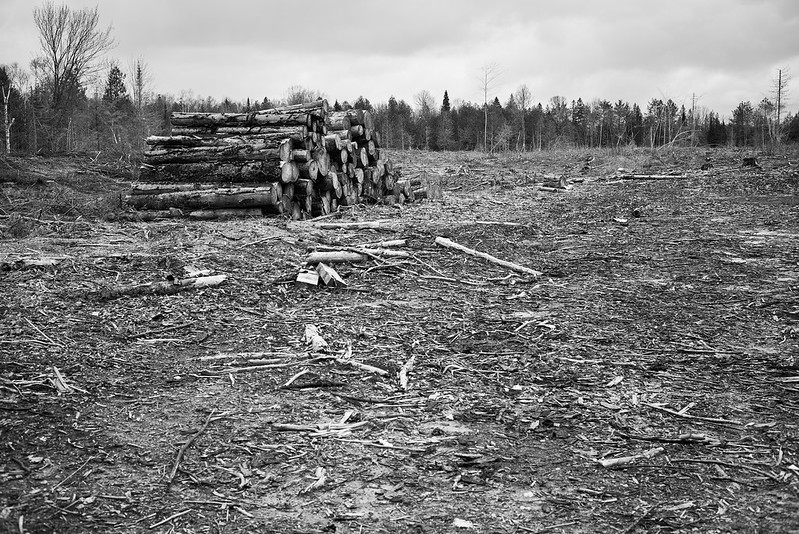
Deforestation is the greatest threat to valuable biodiversity, with around 10 million hectares lost to deforestation each year, mainly for agricultural expansion, according to a new report from the Food and Agriculture Organization of the United Nations (FAO).

The key to thwarting deforestation is sustainable forest management, the report says. “Protecting the animals, plants, fungi, and microorganisms that thrive in forests must become a fundamental goal of sustainable forest management worldwide.”

The world’s forests provide habitats for about 80 percent of amphibian species, 75 percent of bird species and 68 percent of mammal species. In addition, about 60 percent of all vascular plants occur in tropical forests. The importance of sustainable forest management has long been recognized, but more action in a concerted manner is needed.

“The conservation of the world’s biodiversity is utterly dependent on the way in which we interact with and use the world’s forests,” said Tiina Vähänen, Deputy Director of FAO’s Forestry Division, of the report, Mainstreaming Biodiversity in Forestry.  The report was released at the 8th World Forest Week on the sidelines of the 26th Session of FAO’s Committee on Forestry.

The report assesses tools and methods of ensuring the conservation and sustainable use of biodiversity is integrated into forest policy, strategy and management. Through a series of case studies from the Democratic Republic of the Congo, Ethiopia, Finland, Japan, Malaysia, Mexico, Peru, and the United Kingdom it explores lessons learned and identifies good practices.

It recommends actions that governments and development partners can take “to facilitate the mainstreaming of biodiversity in forest management”:

  • Halting and reversing deforestation
  • Combating illegal and unregulated forest activities
  • Recognizing the forest tenure of Indigenous Peoples and local communities
  • Preventing the conversion of natural forests into monospecific forest plantations
  • Ensuring the sustainable management of harvested species
  • Managing and controlling invasive and overabundant species
  • Leveraging global momentum on restoration to enhance biodiversity conservation
  • Adopting a multisectoral perspective
  • Providing economic incentives
  • Facilitating market-based instruments
  • Investing in knowledge and capacity development

“We hope that the wealth of information and recommendations made in this study will inspire action from those involved in forest management and conservation,” said FAO Forestry Officer Kenichi Shono.

The role of forests in maintaining biodiversity is explicitly recognized by the United Nations Strategic Plan for Forests 2017–2030 and in 2019, FAO adopted the Strategy on Mainstreaming Biodiversity across Agricultural Sectors.

Lots of hope, lots of studies: time for action.