Hanford going solar

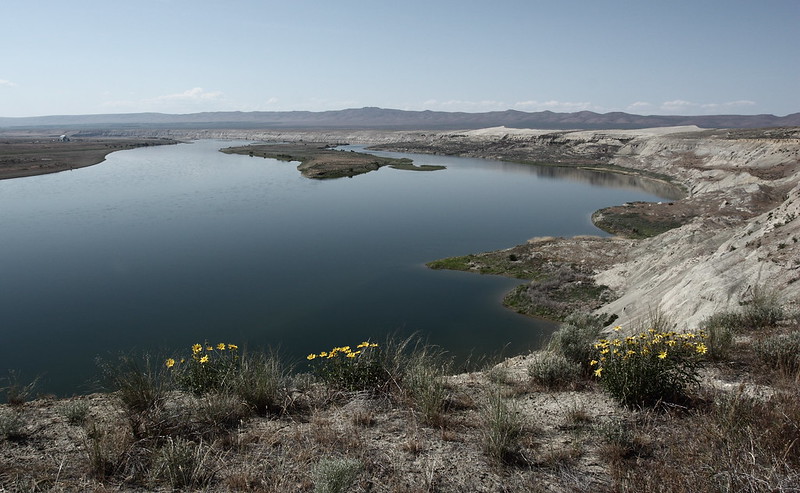
Hanford by Nicholas Blumhardt vi Flickr CC

The Department of Energy (DOE) entered into negotiations with Hecate Energy, LLC for a solar project capable of delivering up to one gigawatt of clean energy within an 8,000-acre area of DOE-owned land at the Hanford nuclear site as part of the Cleanup to Clean Energy initiative.

The Hanford site is a decommissioned nuclear production complex operated by the United States government on the Columbia River in Washington. It has also been known as Site W and the Hanford Nuclear Reservation. Established in 1943 as part of the Manhattan Project, the site was home to the Hanford Engineer Works and B Reactor, the first full-scale plutonium production reactor in the world. Plutonium manufactured at the site was used in the first atomic bomb, which was tested in the Trinity nuclear test, and in the Fat Man bomb used in the bombing of Nagasaki. For more Hanford’s history, click here.

DOE says the Cleanup to Clean Energy initiative aims to repurpose parts of DOE-owned lands to support the growth of America’s clean energy economy. The latest announcement reinforces the Biden-Harris Administration’s “whole-of-government approach to leveraging federal properties to increase the deployment of clean power through the buildout of utility-scale clean energy projects.”   

Secretary of Energy Jennifer M. Granholm said,  “Since the beginning of the Biden-Harris Administration, we’ve added nearly 90 gigawatts of solar capacity to the grid—enough to power roughly 13 million homes—and we’re building on this historic progress with another massive solar project,” She added that through this latest announcement,  DOE is transforming thousands of acres of land at the Hanford site into a thriving center of carbon-free solar power generation.”

Hecate Energy, LLC was selected to negotiate a real estate agreement for up to 8,000 acres at Hanford that DOE is making available for the development of a gigawatt-scale solar photovoltaic system with battery storage.

The selection was made through a competitive qualifications-based process for evaluating and ranking proposals. The selection comes after public comments on a request for information in August 2023, a Cleanup to Clean Energy information day at Hanford in September 2023, and a request for qualifications issued in March 2024. DOE and Hecate Energy will negotiate a realty agreement; DOE may cancel negotiations and rescind the selection for any reason during this process.

While cleanup at the huge Hanford site could take 50 years, the solar project might be up and running in five to seven years.

In addition to supporting the Administration’s clean energy goals, this project has the potential to benefit the Hanford site, Tribal Nations, and surrounding communities, while complementing local efforts to plan for the future. DOE will complete environmental review and applicable regulatory processes, and continue to communicate and partner with industry, Tribal Nations, communities, stakeholders, regulators, and others as clean energy projects are developed on DOE land. 

More information on the Cleanup to Clean Energy initiative can be found here

Toothless

              COP28 by USAID via Flickr CC

So they decided it’s time to “transition away” from fossil fuels? It took 28 meetings for this realization?

At the end of the 28th UN Climate Change Conference (COP28), European Union and world leaders “recommitted” to delivering the Paris Agreement goals and limiting the global average temperature increase to 1.5 Celsius. They agreed to “accelerate” emission reductions towards net zero by 2050, with urgent action in this critical decade. This includes transitioning away from fossil fuels and reducing global emissions by 43% by 2030.

Some commitments and actions announced by the EU at COP28:

  • A Global Pledge on Renewables and Energy Efficiency to triple renewable energy capacity and double the rate of energy efficiency improvements by 2030. €2.3 billion from the EU budget will support the energy transition in the European neighborhood and around the globe
  • €175 million of financial support from the EU and its Member States to reduce methane emissions
  • More than €400 million in funding from the EU and its Member States to activate a new loss and damage fund for climate emergencies
  • The first two European clean tech projects to be supported by the EU-Catalyst partnership to help the EU reach its 2030 climate targets
  • A €20 billion Team Europe contribution to the Africa-EU Green Energy Initiative
  • a new Team Europe initiative focused on deforestation-free value chains

It sounds good, but…

Critics, notably activist Greta Thunberg say the deal will not prevent global temperatures from rising more than 1.5 degrees Celsius above the pre-industrial average, which scientists say will trigger catastrophic and irreversible impacts, from melting ice sheets to the collapse of ocean currents.

“This text is toothless and it is nowhere even close to being sufficient to keep us within the 1.5-degree limit,” Thunberg, 20, told Reuters outside Sweden’s parliament, where she and a handful of other protesters were calling for climate justice.

“It is a stab in the back for those most vulnerable. As long as we don’t treat the climate crisis as a crisis and as long as we keep lobby interests influencing these texts and these processes, we are not going to get anywhere,” she said.

The Conference of the Parties to the United Nations Framework Convention on Climate Change is a yearly international summit where world leaders, environmental experts, activists, and stakeholders gather to discuss and negotiate actions to combat climate change.

For more information

EU at COP28 Climate Change Conference

Climate action and the Green Deal

Press release: Global Pledge on Renewables and Energy Efficiency

Press release: EU negotiators secure agreement at COP28 to accelerate the global transition away from fossil fuels and triple renewables and double energy efficiency this decadeStatement of President von der Leyen on the outcome of COP28

Copping out

Will the COP 28 meeting make much of a difference in the climate crisis discussion and action?

 Some rights reserved by equipo.comunicacion via Flickr CC

Probably not, but it is all we’ve got right now.

The 2023 United Nations Climate Change Conference or Conference of the Parties of the UNFCCC, more commonly referred to as COP28, is the 28th United Nations Climate Change conference, held from 30 November until 12 December 2023 at Expo City, Dubai. 

Here’s a round-robin of takes from various publications and organizations on the status of, and chances for success, of COP 28:

  • Climate Home News: “Annual emissions may have just peaked but the world’s temperature will keep rising until we reach net zero. Ahead of every COP climate talks, think tanks, campaign groups and United Nations agencies get their number-crunchers to produce a load of reports summarising where the fight against climate change is at. These reports can start to induce deja vu. We’re doing some stuff to tackle climate change, usually more than the year before. But not fast enough to avoid some pretty terrifying destruction.”
  • “Broken record,” is the title of the UN’s latest emissions gap report. “Temperatures hit new highs yet world fails to cut emissions (again),” the subtitle.
  • Nature: “Is it too late to keep global warming below 1.5 °C? Chances are rapidly disappearing to limit Earth’s temperature rise to the globally agreed mark, but researchers say there are some positive signs of progress.”

Editors always told me to try to find some positives in any story. That search is getting more difficult.

  • The Indian Express: “Ahead of the COP 28 summit, have we lost the fight against climate change? Emissions are rising, there’s not enough money to deal with a worsening climate, and its harmful effects become more apparent every day. What’s the way ahead? Just like every previous year, the situation appears more grim, and the progress more marginal, than earlier.”
  • report by Climate Analytics finds a 70% chance that emissions will peak in 2023 and start falling in 2024, mainly thanks to electric vehicles, solar and wind power.
  • Triple Pundit: “All in all, a multitude of complex and interconnected challenges need to be addressed at COP28 for the world to get back on track. Summit President Sultan Al Jaber emphasized in his letters to parties that ‘it is not too late to correct course’ and ‘we’re playing catch-up to keep 1.5°C alive.’ He calls for ‘optimism and unwavering resolve’ at the talks this year, though the outcome remains to be seen.”
  • Greenfin Weekly: “The feasibility of “keeping 1.5 alive” appears increasingly tenuous. 2023 saw the hottest month on record since 1880, and the global average temperature briefly passed 2 degrees Celsius of warming from the pre-industrial era for the first time ever in mid-November. “It will require an estimated $4 trillion annually by 2030 to transition to a clean economy that reverses those trends, and Al Jaber has noted that the money isn’t flowing fast enough.
  • It will take a real step change at COP28 to rewrite that equation, said Elise Larkin, director of global economic recovery at The Rockefeller Foundation.”

The way ahead is not very promising. If the private sector, especially the companies that have benefited the most from causing the climate crisis, can somehow step up and weigh-in, maybe progress will occur.

Is that a positive or a dream?

Charge where you are….

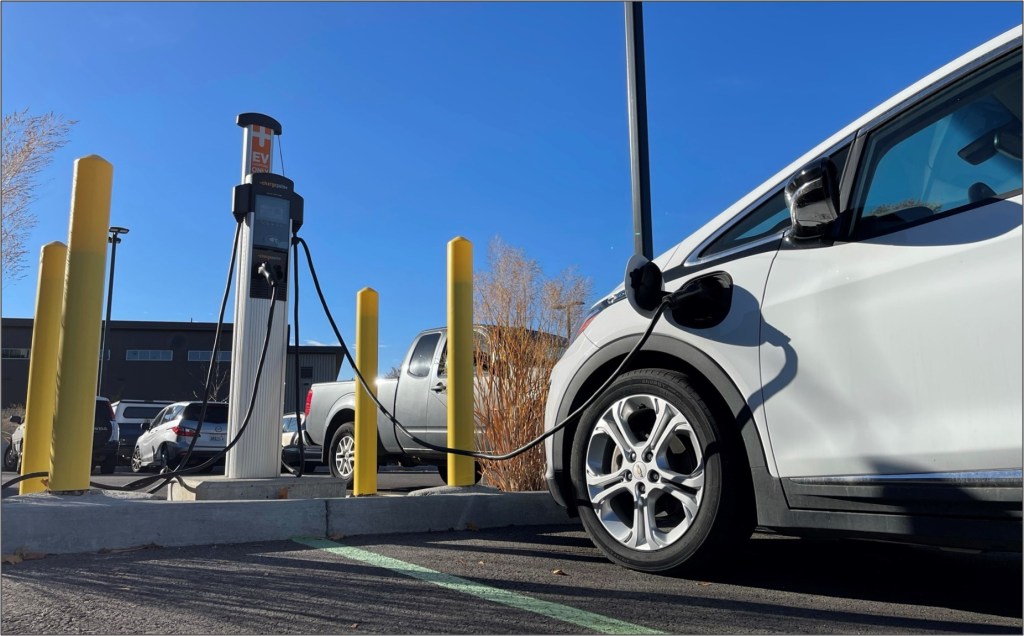
The grants will help Washington communities build and update charging infrastructure for EVs. 

The Washington Department of Ecology is offering $3.5 million in grants over the next two years to purchase and install Level 2 charging stations and upgrade existing charging stations in public, fleet, workplace, and residential locations.

Washington businesses, Tribes, nonprofits, public entities, and multi-family residences are eligible to apply for the electric vehicle (EV) charging infrastructure grants.

The so-called “Charge Where You Are” grants are intended to attract applicants from a wide range of community groups over multiple funding rounds. The department says the first installment will distribute $1 million, with priority given to projects in rural areas, as well as neighborhoods with limited access to EV charging and communities that are disproportionately affected by air pollution. Funding for the grants comes from Washington’s Volkswagen diesel emissions settlement. Applications for the first round are open now through Nov. 16.

“Not everyone lives where they can charge an EV in their garage every night,” said Molly Spiller, manager of the Pollution Reduction Grants Section in Ecology’s Air Quality Program. “By making more charging stations available in apartments, multi-family homes, workplaces, and public locations, such as parks and libraries, we can help make EV ownership a reality for more drivers.”

With a 240-volt output, Level 2 chargers are commonly used in offices and public spaces. Although slower than the fast chargers found along highways and major road corridors, they can recharge most EVs in 4 to 10 hours.

Kathy Taylor, Air Quality Program manager, says, “We estimate the Level 2 projects we fund will help reduce greenhouse gas emissions by about 2,200 tons per year.”

Ecology anticipates opening additional grants for faster, direct current (DC) EV charging stations in 2024.

Related info:                                                    

State of Green Business: The Sustainability Cha-Cha

Following is an excerpt from GreenBiz Group’s 16th annual State of Green Business, which explores sustainable business trends to watch in 2023. Download the report here.

“Stay the course” is a brief summation from Joel Makower, chairman and co-founder of GreenBiz Group.

He writes: “That may be the key message coming out of the convulsing, confounding year that was 2022. For all that those 12 months threw at us — a still-raging pandemic, a global economic downturn, major supply-chain chokepoints, political upheavals, climate-exacerbated natural disasters, and a global energy crisis spurred by Russia’s unprovoked invasion of Ukraine — there’s no turning back for sustainability professionals.

“Of course, inflation and low economic growth led some companies to tap the brakes, slowing some initiatives, including the increased headcount that goes with companies’ growing sustainability ambitions. But not for long. There’s a general sense that the critical nature of social and environmental challenges, and the risks they pose to companies and society, will keep sustainability a hot-button business issue for the foreseeable future.

“It’s another round of the sustainability cha-cha: two steps forward, one step back.”

The risks are growing, he says, “but so are the rewards — to professionals, their organizations and, ultimately, to the planet and all who live here.” Since 2008, the GreenBiz editors and analysts have focused on 10 key trends worth watching, reflecting a broad spectrum of environmental and sustainability topics: transportation, carbon removal, the circular economy, climate tech, sustainable food systems, renewable energy and more.

Much of the sustainability wish list is coming to fruition, according to the report. “At last, biodiversity and natural capital are being recognized as critical inputs to business and industry; healthy ocean ecosystems are linked to climate mitigation and resilience; the financial sector, from insurance to banking to venture capital, is awakening to a post-oil future; and forthcoming transparency and disclosure frameworks promise to help separate leaders from laggards.”

Stakeholder capitalism “is alive and well, as companies and mainstream investors increasingly view environmental and social issues not as some social engineering conspiracy but as activities critical to business and macroeconomic success.”

For the 16th consecutive year, we’ve tapped the GreenBiz analyst and editorial teams to identify 10 key trends and developments GreenBiz will watch over the next 12 months. To learn more, download the free report here.

Beam it down! Solar farms in space!

London, United Kingdom by NASA via Flickr CC

Euronews is reporting that giant solar farms orbiting the planet may someday power Europe. The European Space Agency (ESA) unveiled a plan to harvest the sun’s energy in space and beam it back down to Earth.

It’s an idea that has been around for a while, and the subject of science fiction stories, but now it is closer to science fact. The technology is still in the preliminary testing phase, but the goal is the construction of a 2-kilometer (1.2 mile) long solar space farm, generating as much energy as a nuclear power plant, according to Hannah Brown with the European Broadcasting Union (EBU). The farm would orbit about 36,000 kilometers above the Earth.

“[Such a project] would ensure that Europe becomes a key player– and potentially leader – in the international race towards scalable clean energy solutions for mitigating climate change,” the ESA said in a statement.

Solar power is a great source of clean energy, but it’s held back by some limitations. For example, solar panels can only harness power in the daytime, and even then, much of the sunlight is absorbed by the atmosphere on its journey to the ground. But in space, the sun’s beams are around ten times as intense as they are on Earth.

The ESA has partnered with Airbus to develop ‘wireless power transmission’ to capture this 24-hour source of electricity and beam it down to us. The technology is based on the transmission used by TV and communication satellites every day, Airbus engineer Nicolas Schneider explained: “We are not very far from a 4G antenna, except that what we want is not to radiate in all directions, we want to be very precise like a laser, in fact. It’s a wave that can be directed to this receiving antenna which will then transform this wave into electricity.”

The problem is one of scale. The satellite would be massive, and so difficult to launch and build. But doable.

With mega-billionaires so interested in playing around in space, maybe they should spend a few billion for this and become energy czars.

Let’s do this!

Port Offers Solar Power Project Funding

RMS Queen Mary/Long Beach, CA by Jason Mrchina via Flikr CC

The Port of Long Beach is accepting “concept paper” proposals for solar power generation projects that qualify for funding under the port’s Community Grants Program.

The Community Grants Program encompasses more than $46 million to fund projects that help those in the community who are most vulnerable to port-related impacts and to reduce greenhouse gases. These projects include expanding asthma services, controlling stormwater runoff through the building of permeable parking lots, and creating open space buffers between port operations and communities, to name a few. Combined with a previous program started in 2009, the Port of Long Beach has set aside more than $65 million, making it the largest voluntary port mitigation initiative in the country. To date, $36.5 million has been committed.

Projects that receive grants will serve people most sensitive to port impacts, including seniors, pregnant women, children, and those with asthma or chronic illnesses. Public and private agencies are eligible to apply, however, home improvements are not eligible. To view the program’s relevant Facilities Improvements guidelines and the pre-solicitation workshop, go to www.polb.com/grantopportunities.

Applicants are required to describe proposed projects at a high leve, the port says,l and program staff will determine project and applicant eligibility. Concept papers must be submitted online and are due by 4 p.m. Wednesday, Nov. 23.

The Port of Long Beach is a gateway for the trans-Pacific trade. With 175 shipping lines connecting Long Beach to 217 seaports, the Long Beach handles $200 billion in trade annually, supporting more than 575,000 Southern California jobs.

The grant program contact is Jennifer Williams, Environmental Specialist Associate, at (562) 283-7133, grants@polb.com

Dealing with air pollution controls

Pollution by Tony Webster via Flickr CC

A new eHandbook from Environment+Energy Leader, sponsored by Anguil Environmental Systems, outlines current trends in air pollution controls and what should be considered when choosing emission control technologies.

That is of course if energy companies insist on emitting volatile organic compounds (VOCs) rather than converting their plants to renewable energy sourcing. But oh well, the climate crisis must continue, and fewer pollutants might have to do.

The handbook notes that in trying to understand how best to mitigate VOCs and hazardous air pollutants (HAPs), industrial companies can find “compliance downright baffling.”

“Significant shifts in the industrial landscape and in the economy at large, along with constant regulatory changes, contribute to the confusion.

 “There are many factors impacting the clean air technology industry, including regulation, public policy, and considerations such as environmental justice,” says Clare Schulzki, executive director of the Institute of Clean Air Companies (ICAC), quoted in the ebook. The landscape is changing. EPA, for example, continues to update and release new air emissions rules including regulations requiring additional controls on certain equipment and processes that emit Ethylene Oxide (EtO) to reduce risk to surrounding communities and protect public health from this known carcinogen.

EPA is also developing new methane emission rules that will tighten standards for new and existing equipment primarily in the oil, gas, and mining sectors.

The eBook identifies five pollution control trends:

Trend #1. The carbon footprint of air pollution controls starts to matter. ESG (Environmental, Social and Governance) considerations are driving companies away from gas-fired emission combustion systems to fume abatement technologies that utilize electrically heated sources. For example, one technology, oxidation, converts pollutants into water vapor, carbon dioxide, and thermal energy. When designed properly these systems can have fewer greenhouse gas emissions than a gas-fired burner.

Trend #2. Concentrator systems gain in popularity. Emission concentrators are specialized systems that process large quantities of polluted air with low pollutant concentrations. This allows companies to use smaller oxidizers in self-sustaining modes. Apparently, this approach is more efficient and cost-effective.

Trend #3. Industries such as battery manufacturing, semiconductors, and renewable natural gas are soaring. For many companies in these industries, this means more factories, increased output and/or new processes.

Trend #4. Supply chain disruptions affect every industry. “If you’re contending with the inability to receive the materials you need in order to manufacture your products, you’re not alone. Nearly every industry is facing similar challenges – including your pollution control technology provider.” This means there might be longer than expected wait times for those smaller oxidizers and other neat technologies. So, plan way ahead.

Trend #5. US industry adheres to US standards even in emerging markets. Manufacturing is increasing in emerging markets. “Large companies are building more plants in Southeast Asia, for example. And many large corporations are committed to adhering to US standards regardless of local regulations.”

The handbook also lists “considerations” for companies to address when choosing emission control technologies, such as the compounds that comprise a company’s emissions, meeting regulatory requirements, sorting capital costs vs. operating costs, and sources of funding.

So again, the basic message is to plan way ahead and keep abreast of new pollution control technologies.

And don’t forget the long-term value inherent in renewable energy technologies. Just saying.

Catch the wind

Wind Turbine by Rachel Schowalter, Massachusetts Clean Energy Center via Flickr

Climate change is deadly serious; but it strikes me the word change is too soft a term because the change occurring is not anything like changing your clothes or your diet or your drapes. Rather it’s a climate crisis.

Climate crisis is a better way to think about what is happening to the planet, and after four years of dreadful neglect, denial and inaction from the previous administration, the Biden administration is taking the crisis seriously. And it is taking action.

The White House last week unveiled a goal to expand the nation’s nascent offshore wind energy industry in the coming decade by opening new areas to development, accelerating permits, and boosting public financing for projects.

Then there is Biden’s American Jobs Plan, which includes $85 billion for mass-transit systems, another $80 billion for Amtrak to expand service and make needed repairs, and $100 billion to upgrade the nation’s electrical grid. The infrastructure plan also would allocate $174 billion to spur the transition to electric vehicles, $35 billion for research in emissions-reducing and climate-resilience technologies, and $10 billion to create a New Deal-style Civilian Climate Corps.

The plan will lead to “transformational progress in our effort to tackle climate change,” Biden said, speaking at a carpenters’ training facility outside Pittsburgh.

A Reuters report provided more detail on the offshore wind power plan: “The blueprint for offshore wind power generation comes after the Biden administration’s suspension of new oil and gas leasing auctions on federal lands and waters, widely seen as a first step to fulfilling the president’s campaign promise of a permanent ban on new federal drilling to counter global warming.

The United States, with just two small offshore wind facilities, has lagged European nations in developing the renewable energy technology.

“We’re ready to rock and roll,” National Climate Advisor Gina McCarthy said at a virtual press conference to announce the administration’s moves.

According to the report, the plan sets a target to deploy 30 gigawatts of offshore wind energy by 2030, which the administration said would be enough to power 10 million homes and cut 78 million metric tons of carbon dioxide per year.

One of the first steps will be to open a new offshore wind energy development zone in the New York Bight, an area off the densely populated coast between Long Island, New York and New Jersey, with a lease auction there later this year.

The industry will employ 44,000 workers directly by 2030 and support 33,000 additional support jobs. Many of those jobs will be created at new factories that will produce the blades, towers and other components for massive offshore wind turbines and at shipyards where the specialized ships needed to install them will be constructed. The administration predicted the nation would see port upgrade investments related to offshore wind of more than $500 million.

The administration said it will also aim to speed up project permits, including environmental reviews, and provide $3 billion in public financing for offshore wind projects through the Department of Energy.

The United States’ two small offshore wind farms include the 30-megawatt Block Island Wind Farm off Rhode Island and a two-turbine pilot project off the coast of Virginia. There are more than 20 GW of proposed projects in various stages of development.

Europe, by contrast, has more than 20 GW of capacity already and plans to expand that more than ten-fold by 2050. Many of the companies developing U.S. projects are European, including Norway’s Equinor, Denmark’s Orsted, and a joint venture between Avangrid, the U.S. arm of Spain’s Iberdrola, and Denmark’s Copenhagen Infrastructure Partners.

So, it is a world climate crisis.

Further reading:

Biden’s Jobs Plan Is Also a Climate Plan. Will It Make a Difference?

To See How Biden’s Infrastructure Plan Will Address Climate Change, Look at the Details

IMO publishes short list of actions for quick carbon footprint reduction in shipping