UN Guide will help insurers plan for net-zero transition

Solar on net-zero house. Credit: David Dodge, Green Energy Futures via Flickr CC

The United Nations published a guide designed to help insurers plan for the transition to net zero.

On 2 July, the UN convened a multistakeholder “Forum for Insurance Transition to Net Zero (FIT)”, saying the guide is tailored for insurance and reinsurance underwriting portfolios. “This new deep-dive global guide was presented at the inaugural FIT Transition Insurance Summit hosted by the European Insurance and Occupational Pensions Authority (EIOPA) at their headquarters in Frankfurt, Germany.”

According to a Green Central Banking article, “The impact of climate change on insurance markets has been systematically underestimated, with profound implications for financial stability and the sustainability of the risk-sharing services insurance companies provide.

“The European Central Bank warned in June that insurers are at increasing risk from the physical risks of climate change, which could become a source of systemic risk.”

The UN described FIT as follows: “Underwriting the Transition” provides insurance market participants—insurers, reinsurers and brokers—with a comprehensive and structured framework to help them develop and disclose credible transition plans for underwriting portfolios, addressing a significant gap in existing transition plan guidance for the insurance industry.

“This pioneering guide paves the way for insurers, reinsurers and brokers to move beyond high-level commitments by independently implementing robust and actionable strategies that enhance long-term business resilience and company value, and help achieve global sustainability goals,” said Butch Bacani, UNEP Head of Insurance and FIT Chair. By underwriting with foresight, and by accelerating and scaling up a just transition to a resilient net-zero economy, the insurance industry can lead with purpose and conviction in helping build inclusive, resilient and sustainable communities and economies, and reaffirm its role as society’s risk manager.”

“Underwriting the Transition identifies key elements of a credible transition plan and provides a checklist to assess the credibility of a transition plan. Through real-world examples, the guide demonstrates how leading insurers, reinsurers and brokers are each implementing various concepts and approaches in their underwriting portfolios that support a just transition to a resilient net-zero economy, as shared in their published transition plans. Moreover, it helps insurance market participants navigate a complex and evolving landscape of sustainability disclosure and reporting.

“It is the second deliverable of the FIT Transition Plan Project—a series of global guidance to address the current major gap in insurance-specific transition plan guidance. “Underwriting the Transition” builds on the FIT’s inaugural report, “Closing the Gap: The emerging global agenda of transition plans and the need for insurance-specific guidance”, which was launched at the 2024 UN Climate Conference (COP29) in Baku, Azerbaijan.”

The third and final FIT Transition Plan Project publication will produce holistic, “total balance sheet” transition plan guidance that links the underwriting and investment portfolios of insurance and reinsurance companies. It is scheduled to be launched at the 2025 UN Climate Conference (COP30) in Belém, Brazil this November.

At the COP29 launch event of the FIT’s inaugural report, Dyogo Oliveira, President of the Brazilian Insurance Confederation (CNseg), announced that CNseg has joined the FIT, and that CNseg will build a “House of Insurance” at COP30, which will serve as the main platform for climate ambition and action by the global insurance industry.

“As COP30 approaches, we look forward to working together with the Brazilian insurance industry, the wider insurance, regulatory and supervisory community, and key stakeholders—from policymakers and real economy actors; to the scientific and academic community, and civil society—and to making the ‘House of Insurance’ a symbol of inclusiveness, resilience, sustainability, and hope,” said Bacani.

Chaired by the United Nations Environment Programme (UNEP), the FIT currently comprises over 50 organizations from across the globe.

UNEP saif FIT “continues to deepen and strengthen its commitment to work with the global insurance industry and key stakeholders to support the acceleration and scaling up of a just transition to a resilient net-zero economy as part of the solution to the triple planetary crisis of climate change, nature loss, and pollution; and the vision of a resilient, sustainable, and prosperous future for all.”

Related recent climate change reading:
Reuters: World risks up to $39 trillion in economic losses from vanishing wetlands, report says  
World Economic Forum: Why we must roll out multiple energy transition solutions to reach net zero. https://www.weforum.org/stories/2025/07/multiple-energy-transition-solutions-to-hit-net-zero/   The Guardian: Politicians are retreating from net zero because they think the public doesn’t care. But they’re wrong.  https://www.theguardian.com/commentisfree/2025/jul/07/politicians-net-zero-public-research-climate-crisis  Rebecca Willis  
 

A world without birds?

Sulphur Crested Cokatoo by Bernard via Flickr CC

Unimaginable…but a Clemson University study concludes that climate is changing faster than most of the world’s birds can adapt.

Casey Youngflesh, an assistant professor in Clemson University’s Department of Biological Sciences, led a study at the university that examined how a bird’s pace of life — the rate at which it grows, develops, reproduces, and how long it lives — is related to environmental conditions and what that reveals about how they might respond to a changing climate.

Included in the study were 7,477 species of birds — basically all the world’s resident, non-marine birds — and used global climate data from 1950 to 2022.

Youngflesh and collaborators from Michigan State University “found that a key link exists between how much an environment varies over time and how long birds tend to live,” according to an article by Cindy Landrum of Clemson’s College of Sciences. “Specifically, species tend to live longer in environments that are more variable from year-to-year, a type of bet-hedging strategy that has long been theorized.”

These longer-lived species “may be at greater risk as well. All else being equal, these species experience greater change per generation than their shorter-lived counterparts. Because more generations means faster adaptation potential, these species are more likely to lag behind in their response to climate change.”

“One of the key things that varies among different bird species is pace of life. We were specifically interested in the role of the environment in potentially driving those differences,” Youngflesh said. “Where do we see ‘slow species’? Where do we see ‘fast species’? And why?”

The study found that birds with a “fast” pace of life have shorter lifespans and have as many young as they can during that time, something Youngflesh called a “live fast, die young” strategy. Birds with a “slow” pace of life have longer lifespans and low rates of reproduction. 

“For a ‘slow’ species, if one year is bad, you’re going to live on to reproduce another year —you’re waiting it out. If you’re a bird that lives 30 years, you could handle a couple of bad years,” he said. “But if you’re a ‘fast’ species and there are several bad years in a row, that might be catastrophic. They may not get an opportunity to breed and raise their young.”

These results have important implications for understanding how species are likely to respond  to climate change. 

“While organisms with a slower pace of life (longer lifepans) are expected to be more robust to environmental variability, these species will tend to adapt to directional change at a slower rate. Fewer generations over a given period means fewer opportunities for selection to operate and thus slower evolutionary adaptation. Similarly, for a species that is used to large fluctuations in temperature year-to-year, a small change in temperature might be less meaningful than to a species that experiences very little fluctuation in temperature over time.”

S0, all change is not equal: “A one-degree Celsius change in temperature is not equal in all environments,” Youngflesh said. “We are making the case that we need to contextualize rates of climate change in terms of both the historical variability of environmental systems and species’ pace of life.”

The study compared two birds: a sulphur-crested cockatoo, which had the longest generation length of any species in the study at 27.2 years, and the double-barred finch, which had the shortest generation length at 1.4 years.

“There might be 19 generations of double-barred finch for every one generation of sulphur-crested cockatoo,” Youngflesh said. “So, the sulphur-crested cockatoo has fewer opportunities for selection to operate and thus slower evolutionary adaptation, all else being equal. Species experiencing higher rates of environmental change per generation are likely to be those that suffer the greatest consequences of climate change.

Detailed findings were published in Ecology Letters in an article titled, “Environmental variability shapes life history of the World’s birds.”

Green Corridors: Enhancing Cross-Border Freight Efficiency

Green Corridors’ GC-IFTS (Green Corridors Intelligent Freight Transportation System) “offers a solution at Port Laredo that will benefit future generations by reducing congestion, bypassing gridlocked areas, and increasing border security.” (Photo credit: Green Corridors.)

Last time, I talked about a Port of Seattle green corridor for cruises to Alaska, along with other port corridors, In this space I will look at the aptly named Green Corridors, a land-based infrastructure freight corridor using elevated tracks.

Green Corridors is an ambitious undertaking that uses technology to bypass traffic congestion by implementing “state-of-the-art, low-emission shuttles traveling on elevated guideways.”  The thinking is to remove traffic congestion by moving freight off the road and onto elevated guideways, “resulting in increased efficiency, sustainability, security and road safety.”

Green Corridors, based in Austin, Texas, offers the logistics industry innovative freight transportation services by moving semi-truck trailers and sea containers across international borders, between a seaport and an inland terminal or through key trade corridors. Designed for transportation providers, port authority and terminal operators, logistics companies will book freight directly on Green Corridors’ system.

Green Corridors’ technology includes automated inland terminals, autonomous freight shuttles, and elevated guideway infrastructure. Inland terminals will serve as hubs for commerce and logistics services.  The cost of such a project is unclear. The company says it is on a mission to improve the $300 billion international trade corridor between Laredo, Texas to Monterrey, N.L., Mexico.

According to a Mexico Business News article, published last year, the Government of Nuevo Leon and Green Corridors signed a Memorandum of Understanding (MoU) to revamp commercial corridors by integrating sustainable technologies that aim to enhance efficiency in cross-border transportation management.

During his visit to Austin, Texas, Governor of Nuevo Leon Samuel García was introduced to the project by executives from Green Corridors.

The MoU, signed by García and Mitch Carlson, CEO, Green Corridors, established a collaborative link to build a Comprehensive Intelligent Freight Transportation System (IFTS) from the Colombia-Laredo area to the Monterrey Metropolitan Zone. This system will facilitate point-to-point cargo transportation within the region, “ultimately reducing traffic congestion and boosting operational efficiency in goods movement.”

Both Green Corridors and the Government of Nuevo Leon want to develop and implement new technologies and operational methods to enhance the efficiency of cross-border and domestic freight transportation.

“The Green Corridors solution encompasses two initial projects applicable to various Ports of Entry (POEs): Seaport to Inland Terminal, and Land Border Crossing. These projects aim to mitigate congestion and security concerns at border crossings and waterfront sites by relocating freight to strategically located areas,” the article said.

One such project involves the Port of Houston, which anticipates a 75% increase in cargo volumes by 2035. This growth is also expected to exacerbate congestion and emissions, leading to supply chain bottlenecks and increased air pollution. To address these challenges, the Green Corridors Initiative (GCI) has been launched in collaboration with stakeholders such as the Port of Houston, Texas Department of Transportation (TxDOT), and Texas A&M University.  Mexico Business News says:

“The project at the Port of Houston aims to reduce traffic congestion, emissions, and road maintenance costs, while improving supply chain resilience and air quality. The project aims to have 1.52 million truck trips removed from the road per year, reducing carbon emissions by 472,623t annually. These changes will also avoid replacing 123,974 tires per year and save US$153.12 million in fuel and 36.9 million gallons of diesel.

“On the other hand, the Green Corridors project in El Paso-Juarez aims to facilitate the movement of trucks through the border region, contributing to regional economic development and job creation. The port is expected to handle a significant portion of future truck traffic. Thus, this project promises substantial reductions in emissions, fuel consumption, and truck trips.”

E#arly days, but it could be part of the freight solution.

Decarbonizing Maritime Shipping: The PNW2Alaska Initiative

There’s an effort underway in the Pacific Northwest to make freight and cruise waterways as green as possible.

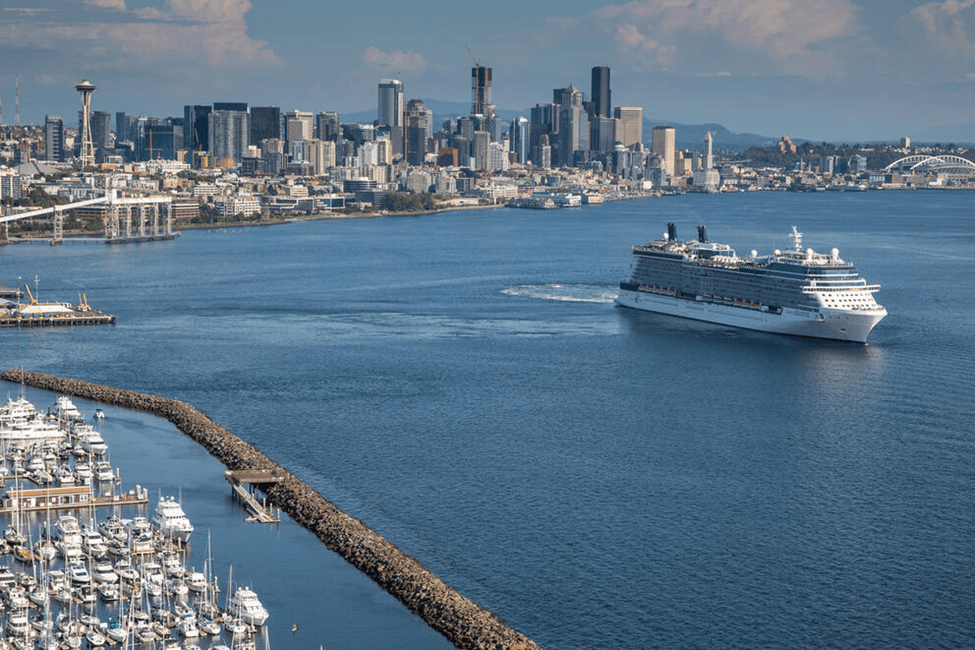
The Royal Caribbean Ovation of the Seas cruise ship leaves a port near Seattle. (Courtesy of the Port of Seattle)

Actually, the Green Corridor concept has been underway for some time.

Last May, the Pacific Coast Business Times reported the Port of Hueneme became the first U.S. port authority to sign agreements to create green automotive shipping corridors with ports and terminals in Japan and South Korea. “The partnerships we have with Japan and South Korea will help mutually grow commercial relationships with existing port clients and allow for a dynamic effort to make a difference around the globe with green shipping and development practices,” Kristin Decas, Port of Hueneme CEO and director, said in a press release.

The Port of Hueneme signed agreements to create green automotive shipping corridors between it and the Port of Yokohama in Japan and the Wallenius Wilhelmsen Pyeongtaek International Ro-Ro automotive terminal in the Port of Pyeongtaek, South Korea.

The agreements will help promote collaboration for environmentally sustainable port development initiatives and automotive logistics to transition to a zero-emission future, according to the release.

In September 2023, the Ports of Los Angeles, Long Beach, and Shanghai unveiled an Implementation Plan Outline for the first trans-Pacific green shipping corridor. Corridor features include:

  • A voluntary partnership of leading maritime goods movement stakeholders, including the Ports of Los Angeles, Long Beach, and Shanghai, with input from leading cargo owners, has developed a Green Shipping Corridor Implementation Plan Outline to accelerate emissions reductions on one of the world’s busiest container shipping routes. 
  • Plan development was supported by C40 Cities, the global network of mayors working to deliver the urgent action needed to confront the climate crisis. C40 is the facilitator of the Green Shipping Corridor, providing support to the cities, ports, and their corridor partners by coordinating, convening, facilitating, and providing communications support for the corridor’s goals.
  • Carrier partners supporting this plan intend to begin deploying reduced or zero lifecycle carbon capable ships on the corridor by 2025. 

X-Press Feeders, the world’s largest independent common carrier, recently signed a memorandum of understanding (MOU) with six European ports: Port of Antwerp Bruges (Belgium), Port of Tallinn (Estonia), Port of Helsinki (Finland), Port of Hamina Kotka (Finland), Freeport of Riga (Latvia) and Klaipeda Port (Lithuania). 

Through this MOU, X-Press Feeders and the participating ports will pool resources and expertise to develop and implement sustainable practices for maritime operations. 

Under the MOU: 

– Parties will work together to further develop infrastructure for the provision and bunkering of alternative fuels such as green methanol, 

– Encourage the development of supply chains for fuel that are zero or near zero in terms of greenhouse gas emissions 

– Provide further training programs for port workers and seafarers with regards to the handling of alternative fuels

– Leverage digital platforms to enhance port call optimization 

– Parties will have regular meetings to update and discuss progress on actions for further developing green shipping corridors. 

X-Press Feeders’ green methanol is sourced from fuel supplier OCI Global. The green methanol is made from green hydrogen and the decomposition of organic matter, such as waste and residues. OCI’s green methanol is independently certified by the International Sustainability and Carbon Certification (ISCC) Association headquartered in Germany. The ISCC system promotes and verifies the sustainable production of biomass, circular and bio-based materials and renewables.  

X-Press Feeders, which was founded in Singapore in 1972, is the world’s largest independent common carrier. X-Press Feeders operates a fleet of more than 100 vessels, calling at more than 180 ports worldwide. X-Press Feeders aims to achieve net zero emission by 2050 and be the ‘Greener Feeder Carrier of Choice’.

Green Shipping

Green shipping refers to transporting goods with as little environmental impact as possible. This may involve using advanced technology to optimize ship design, operations and performance to improve energy and fuel efficiency, prevent pollution, and reduce emissions. The concept of green shipping may be implemented already in the design phase of a new vessel, through continuous improvements or by switching to zero-emission fuels.

Switching to zero-emission fuels is gradually proceeding as more alternative fuels and engines enter the market. More shipbuilders are designing ships with green technology such as dual-fuel engines to accelerate the shift to clean fuels

Green shipping also includes training and educating staff and crew members in marine environmental awareness, including environmental policies, global requirements and compliances, ship energy efficiency, safe bunkering, oil transfer procedures, pollution prevention, garbage handling and disposal, biofouling, and ballast water management.

The International Maritime Organization (IMO) has set a target to reduce the total annual GHG emissions from international shipping by at least 50 percent by 2050. 

So, here’s the skinny on the latest green corridor, from the Port of Seattle.

The Pacific Northwest to Alaska Green Corridor (PNW2Alaska) is a collaboration among 14 organizations to create “a new era of low- and zero- greenhouse gas (GHG) emission cruise travel between Alaska, British Columbia and Washington.”

Decarbonizing this environmentally sensitive route is challenging, the port says. “Urban ports like Seattle and Vancouver can access large amounts of clean electricity to run shoreside operations and may have easier access to alternative fuels being developed. Smaller, remote ports in Alaska have more infrastructure and access challenges. Any decarbonization solution needs to work for cities, boroughs, ports, and cruise lines carrying passengers thousands of miles.”

The PNW2Alaska Green Corridor initiative considers the needs of each partner as it tests the feasibility of local solutions to decarbonize cruises in the Pacific Northwest. “One goal for all partners is that this first cruise-led Green Corridor can be an idea test bed that accelerates decarbonization at the 2,000 river and ocean cruise ports around the world.”

An aerial view of ships, boats, ferries and liners around Vancouver, B.C. (Courtesy of Vancouver Fraser Port Authority)

“No single group can achieve decarbonization. Combatting the reality of climate change takes honesty, accountability, innovation, and partnership,” said Port of Seattle Commission President Hamdi Mohamed of the collaboration. “We want to become a zero-emission port by 2050, and we need communities and industry partners to work together to meet these ambitious goals.”

PNW2Alaska was established in response to the 2021 Clydebank Declaration, a global commitment to create six green corridors on specific shipping routes by 2025, with corridors in operation by 2030, to move the needle toward maritime decarbonization at scale. Twenty-four countries took the commitment, the U.S. and Canada among them.

Next, Green Corridors, Part 2, and “elevating the future of freight.”

Heating up, drying up

Global warming by Howard Duncanvia Flickr CC

Last year was yet another “warmest on record”  according to a UVA Today article (my alma mater, but multiple sources reported this) —warmest year on record in 2024. The UVA article cited data from the European Union’s Copernicus Climate Change Service, Europe’s leading environmental monitoring program, and a handy site to follow..

Sadly, last year was the first to exceed the 1.5 degrees Celsius (2.7 F) red line above the pre-industrial average set by the 2015 Paris Agreement, the treaty that aims to reduce deal with climate change.

“2023 was roughly 0.3 degrees Celsius (0.5 F) warmer than 2022,” said Kevin Grise, an associate professor of environmental sciences at the University of Virginia, “and 2024 continued that trend of being warmer than the previous year.”

Grise continued: “We’ve seen some unusual events that have huge impacts on ecosystems in the ocean and tropical systems. We saw the first ever Category 5 hurricane in the Atlantic basin in June, and we saw (Hurricane) Milton hit Florida, which rapidly intensified within 24 hours – an almost 95 mph intensification.”

The United Nations Climate Change Conference, held in Baku, Azerbaijan in November, focused on climate finance, with developed nations pledging to pony up at least $300 billion per year by 2035, triple the previous goal of $100 billion.

“From a policy perspective, the choices now are to focus now on climate mitigation and working to stop the emissions that are causing climate change or developing ways to adapt to a warmer world,” Grise said. “Or a combination of the two.”

Big numbers but not enough.

Also sadly, regarding climate finance, Wells Fargo recently withdrew from the Net Zero Banking Alliance (NZBA) without explanation. Kaleigh Harrison, writing in Environment+Energy Leader, said, “The decision was announced on a Friday afternoon, ahead of a holiday week, echoing a similar exit by Goldman Sachs just two weeks earlier. Despite initially joining the alliance in 2021 when it was politically advantageous, major U.S. banks have failed to align their fossil fuel financing with the goals of Net Zero emissions and a 1.5˚C climate pathway.”

She added: “Wells Fargo’s departure from the alliance highlights a broader trend of banks backtracking on voluntary climate commitments while continuing to finance fossil fuel expansion. Since the 2015 Paris Agreement, Wells Fargo has financed $296 billion in fossil fuel projects, including $99 billion for companies driving expansion in the sector. In 2023 alone, the bank funneled $11 billion into fossil fuel projects, according to data from Rainforest Action Network (RAN).”

Quite a start to 2025: it’s getting hotter, and the big bucks needed from organizations to combat climate change is drying up.

Maritime Partners, USCG agree on hydrogen power system

M/V Hydrogen One rendering. Credit: Elliott Bay Design Group

Maritime Partners received a ‘Design Basis Agreement’ from the U.S. Coast Guard for the M/V Hydrogen One towboat that includes e1 Marine hydrogen generator technology that will be used for the vessel’s power plant.

Maritime Partners, LLC, is a New Orleans-based maritime financing company that’s primarily focused on Jones Act vessels. The Maritime Partners press release said, “The M/V Hydrogen One is being designed as a first-of-its-kind vessel using new, cleaner, fuel cell technology that works by converting stored methanol to hydrogen.”

The hydrogen is then put into the fuel cell to generate power for the vessel. A successful string test of this technology was completed in Gothenburg, Sweden, in June 2023, proving it to be a viable option as the sole power generation source for vessel propulsion.

“The signing of this agreement opens the pathway for us to deploy our technological capabilities,” said Bick Brooks, co-founder and CEO of Maritime Partners. “With this, Hydrogen One is one step closer to becoming the world’s first vessel to utilize hydrogen generator technology greatly reducing emissions, increasing efficiency and providing a model for cleaner energy use as the industry continues to seek ways to decarbonize.”

The DBA process sets the rules for new technology proposed for installation on marine vessels. Maritime Partners worked with several industry leaders on the Hydrogen One project, including the Seattle-based Elliott Bay Design Group, which is designing the towboat; Bourg, La.-based Intracoastal Iron Works, which is the selected shipyard; e1 Marine, RIX Industries, Power Cell Group, among others, to work through the U.S. Coast Guard requirements.

Dave Lee, Maritime Partners’ VP of Technology & Innovation, said his company is committed to “developing and utilizing sustainable, clean energy solutions, as the entire maritime industry continues to seek alternative fuel options that are cleaner, greener, and more efficient.”

The signing of this DBA ensures that as the M/V Hydrogen One project advances Maritime Partners will be working towards an agreed-upon framework with the U.S. Coast Guard for the design, arrangement, and engineering aspects of the power system and associated safety systems for plan review, inspection, and eventual certification of the M/V Hydrogen One.

This is an important and necessary step for the eventual development of fossil-free marine propulsion.

Charge where you are….

The grants will help Washington communities build and update charging infrastructure for EVs. 

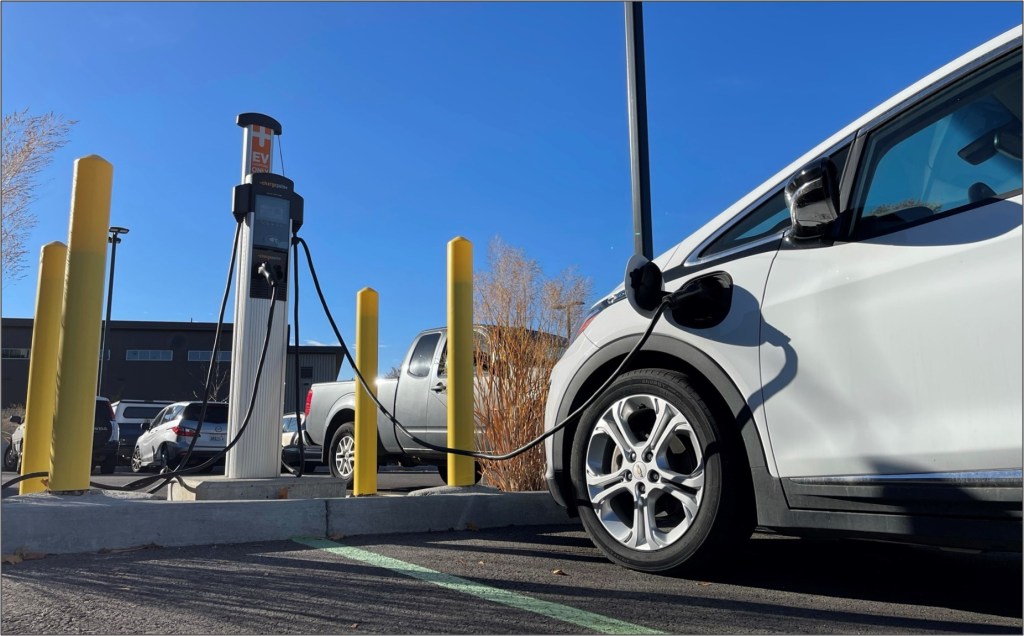
The Washington Department of Ecology is offering $3.5 million in grants over the next two years to purchase and install Level 2 charging stations and upgrade existing charging stations in public, fleet, workplace, and residential locations.

Washington businesses, Tribes, nonprofits, public entities, and multi-family residences are eligible to apply for the electric vehicle (EV) charging infrastructure grants.

The so-called “Charge Where You Are” grants are intended to attract applicants from a wide range of community groups over multiple funding rounds. The department says the first installment will distribute $1 million, with priority given to projects in rural areas, as well as neighborhoods with limited access to EV charging and communities that are disproportionately affected by air pollution. Funding for the grants comes from Washington’s Volkswagen diesel emissions settlement. Applications for the first round are open now through Nov. 16.

“Not everyone lives where they can charge an EV in their garage every night,” said Molly Spiller, manager of the Pollution Reduction Grants Section in Ecology’s Air Quality Program. “By making more charging stations available in apartments, multi-family homes, workplaces, and public locations, such as parks and libraries, we can help make EV ownership a reality for more drivers.”

With a 240-volt output, Level 2 chargers are commonly used in offices and public spaces. Although slower than the fast chargers found along highways and major road corridors, they can recharge most EVs in 4 to 10 hours.

Kathy Taylor, Air Quality Program manager, says, “We estimate the Level 2 projects we fund will help reduce greenhouse gas emissions by about 2,200 tons per year.”

Ecology anticipates opening additional grants for faster, direct current (DC) EV charging stations in 2024.

Related info:                                                    

California Grants Target Big Bucks for Net-Zero Efforts

The California State Transportation Agency (CalSTA) this month announced $1.5 billion in grants as part of efforts to build a “more efficient, sustainable and resilient supply chain.” The program includes approximately $450 million for zero-emission infrastructure, locomotives, vessels and vehicles.

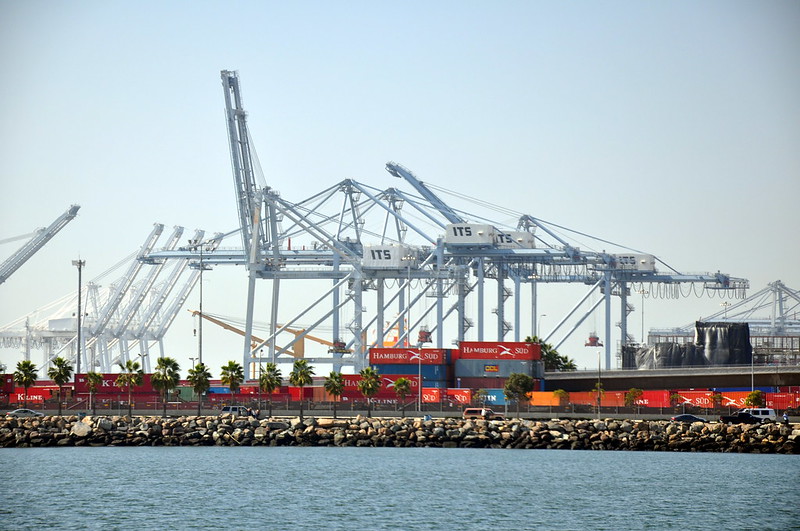
Port of Long Beach CA by Ken Harrell via Flickr CC

A major chunk of the funding includes a $383.35 million grant for the Port of Long Beach to complete a series of construction and clean-air technology projects to “accelerate” the transformation to zero-emissions operations and enhance the reliability and efficiency of cargo movement.

Also, as part of the state’s Port and Freight Infrastructure Program, nearly $225 million will fund a variety of zero-emissions cargo-moving equipment and support infrastructure projects across the Port of Long Beach, including “top handlers” and other manually operated cargo-handling equipment, as well as tugboats and locomotives. The sum is the single largest grant the port has received to support the zero-emissions goals of the 2017 Clean Air Action Plan Update.

The Port of Los Angeles will receive $233 million in grants from the state to complete infrastructure projects aimed at creating a more efficient and sustainable supply chain. “This nearly quarter-billion-dollar investment in critical Port of Los Angeles projects –– along with an additional $191 million in supporting regional projects –– will accelerate our efforts to boost competitiveness, create jobs and enhance decarbonization efforts,” said Port of Los Angeles Executive Director Gene Seroka. 

The Port of Oakland was awarded $119 million in grant funding from the state under the Port Freight Infrastructure Program (PFIP). The funding will support infrastructure improvements at the port’s maritime facilities and roadways, and to electrify port cargo handling equipment. 

A complete list of projects is available at the following links:

The funding – particularly the investments in zero-emission projects, which account for nearly 40 percent of the Port and Freight Infrastructure Program awards – builds on a partnership between the governments of California and Japan announced in March to collaborate on strategies to cut planet-warming pollution at seaports and establish green shipping corridors as part of the state’s broader strategy to aggressively combat and adapt to climate change.

The investments also follow the California Transportation Commission’s recent approval of $1.1 billion for infrastructure improvements on high-volume freight corridors as part of the Trade Corridor Enhancement Program (TCEP) – for a total state investment in supply chain infrastructure of more than $2.6 billion this month.

Beam it down! Solar farms in space!

London, United Kingdom by NASA via Flickr CC

Euronews is reporting that giant solar farms orbiting the planet may someday power Europe. The European Space Agency (ESA) unveiled a plan to harvest the sun’s energy in space and beam it back down to Earth.

It’s an idea that has been around for a while, and the subject of science fiction stories, but now it is closer to science fact. The technology is still in the preliminary testing phase, but the goal is the construction of a 2-kilometer (1.2 mile) long solar space farm, generating as much energy as a nuclear power plant, according to Hannah Brown with the European Broadcasting Union (EBU). The farm would orbit about 36,000 kilometers above the Earth.

“[Such a project] would ensure that Europe becomes a key player– and potentially leader – in the international race towards scalable clean energy solutions for mitigating climate change,” the ESA said in a statement.

Solar power is a great source of clean energy, but it’s held back by some limitations. For example, solar panels can only harness power in the daytime, and even then, much of the sunlight is absorbed by the atmosphere on its journey to the ground. But in space, the sun’s beams are around ten times as intense as they are on Earth.

The ESA has partnered with Airbus to develop ‘wireless power transmission’ to capture this 24-hour source of electricity and beam it down to us. The technology is based on the transmission used by TV and communication satellites every day, Airbus engineer Nicolas Schneider explained: “We are not very far from a 4G antenna, except that what we want is not to radiate in all directions, we want to be very precise like a laser, in fact. It’s a wave that can be directed to this receiving antenna which will then transform this wave into electricity.”

The problem is one of scale. The satellite would be massive, and so difficult to launch and build. But doable.

With mega-billionaires so interested in playing around in space, maybe they should spend a few billion for this and become energy czars.

Let’s do this!

FAO on food loss and waste

Fresh mangoes, like many other fruits, spoil rapidly because of their high moisture content and delicate nature. © FAO/Miguel Schincariol.

The Food and Agriculture Organization of the United Nations asserts that minimizing food loss “is easier than you think” by adopting simple solutions that can help “break the vicious cycle of food loss and climate change.”

The FAO article, released in connection with the International Day of Awareness of Food Loss and Waste 2022, notes that each year, approximately 14 percent of the food we produce is lost between when it is harvested and before it reaches the shops. A further 17 percent of our food ends up being wasted by retailers and consumers.”

FAO continues: “Food loss and waste is also a major contributor to the climate crisis, accounting for up to 10 percent of global greenhouse gas (GHGs) emissions. In some countries, the food supply chain is already on course to overtake farming and land use as the largest contributor to GHGs emissions, adding to an unstable climate and extreme weather events such as droughts and flooding.”

Alarming numbers, to be sure, but simple solutions? It seems that nothing is ever simple anymore.  

The UN organization has implemented several projects designed to reduce food loss and make agriculture systems more efficient. The Asia region is showing some promising results. Consider the mango.

Like other fruits, fresh mangoes spoil rapidly because of their high moisture content and delicate nature. If not harvested at the correct stage of maturity, and if not handled properly throughout the distribution chain, mangoes suffer both in terms of quality and quantity, resulting in losses and reduced income for all involved in their production and post-harvest handling. Furthermore, improper handling and infestations shorten their shelf-life, which in turn limits their sales, resulting in economic losses.

In southern Asia, for example, FAO experts found that local farmers often have scarce knowledge of how to handle fruit and vegetables after the harvest and also lack the resources to address quality issues in the supply chain. This can result in more than half of vegetable harvests being lost due to diseases, pest infestations, improper harvesting techniques, careless handling, poor packaging, and transport conditions.

That does not sound very simple, but apparently, training is a key factor. “When FAO trained the farmers to apply good post-harvest management practices and use reusable plastic crates instead of single-use mesh sacks to transport their produce, the switch produced dramatic improvements.”

Using plastic crates for bulk packaging reduced losses to a minimum during transportation. Also, “shelf lives in shops and markets improved significantly for the mangoes that underwent a hot-water treatment that controls post-harvest diseases. New harvesting tools and techniques, such as improved picking poles or trimming the fruit stem with scissors and gloves rather than pulling them off by hand, reduced mechanical injury to the fruit, while the trimming of the stems reduced latex staining of the fruit when packed in the crates, making them more attractive in shops and markets.” 

Improvements in the post-harvest handling practices, together with the hot water treatment, resulted in better quality mangoes having a longer shelf life in retail, with a 70 – 80 percent reduction in the number of mangoes wasted due to decay over a period of five days.

FAO is promoting its findings and practices around the world. About 5 000 smallholders across Asia have been trained in fresh fruit and vegetable production and marketing.

 The FAO conclusion? “With the rise of food prices, the growing impact of climate change, and the persistence of global hunger, there is no excuse for food loss and waste at any level.”

It does sound simple, but simple is often complicated.

The story and photos can be found here:  https://www.fao.org/fao-stories/article/en/c/1605721/