Charge where you are….

The grants will help Washington communities build and update charging infrastructure for EVs. 

The Washington Department of Ecology is offering $3.5 million in grants over the next two years to purchase and install Level 2 charging stations and upgrade existing charging stations in public, fleet, workplace, and residential locations.

Washington businesses, Tribes, nonprofits, public entities, and multi-family residences are eligible to apply for the electric vehicle (EV) charging infrastructure grants.

The so-called “Charge Where You Are” grants are intended to attract applicants from a wide range of community groups over multiple funding rounds. The department says the first installment will distribute $1 million, with priority given to projects in rural areas, as well as neighborhoods with limited access to EV charging and communities that are disproportionately affected by air pollution. Funding for the grants comes from Washington’s Volkswagen diesel emissions settlement. Applications for the first round are open now through Nov. 16.

“Not everyone lives where they can charge an EV in their garage every night,” said Molly Spiller, manager of the Pollution Reduction Grants Section in Ecology’s Air Quality Program. “By making more charging stations available in apartments, multi-family homes, workplaces, and public locations, such as parks and libraries, we can help make EV ownership a reality for more drivers.”

With a 240-volt output, Level 2 chargers are commonly used in offices and public spaces. Although slower than the fast chargers found along highways and major road corridors, they can recharge most EVs in 4 to 10 hours.

Kathy Taylor, Air Quality Program manager, says, “We estimate the Level 2 projects we fund will help reduce greenhouse gas emissions by about 2,200 tons per year.”

Ecology anticipates opening additional grants for faster, direct current (DC) EV charging stations in 2024.

Related info:                                                    

Los Angeles, Long Beach, and Shanghai Ports Implement Outline for First trans-Pacific Green Shipping Corridor

The creation of the first green shipping corridor across the Pacific is taking shape.

Credit: U.S. Naval Institute/Shutterstock

Last week a voluntary partnership of maritime goods movement stakeholders, including the Ports of Los Angeles, Long Beach and Shanghai, some of the largest carriers in the world, and key leading cargo owners unveiled a Green Shipping Corridor Implementation Plan Outline designed to accelerate emissions reductions on one of the world’s busiest container shipping routes across the Pacific Ocean.

The plan, the first of its kind, was developed with support from C40 Cities as part of their effort to reduce carbon emissions from the largest cities in the world.

A joint press release from the stakeholders says the plan “is an important step toward decarbonizing the global supply chains that power our economies and transitioning toward zero lifecycle carbon emission ships.” In addition, it will showcase “cutting-edge goods movement technologies, decarbonization applications and best management practices to enhance efficiency, and catalyze technological, economic and policy efforts to progressively decarbonize shipping and port-related activities.” 

Carrier partners will begin deploying reduced or zero lifecycle carbon capable ships on the corridor by 2025, and work together to demonstrate by 2030 the feasibility of deploying the world’s first zero lifecycle carbon emission container ship(s).

Carrier partners include CMA CGM, COSCO Shipping Lines Co., Ltd., Maersk, and ONE. Core partners include the Shanghai International Port (Group) Co., Ltd., the China Classification Society, and the Maritime Technology Cooperation Centre of Asia.   

Partnership participants will take steps to reduce carbon emissions and harmful pollutant emissions impacting air quality, through methods such as expanding the use of shore power and supporting the development of clean marine fueling infrastructure. Cargo owner partners have set goals to contract with carriers to use zero lifecycle carbon emission shipping services, and in an effort to measure progress toward decarbonization, all partners will develop metrics to track decarbonization progress. 

Gene Seroka, Executive Director of the Port of Los Angeles, said, “This trans-Pacific green corridor will be a model for the global cooperation needed to accelerate change throughout the maritime industry. Most of the emissions associated with moving cargo by ship occur in the mid-ocean part of the journey between ports.  This corridor will help reduce mid-ocean emissions while continuing the work we have done to cut emissions within our ports.”

The initiative will drive emissions reductions across the world’s largest ocean and lead to greener practices from supply chain participants along these vital trade routes, added Mario Cordero, Chief Executive Officer of the Port of Long Beach. “The new and innovative vessel technologies, increased availability of sustainable fuels and better practices created through this green corridor will also impact society’s transition to a cleaner future far beyond the areas served by our ports.”

 C40 Cities is a network of world cities that are working to deliver the urgent action needed “to confront the climate crisis and create a future where everyone, everywhere can thrive.” Mayors of C40 cities are committed to using a science-based and people-focused approach to help the world limit global heating to 1.5°C and build healthy, equitable and resilient communities. Through a Global Green New Deal, mayors are working alongside a broad coalition of representatives from labor, business, the youth climate movement and civil society to go further and faster than ever before. 

Established in 2004, Shanghai Municipal Transportation Commission (SMTC) undertakes the management and safety supervision of the highways and urban roads, road transportation and urban traffic, ports and shipping, and other transportation industries in Shanghai. SMTC also leads the development of the Shanghai International Shipping Center. SMTC coordinates the air, rail and postal transportation management. SMTC aims to optimize the layout of the transport structure, comprehensively balance the transport capacity, and build an integrated transportation system in Shanghai.

Read the Green Shipping Corridor Implementation Plan Outline.

Watch a video about the Green Shipping Corridor.

California Grants Target Big Bucks for Net-Zero Efforts

The California State Transportation Agency (CalSTA) this month announced $1.5 billion in grants as part of efforts to build a “more efficient, sustainable and resilient supply chain.” The program includes approximately $450 million for zero-emission infrastructure, locomotives, vessels and vehicles.

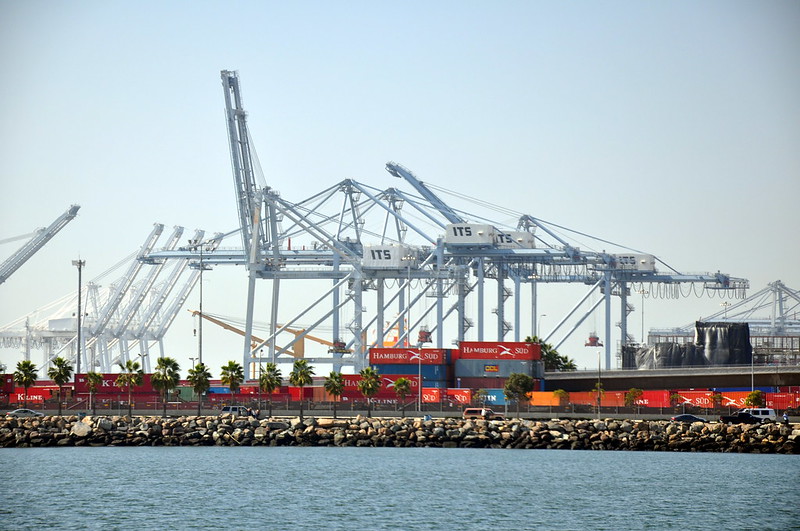
Port of Long Beach CA by Ken Harrell via Flickr CC

A major chunk of the funding includes a $383.35 million grant for the Port of Long Beach to complete a series of construction and clean-air technology projects to “accelerate” the transformation to zero-emissions operations and enhance the reliability and efficiency of cargo movement.

Also, as part of the state’s Port and Freight Infrastructure Program, nearly $225 million will fund a variety of zero-emissions cargo-moving equipment and support infrastructure projects across the Port of Long Beach, including “top handlers” and other manually operated cargo-handling equipment, as well as tugboats and locomotives. The sum is the single largest grant the port has received to support the zero-emissions goals of the 2017 Clean Air Action Plan Update.

The Port of Los Angeles will receive $233 million in grants from the state to complete infrastructure projects aimed at creating a more efficient and sustainable supply chain. “This nearly quarter-billion-dollar investment in critical Port of Los Angeles projects –– along with an additional $191 million in supporting regional projects –– will accelerate our efforts to boost competitiveness, create jobs and enhance decarbonization efforts,” said Port of Los Angeles Executive Director Gene Seroka. 

The Port of Oakland was awarded $119 million in grant funding from the state under the Port Freight Infrastructure Program (PFIP). The funding will support infrastructure improvements at the port’s maritime facilities and roadways, and to electrify port cargo handling equipment. 

A complete list of projects is available at the following links:

The funding – particularly the investments in zero-emission projects, which account for nearly 40 percent of the Port and Freight Infrastructure Program awards – builds on a partnership between the governments of California and Japan announced in March to collaborate on strategies to cut planet-warming pollution at seaports and establish green shipping corridors as part of the state’s broader strategy to aggressively combat and adapt to climate change.

The investments also follow the California Transportation Commission’s recent approval of $1.1 billion for infrastructure improvements on high-volume freight corridors as part of the Trade Corridor Enhancement Program (TCEP) – for a total state investment in supply chain infrastructure of more than $2.6 billion this month.

FAO: Transform agrifood systems to adapt and mitigate climate change

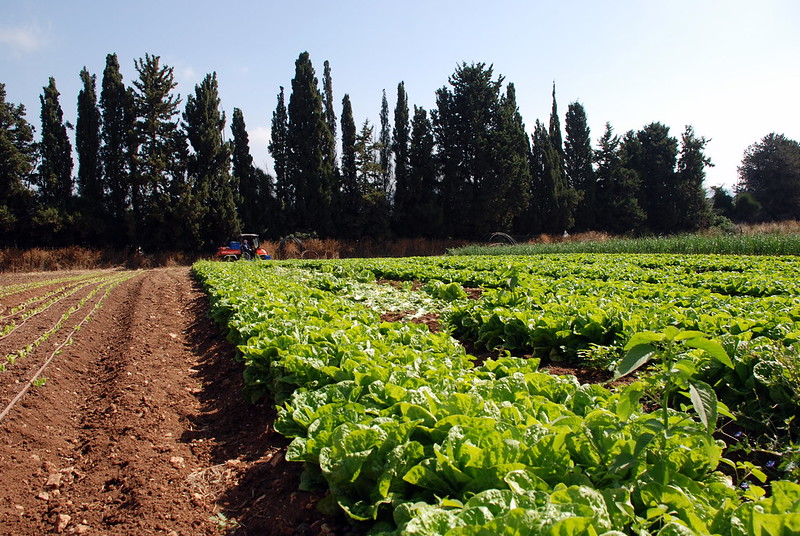
Agriculture by StateofIsrael via Flickr CC

The UN Food and Agriculture Organization asserts that transforming agrifood systems is essential to adapt to human-caused climate change and reduce greenhouse gas emissions. FAO underscored this in response to the March report published by the Intergovernmental Panel on Climate Change (IPCC).

The Synthesis Report, the last of the Sixth Assessment report cycle, confirms that human activities, mainly through emissions of greenhouse gases, have unequivocally caused global warming. These include unsustainable energy use, land use, and land-use change, as well as consumption and production patterns.

FAO says the report “underlines that 22% of global greenhouse gas emissions right now come from agriculture, forestry, and land use.” The synthesis report also paints a clear way ahead, noting that the solution lies in climate-resilient development and holistic measures to adapt to climate change that also reduce or avoid greenhouse emissions.

“Agriculture and food security are already threatened by climate change, in particular in Small Island Developing States, Least Developed Countries and Land-Locked Countries, affecting the livelihoods of smallholder farmers, pastoralists, forest-dependent people, fishers, Indigenous Peoples and women”, said FAO Deputy Director-General Maria Helena Semedo.

“We need to act now at scale. Building sustainable and resilient agrifood systems is fundamental to tackling the climate crisis, food insecurity and biodiversity loss,” she said.

Climate action through food and agriculture

IPCC scientists highlight with high confidence that many agriculture, forestry and land use options provide adaptation and mitigation benefits that could be upscaled in the near term across most regions.

For example, conservation, improved management, and restoration of forests and other ecosystems offer the largest opportunity to counteract the economic damages caused by climate-related disasters.

 Examples of effective adaptation options include cultivar improvements, on-farm, water management and storage, soil moisture conservation, irrigation, agroforestry, community-based adaptation, farm and landscape level diversification in agriculture and sustainable land management.

The IPCC also notes the importance of integrated approaches to meet multiple objectives, including food security, and underscores that shifting to healthy diets and reducing food waste, along with sustainable agriculture, can reduce impacts on ecosystems and free up land for reforestation and biodiversity restoration.

“The report shows how agriculture can be central to climate action. It highlights that Agriculture is already impacted by climate change, showing that its adaptation is urgent to ensure food security and nutrition leaving no one behind”, FAO Deputy Director-General Semedo highlighted.

“Agriculture including crop and livestock production, forestry, fisheries and aquaculture, offers solutions that contribute to both adaptation and mitigation,” she added.

The synthesis further highlights how central water is to all sectors for their adaptation. In this context, FAO supports integrated water resources management to face water-related challenges in the context of climate change. Looking ahead, the UN 2023 Water Conference is of particular importance for Agriculture.

The FAO Strategy on Climate Change looks beyond food production by considering crops and livestock, forests, fisheries and aquaculture and related value chains, livelihoods, biodiversity and ecosystems in a holistic manner, as well as embracing the indispensable role of women, youth and Indigenous Peoples, as essential agents of change.

It considers different contexts and realities, including rural, peri-urban and urban areas, and supporting countries, as appropriate, in designing, revising and implementing agrifood systems related parts of their country-driven commitments and plans, including nationally determined contributions (NDCs), national adaptation plans (NAPs), nationally appropriate mitigation actions, long-term low greenhouse gas emission development strategies, disaster risk reduction plans and other related targets and commitments.

It’s time to implement the strategy and make the Green Climate Fund (GFC), the world’s largest climate fund mandated to support developing countries to raise and achieve the ambition of their national climate plans, an effective reality.

Since becoming partners in 2016, FAO and the GCF have been scaling up climate investments in high-impact projects that make the agriculture, forestry and fisheries sectors more efficient, inclusive, sustainable and resilient to climate change. The portfolio now exceeds over 1 billion.

Beyond the brink

time bomb by Dirk Knight via Flickr CC

When it comes to the climate crisis we’re not on the brink of disaster, we’re beyond the brink.

A “Synthesis Report” report released Monday from the United Nations Intergovernmental Panel on Climate Change (IPCC), also known as the Sixth Assessment Report (AR6) says the world is likely to miss its climate target — limiting warming to 1.5 degrees Celsius (2.7 degrees Fahrenheit) above preindustrial temperatures — within a decade.

Climate change has already caused “substantial damages, and increasingly irreversible losses, in terrestrial, 36 freshwater, cryospheric, and coastal and open ocean ecosystems.”  Losses of species have been driven by increases in the magnitude of heat extremes with “mass mortality” events recorded on land and in the ocean, the report continues. Impacts on some ecosystems are “approaching Irreversibility,” such as the impacts of hydrological changes resulting from the retreat of glaciers, or the changes n some mountain and Arctic ecosystems driven by permafrost thaw.

Climate change has reduced food security and affected water security, “hindering efforts to meet Sustainable Development Goals.”

All the widely documented impacts from human-caused climate change “continue to intensify,” the report says.

Humanity has reached a “critical moment in history,” IPCC Chair Hoesung Lee asserted: The world has all the knowledge, tools and financial resources needed to achieve its climate goals, but after decades of disregarding scientific warnings and delaying climate efforts, the window for action is rapidly closing.

At the current global pace of carbon emissions, the world will burn through its remaining “carbon budget” by 2030. Doing so would put the long-term goal of keeping global warming to 1.5 degrees Celsius (2.7 degrees Fahrenheit) irrevocably out of reach. Keeping warming below th1.5 degrees Celsius threshold would help save the world’s coral reefs and preserve the Arctic’s protective sea ice layer. It could also stave off dramatic sea level rise by avoiding further destabilization in Antarctica and Greenland.

So we are all sitting on a powder keg, a loudly ticking time bomb, and while we may have the ability to defuse this bomb, can we do it?

State of Green Business: The Sustainability Cha-Cha

Following is an excerpt from GreenBiz Group’s 16th annual State of Green Business, which explores sustainable business trends to watch in 2023. Download the report here.

“Stay the course” is a brief summation from Joel Makower, chairman and co-founder of GreenBiz Group.

He writes: “That may be the key message coming out of the convulsing, confounding year that was 2022. For all that those 12 months threw at us — a still-raging pandemic, a global economic downturn, major supply-chain chokepoints, political upheavals, climate-exacerbated natural disasters, and a global energy crisis spurred by Russia’s unprovoked invasion of Ukraine — there’s no turning back for sustainability professionals.

“Of course, inflation and low economic growth led some companies to tap the brakes, slowing some initiatives, including the increased headcount that goes with companies’ growing sustainability ambitions. But not for long. There’s a general sense that the critical nature of social and environmental challenges, and the risks they pose to companies and society, will keep sustainability a hot-button business issue for the foreseeable future.

“It’s another round of the sustainability cha-cha: two steps forward, one step back.”

The risks are growing, he says, “but so are the rewards — to professionals, their organizations and, ultimately, to the planet and all who live here.” Since 2008, the GreenBiz editors and analysts have focused on 10 key trends worth watching, reflecting a broad spectrum of environmental and sustainability topics: transportation, carbon removal, the circular economy, climate tech, sustainable food systems, renewable energy and more.

Much of the sustainability wish list is coming to fruition, according to the report. “At last, biodiversity and natural capital are being recognized as critical inputs to business and industry; healthy ocean ecosystems are linked to climate mitigation and resilience; the financial sector, from insurance to banking to venture capital, is awakening to a post-oil future; and forthcoming transparency and disclosure frameworks promise to help separate leaders from laggards.”

Stakeholder capitalism “is alive and well, as companies and mainstream investors increasingly view environmental and social issues not as some social engineering conspiracy but as activities critical to business and macroeconomic success.”

For the 16th consecutive year, we’ve tapped the GreenBiz analyst and editorial teams to identify 10 key trends and developments GreenBiz will watch over the next 12 months. To learn more, download the free report here.

Sustaining Supply Chains

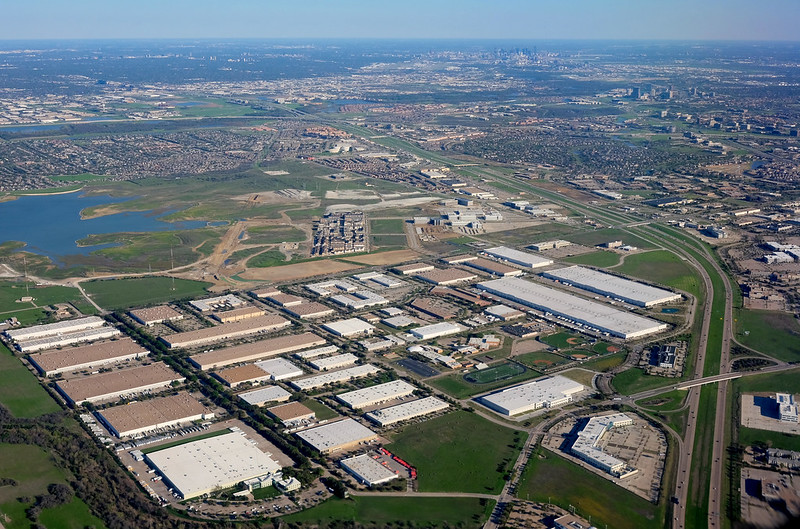
Supply chain infrastructure by Lars Plougmann via Flickr CC

Have supply chains ever really been sustainable? Are they more or less sustainable now in the post-pandemic, political and economic climate? Probably less.

Perhaps the problem is with the word itself: what happens when supplies are disrupted by war, weather, politics, economic turbulence and/or pandemics? Are the chains tough and flexible enough to withstand those punches?

Supply Chain Digest reviewed the Top Supply Chain Stories by Month 2022, which presented  pictures of oddities, failures, and “chaos.”

In January, for example, SCD reported that thieves are “opening intermodal containers as freight trains slow down or stop as they approach depots in downtown LA. That also leaves a trash mess around the rails from items the thieves don’t want.” Also, the queue of ships waiting to unload at the ports of Los Angeles and Long Beach reached a record high of 105, even as peak season ended weeks before.

And that was just January. In February Russia invaded Ukraine leading to chaos that is still happening.

In June, CSCMP and Kearney released the 2022 State of Logistics report. One of its metrics, US Business Logistics Costs (USBLC) rose sharply on an absolute basis in 2021 to $1.85 trillion. “That was an increase of 22.4% from an economically weak 2020. With a smaller increase in US nominal GDP (10%) than logistics cost rose last year (22.4%), that took the relative cost of logistics as a share of GDP to 8.0%, up significantly from 7.44% in 2020.”

Members of the International Longshore and Warehouse Union (ILWU), which represents West Coast dock workers, begin working without a contract in July after the current one expired at the end of June. Negotiations with the Pacific Maritime Association (PMA), which represents ports and terminals, began in May and a settlement seems well off.  Port automation is said to be a key issue, raising fears that a stalemate will lead to a dock worker strike and … supply chain chaos.

In December, the battery-powered Tesla Semi was launched as a commercially available product, with news that PepsiCo received the first vehicle. “It’s been a long haul for the electric truck,” according to SCD. “The company’s CEO Elon Musk first announced the cargo truck plans in 2017, with stated expectation for a commercial launch in 2019. At the announcement, Musk also said that on a November 25 test drive, a fully-loaded Tesla Semi (81,000 pounds) traveled 500 miles on a single charge.

Maybe we will all have to slow down in the EV age.

So what about this year? Thomas Insights offered these “top trends” in the supply chain for 2023:

  • An increase in Reshoring and Near-Sourcing initiatives: “Factors ranging from high freight costs, labor shortages, and factory shutdowns to component shortages, transportation delays, and geopolitical conflicts, have compelled many organizations to rethink their approach to supply chain management.” 
  • The Rise of crowdsourced delivery: A global research study found that around 90% of retailers expect to use crowdsourced delivery to handle specific orders by 2028. 
  • Better conditions for truckers: As of October 2022, the U.S. was short almost 78,000 truck drivers. “If current trends continue, the driver shortage could exceed 160,000 by 2031, contributing to significant supply chain delays.”
  • High supply chain costs: “In 2022, increases in fuel prices and ongoing global supply chain disruptions have severely impacted retailers’ margins. Between January and June, for example, the price of regular motor gasoline rose by 49% and the price of diesel fuel rose by 55%. Meanwhile, the ongoing war in Ukraine has seen a decline in food supplies and transportation bottlenecks. Because it’s more expensive, and takes a good deal longer, for retailers to acquire, transport, and store their goods, the prices of commodities are also soaring.”
  • Smaller warehouses: “Because smaller warehouses are both in-demand and hard to come by, recently, the rental rates for units less than 120,000 square feet had risen twice as much compared to bigger warehouses. Another option for retailers is to transform existing retail spaces into fulfillment centers. This is the tactic taken by Walmart, which is in the process of converting many of its 4,700 stores to mini-warehouses.”
  • Major skills gaps remain: “For supply chain leaders, a focus on attracting, recruiting, and retaining top talent will be a key focus in 2023, as will reskilling and upskilling the existing workforce.”
  • Technology investments: “The top supply chain technology trends of 2022 included digital twins, autonomous things, sustainability tools, and analytics everywhere. As companies become more comfortable utilizing these technologies, we will see them grow in 2023.”

Sustainable supply chains? It seems those are three words that don’t work very well together at the moment.

Copping out on COP

Climate Alliance photo via Flickr CC

Net zero? When it comes to net zero carbonization that sounds like a game that countries and companies play, much like getting to zero fuel emissions for some auto fleets, but not for others. It’s all about the math and playing with the numbers in a time-honored way to game the system and look good.

That really won’t cut it when it comes to the climate crisis because the corporations with the most to lose – and who are the most responsible for the crisis in the first place – don’t really want to hurt themselves too much while talking the net zero game.

From Triplepundit: “At COP27, companies, NGOs and governments are discussing what it takes to create a just transition, as in a climate action plan that is socially equitable.”

Hmm, that sounds like gobbledygook, or as Greta Thunberg might say (quoted in the Nov. 28 New Yorker article written by Elizabeth Kolbert: “blah blah blah…”

Can technological advances get us to net zero emissions? Maybe, but again, blah blah blah!

Here is part of Thunberg’s quote from the Youth4Climate conference in September:

“This is all we hear from our so-called leaders: words—words that sound great, but so far have led to no action. Of course, we need constructive dialogue, but they’ve now had thirty years of blah, blah, blah, and where has that led us?”

Governments and corporations need to develop and deploy climate technologies critical for the world’s net-zero agenda.

Now.

Beam it down! Solar farms in space!

London, United Kingdom by NASA via Flickr CC

Euronews is reporting that giant solar farms orbiting the planet may someday power Europe. The European Space Agency (ESA) unveiled a plan to harvest the sun’s energy in space and beam it back down to Earth.

It’s an idea that has been around for a while, and the subject of science fiction stories, but now it is closer to science fact. The technology is still in the preliminary testing phase, but the goal is the construction of a 2-kilometer (1.2 mile) long solar space farm, generating as much energy as a nuclear power plant, according to Hannah Brown with the European Broadcasting Union (EBU). The farm would orbit about 36,000 kilometers above the Earth.

“[Such a project] would ensure that Europe becomes a key player– and potentially leader – in the international race towards scalable clean energy solutions for mitigating climate change,” the ESA said in a statement.

Solar power is a great source of clean energy, but it’s held back by some limitations. For example, solar panels can only harness power in the daytime, and even then, much of the sunlight is absorbed by the atmosphere on its journey to the ground. But in space, the sun’s beams are around ten times as intense as they are on Earth.

The ESA has partnered with Airbus to develop ‘wireless power transmission’ to capture this 24-hour source of electricity and beam it down to us. The technology is based on the transmission used by TV and communication satellites every day, Airbus engineer Nicolas Schneider explained: “We are not very far from a 4G antenna, except that what we want is not to radiate in all directions, we want to be very precise like a laser, in fact. It’s a wave that can be directed to this receiving antenna which will then transform this wave into electricity.”

The problem is one of scale. The satellite would be massive, and so difficult to launch and build. But doable.

With mega-billionaires so interested in playing around in space, maybe they should spend a few billion for this and become energy czars.

Let’s do this!

Dueling for compliant fuel

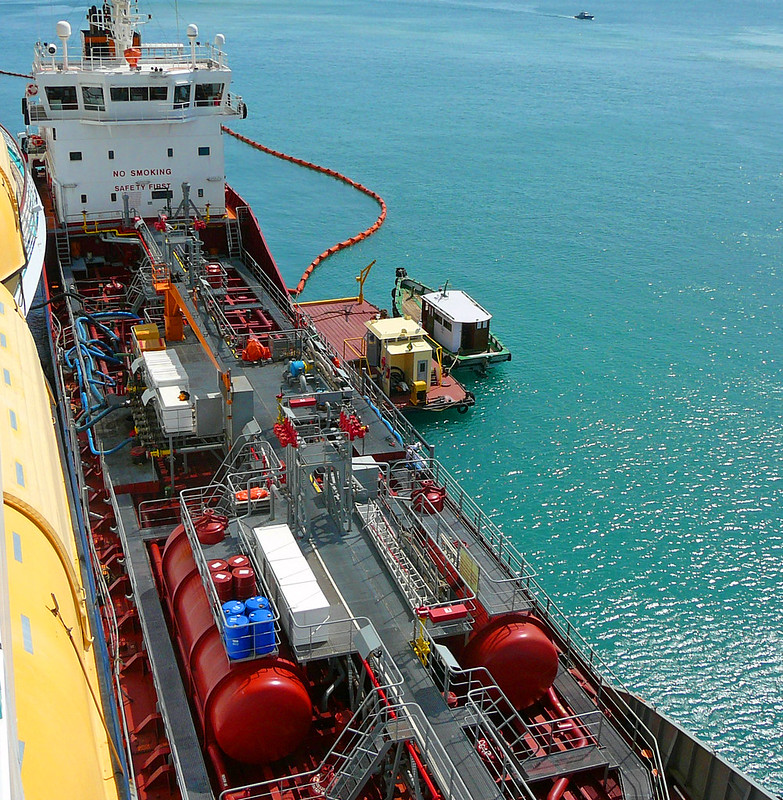
Bunkering by Cycling Man via Flickr

Container shipping operators are scrambling to come into compliance with United Nations decarbonization rules, according to IHS Markit.

In 1973, the International Convention for the Prevention of Pollution from Ships (MARPOL) expanded the powers of the International Maritime Organization (IMO) to regulate the environmental impacts of shipping. A MARPOL update in 2008 called for a reduction of the maximum sulfur content in marine bunker fuel from 3.50% to 0.50% in 2020, unless a supply study would conclude insufficient availability of compliance fuels and a delay to 2025 deemed necessary. But, in October 2016, the IMO came to a broad agreement to implement the global reduction in the sulfur content of marine bunker fuel from January 1, 2020.

IHS Markit estimates that about 55,000 ships of a total fleet of about 110,000 vessels burn heavy fuel oil bunkers and that roughly 30,000 ships account for about 80% of global fuel oil bunker use.

Compliant fuel means seven and eight-tenths (7.8) pounds per square inch (psi) low Reid Vapor Pressure (RVP) gasoline, federal reformulated gasoline, or ethanol-blended low RVP gasoline as described in section 5 of the IMO rule.

Operators must therefore compete to secure shore-side production of eco fuels such as hydrogen, ammonia, and methanol with other energy-hungry industries. The current global supply of hydrogen, ammonia and methanol would barely cover the needs of the shipping industry, even without competition from other critical sectors such as manufacturing, oil refining, and the production of fertilizers, said the Shipping Gazette.

The shipping industry uses more than 300 million tons of fossil fuels every year, about five percent of global oil production, and there is still no clear pathway toward replacing that volume with renewable fuels.

The Paris-based International Energy Agency (IEA), predicts ammonia will be the dominant alternative fuel for shipping by 2050.

Jonah Sweeney, a European marine fuels analyst at oil price reporting agency Argus, told the IMO that alternative fuels such as ammonia and methanol produced less energy than very low sulfur fuel oil (VLSFO). One ton of VLSFO produces 2.2 times more heat content than one ton of ammonia and 2.1 times more than methanol.

“It is important when looking at alternative fuel options to compare like for like in terms of energy output, otherwise if you take the outright price of methanol, for example, you will have a substantial discount to VLSFO, but you will need about twice as much,” Sweeney said, quoted in the Shipping Gazette.

This is a big problem, because about 93 percent of the global companies that have set net-zero goals are on course to fall short of their carbon emissions targets, according to Triplepundit.