

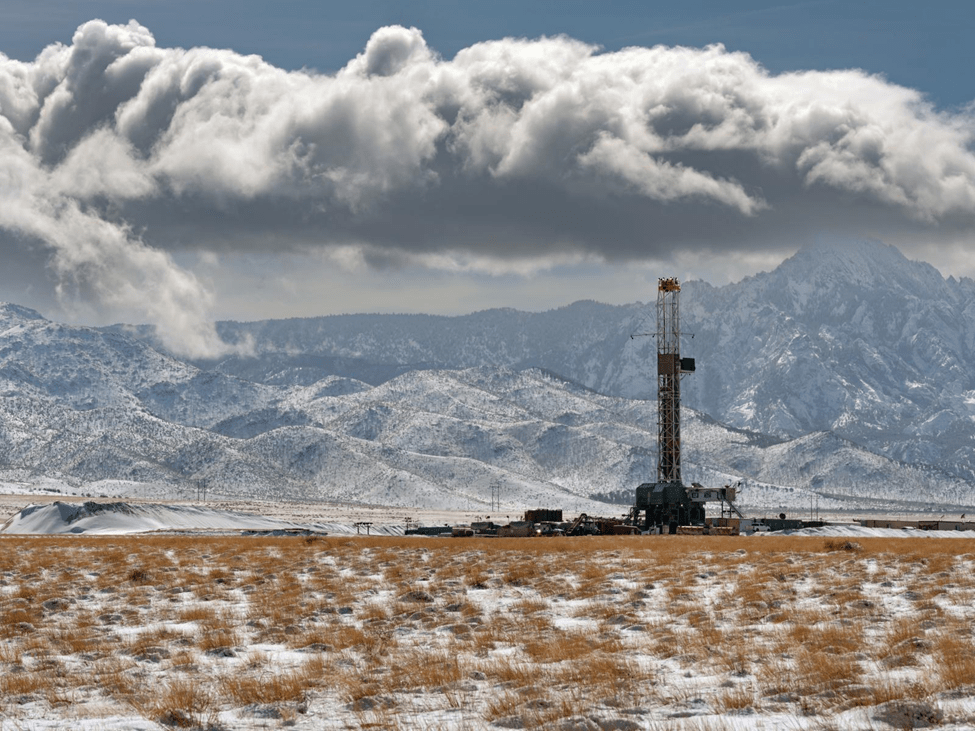
. (Photo courtesy of Fervo Energy)
Pacific Northwest National Laboratory is planning to build an AI-powered modeling platform to help geothermal energy operators maximize electricity generation. The plan is for PNNL will team with geothermal company Fervo Energy and the AI technology company NVIDIA to build a digital twin of enhanced geothermal reservoirs.
JoAnna Wendel, PNNL communications professional, notes in a Press Release that heat from Earth’s subsurface hasn’t contributed much to the nation’s electricity supply — in 2023, geothermal made up only 0.4% of all electricity generated in the United States. “Energy experts see geothermal as a high-potential, untapped, and underused resource,” she continues. Research institutions and industries are looking to increase geothermal energy production.
To help accelerate production, she continues, the Department of Energy’s PNNL will develop a “digital twin” virtual platform that simulates a physical asset, like a battery, hydropower dam or, in this case, a geothermal reservoir. Through AI and computer simulations, digital twins mimic real physical processes.
PNNL says that with Fervo Energy and NVIDIA, PNNL researchers will build an “Enhanced Geothermal System Twin,” a virtual platform that will mimic the behavior of a real geothermal reservoir. “Once launched, the platform would ultimately be available to any geothermal plant operator to help them make quick decisions to maximize electricity generation. “
“Current modeling capabilities for geothermal systems are too slow to fully incorporate and analyze production data, which can lead to an underutilized resource. A digital twin would allow EGS operators to understand, in real time, the dynamics of their reservoir and act quickly to maximize the power generation potential,” said Maruti Mudunuru, an Earth scientist at PNNL and principal investigator of the project.
“Fervo will provide us with their proprietary data for their geothermal sites in Nevada and Utah, and NVIDIA will provide their technical expertise on developing AI surrogates used in the digital twin for Earth’s subsurface,” he added.
“We see digital twins as a critical step toward enabling data-driven geothermal operations,” said Sireesh Dadi, senior manager for data acquisition and advanced analytics at Fervo Energy. “Through this collaboration, we are contributing field data, operational context and validation use cases to ensure that the digital twin platform delivers actionable insights at the speed required for real-world decision-making.”
Enhanced geothermal systems use water pumped deep underground through fractures to absorb heat. The hot water rises to the surface and becomes steam, which then spins turbines to create electricity.
Then, cold water is injected through the fractures, where it absorbs heat from the surrounding rock (which can reach up to 555 degrees Fahrenheit) and rises to the surface. At the surface, the water becomes steam, which then spins electricity-generating turbines. Fervo’s geothermal power generation process is designed so that the water can cool at the surface and none of it is lost to evaporation. The water is then injected back into the subsurface, creating a continuous electricity-producing process.
To build the digital twin, PNNL researchers will train scalable AI models on NVIDIA AI infrastructure to learn and process field data from Fervo’s EGS asset. The team will then incorporate those trained AI models into the NVIDIA Omniverse libraries, which will be able to show a physical model of the geothermal system.
NVIDIA tools would apply enormous amounts of records from Fervo’s field production to create a simulation of the entire fracture system, showing operators whether injected water is successfully flowing through that network to collect as much heat as possible. The final EGS-Twin will contain anonymized data so that other geothermal plant operators can adapt it to their own operations.
“Geothermal has the potential to be a reliable, always-on source of energy, but unlocking it at scale will require advanced computing to better understand complex reservoirs thousands of feet below the surface,” said John Josephakis, global vice president of high-performance computing and supercomputing at NVIDIA. “PNNL and Fervo Energy are using NVIDIA accelerated computing to build EGS-Twin, applying AI and simulation to help improve reservoir modeling, planning and operations.”
The EGS-Twin platform should be ready to deploy by 2029. The project is funded by DOE’s Hydrocarbons and Geothermal Energy Office.
View the complete PNNL press release here.

